
Rose Hall Great House and the Georgian plantation world above Montego Bay
Published on 09/18/2026 at 10:30 | Editorial responsibility: Rafael Müller, Editor-in-Chief AD HOC NEWS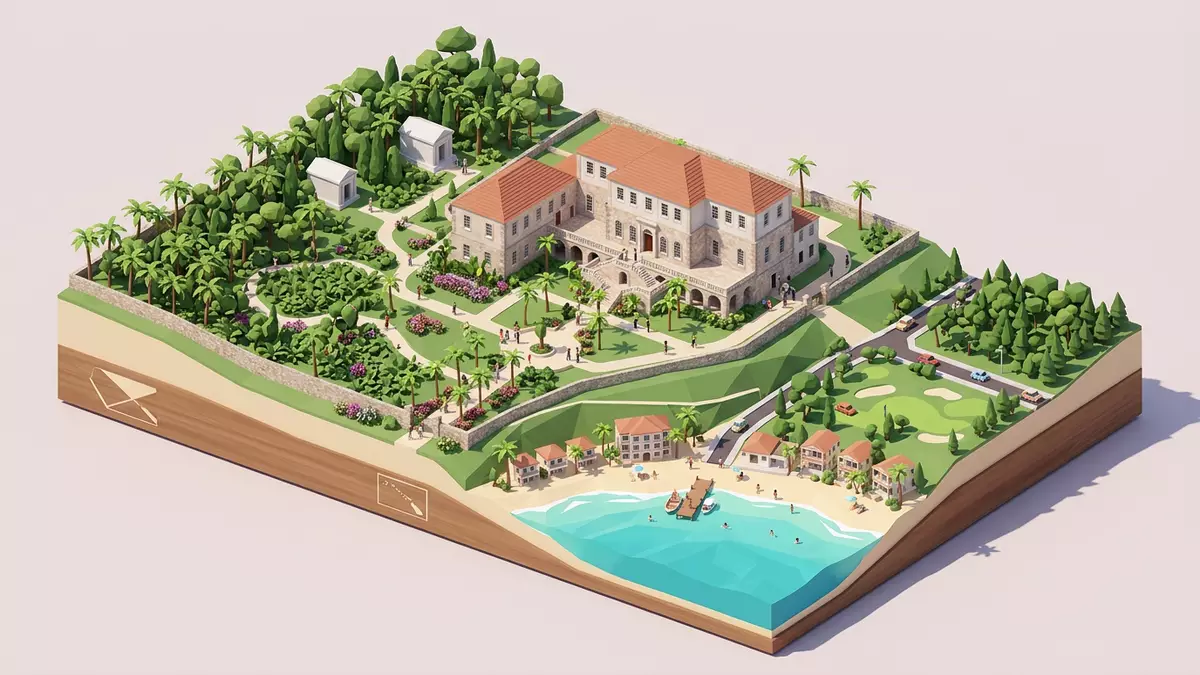
Rose Hall Great House above Montego Bay is a Georgian plantation mansion from the eighteenth century, set on rising ground overlooking Jamaica’s north coast. Built as the centrepiece of a large sugar estate owned by figures including Henry Fanning, George Ash and John Palmer, it combines cut stone, timber and plaster in a house whose elegance sits directly over fields once worked by enslaved people.
A Georgian plantation mansion in stone and timber
The story of Rose Hall Great House reaches back into the mid eighteenth century, when English planter Henry Fanning assembled caneland on the north coast and began work on a substantial residence above his sugar lands.Henry Fanning’s purchase of caneland After his death the plantation and its ambitious house project passed through the hands of Rosa Fanning, later Rosa Kelly, and then her husband George Ash, an established planter linked to the wider estate known as Rose Hall.established in the mid eighteenth century by George Ash
Construction in this period produced a Georgian great house built around the 1770s, in a style associated with the reigns from George I to George IV.built in 1770 by John Palmer The resulting mansion stands on a base of cut stone, with its lower levels formed from dressed blocks and upper floors rendered in stucco over masonry. Inside, surviving descriptions and historic images point to carved mahogany, broad staircases and formal rooms laid out along central axes, characteristic of Georgian planning adapted to the climate of Jamaica.
Estate wealth, enslaved labour and later restoration
Rose Hall Great House belongs to a wider plantation landscape that once extended over thousands of acres of cane, grass and pasture on the hills east of Montego Bay.estate extended over thousands of acres Records from the late eighteenth and early nineteenth centuries describe an estate with hundreds of enslaved Africans, whose labour in the fields, boiling house and mill yard produced sugar, rum and other goods that funded the furnishings and social life concentrated in the great house.
The mansion’s documented history runs through the Palmer family, including John Palmer and later his grandnephew John Rose Palmer, whose names appear in deeds and estate records linked to Rose Hall and the adjoining Palmyra lands.John Palmer and John Rose Palmer In the nineteenth century the house suffered damage during uprisings that affected plantations across Jamaica, and for much of the twentieth century it stood as a ruined structure. In the 1960s United States businessman John Rollins and his wife Michele bought the property and carried out a thorough restoration, refurnishing the rooms and incorporating the estate into a wider resort development on the coast.restored in the mid 1960s by John and Michele Rollins
The White Witch legend and the house as museum
Alongside its architectural and plantation history, Rose Hall Great House carries a folklore layer centred on the figure known as the White Witch of Rose Hall. In Jamaican storytelling this character is called Annie Palmer, presented as a plantation mistress associated with cruelty, multiple husbands and sinister practices.legend of Annie Palmer Literary historians point out that the most detailed version of the story comes from Herbert G. de Lisser’s 1929 novel “The White Witch of Rosehall”, a work of fiction that embroidered existing anecdotes into a dramatic narrative.novel The White Witch of Rosehall
In its present form the house operates as a historic museum and attraction where architectural details, plantation artefacts and storytelling about the White Witch legend share the same physical setting.example of Caribbean Georgian architecture Visitors move through rooms that display period-style furniture, portraits and household objects, while interpretation panels and guided tours connect those interiors to the plantation world outside and to the stories later attached to Annie Palmer. The combination of Georgian architecture, hillside location and layered narratives makes Rose Hall Great House one of Jamaica’s more extensively documented great houses.
Visiting Rose Hall Great House: what travellers from Western Europe should know
- Rose Hall Great House stands east of Montego Bay on a hillside above the main coastal road, within the historic Rose Hall estate landscape on Jamaica’s north shore.
- The approach to the house involves a climb from the lower grounds to the main entrance, with steps and interior staircases linking the mansion’s different levels.
- The official language is English and the currency is the Jamaican dollar.
- Entry requirements depend on your nationality; UK travellers can check the FCDO travel advice at gov.uk/foreign-travel-advice, Irish travellers the Department of Foreign Affairs at ireland.ie.
Searching for Rose Hall Great House on social platforms
These links open searches for Rose Hall Great House on each platform.
Frequently asked questions about Rose Hall Great House
Where is Rose Hall Great House located?
Rose Hall Great House stands east of Montego Bay in Jamaica’s Saint James Parish, on rising ground above the island’s northern coastline and main coastal highway.
What can visitors expect inside the house?
Visitors encounter restored Georgian-style interiors with period furnishings, timber finishes and interpretive material about the plantation era and the legends attached to the estate.
What makes Rose Hall Great House distinctive among Jamaican great houses?
The house combines eighteenth-century Georgian architecture, documented links to sugar plantation history and a widely known White Witch legend, all concentrated in a single hillside mansion.


