Rottnest Island and its limestone shores
Published on 08/10/2026 at 15:05 | Editorial responsibility: Rafael Müller, Editor-in-Chief AD HOC NEWS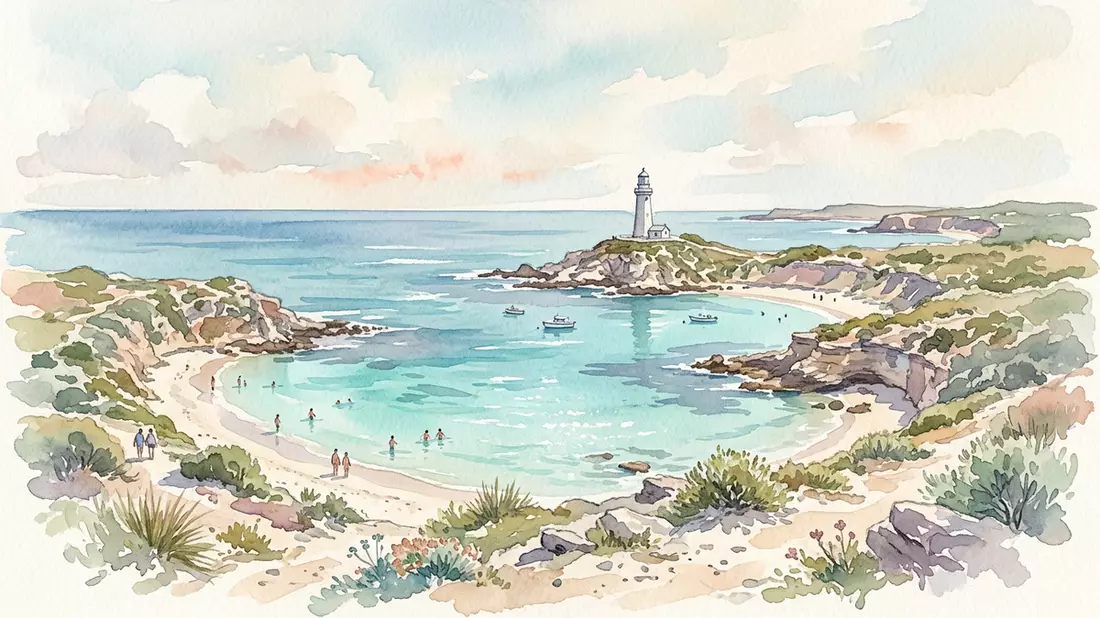
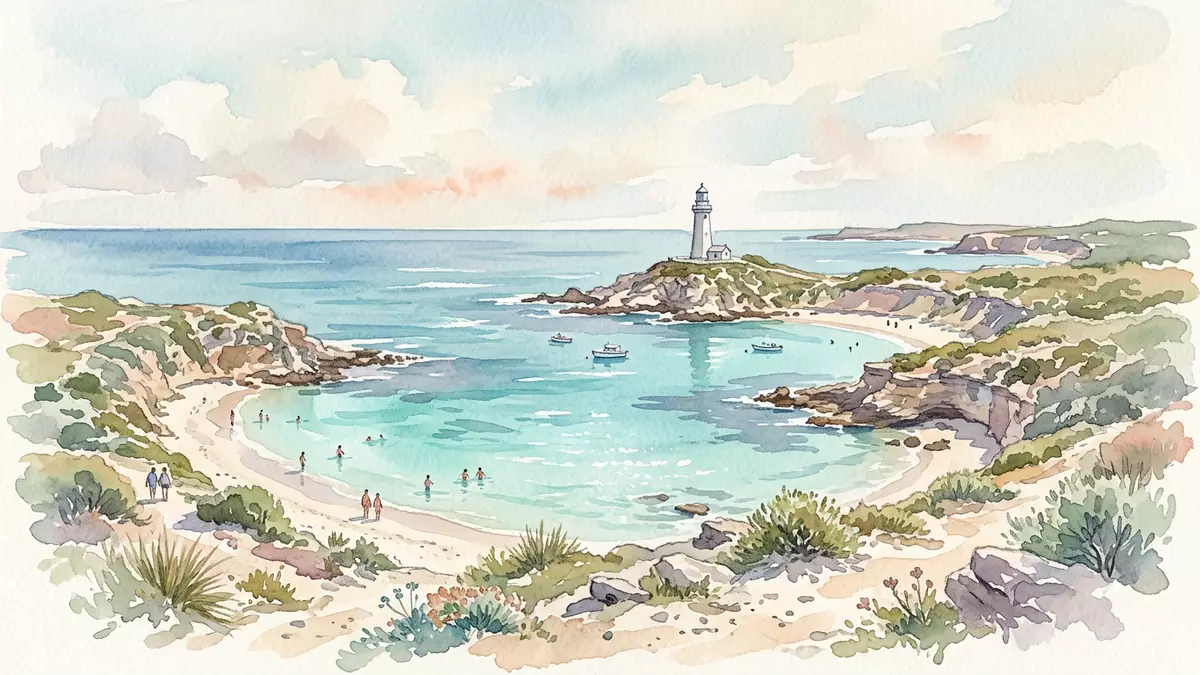
Rottnest Island lies off Perth and is known for its pale limestone coast, sandy bays and low scrub. It is closely associated with the Dutch sailor Willem de Vlamingh, who reached the island in 1696 and gave it the name that led to its present English form.
Limestone edges and sheltered bays
The island’s coastline is made up of low rock platforms, small beaches and coves backed by dunes. Inland, the ground rises only gently, so the sea remains a constant reference point across much of the island.
That profile gives Rottnest Island a quiet, open look rather than a dramatic one. The pale limestone, blue water and sparse vegetation are the features that shape first impressions.
Colonial traces and island history
Rottnest Island also carries the marks of earlier settlement and use under British colonial administration in the nineteenth century. The island’s name has a direct link to its early European charting, when de Vlamingh compared the local quokkas to rats.
Later, the island became associated with convict confinement and with military use, including the Fremantle Fortress era and the broader defence history of Western Australia. Those layers give the island a history that reaches beyond its beaches.
Quokkas, scrub and the inland walk
The island is best known for its quokkas, small wallaby-like marsupials that move through the settlement areas and the scrub. They sit alongside coastal heath, low trees and patches of shade that break up the brighter limestone ground.
Walking routes cross flat and undulating ground, with long views and few tall landmarks. The experience changes from bay to bay, with each stretch of coast opening onto a different arrangement of sand, rock and water.
Visiting Rottnest Island: what travellers from Western Europe should know
- The island is reached from Perth by boat.
- Admission arrangements and opening hours are set by the site's operator and change with the season; the official website is the only binding source.
- The best conditions are usually the clearer, milder months, when walking and cycling are easier.
- Paths can be sandy, and the island rewards comfortable footwear and time on foot or by bicycle.
- English is used on the island, and card payments are widely accepted in visitor services.
- Entry requirements depend on your nationality. UK travellers should check the FCDO travel advice at gov.uk/foreign-travel-advice; Irish travellers the Department of Foreign Affairs at ireland.ie; EU and EEA citizens their own national foreign ministry.
Searching for Rottnest Island on social platforms
These links open searches for Rottnest Island on each platform.
Frequently asked questions about Rottnest Island
Where is Rottnest Island?
Rottnest Island lies in the Indian Ocean off Perth, in Western Australia. It is a short coastal destination rather than a remote outpost.
What should I expect on a visit?
Expect bays, scrub, limestone ground and a settlement area with services for visitors. The island suits walking, cycling and time spent moving between the coast and the interior.
What makes Rottnest Island distinctive?
Its combination of pale limestone, sheltered water, colonial history and quokkas gives it a clear identity. The island feels compact, but its landscape and history are layered.