
Rottnest Island and its ring of sea, sand and stone
Published on 08/15/2026 at 14:28 | Editorial responsibility: Rafael Müller, Editor-in-Chief AD HOC NEWS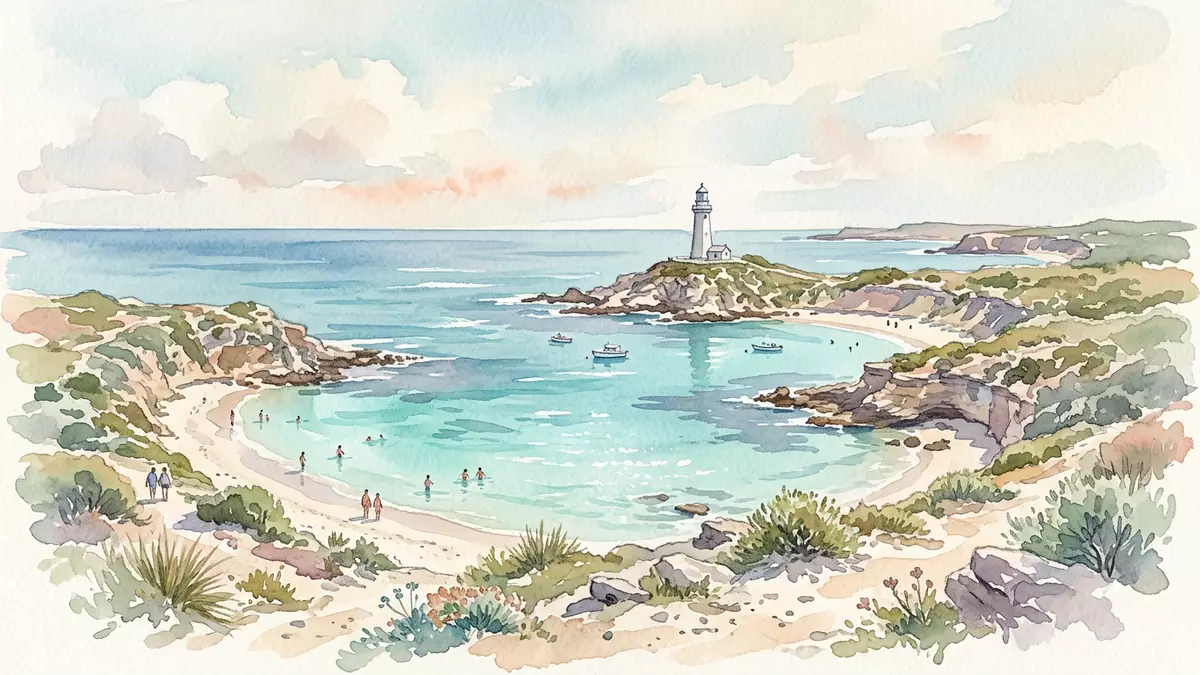
Rottnest Island lies off Perth in the Indian Ocean, reached by ferry from Fremantle, North Fremantle, Perth city and Hillarys Boat Harbour. The island combines sandy shores, limestone headlands and a landscape shaped by salt lakes and low inland ground.
Coast, limestone and low country
The island’s surface is modest in height, with broad stretches of reef, bay and dune rather than a single dominating summit. Its limestone geology gives the coast a pale, weathered look, while inland salt lakes and swamps break up the drier ground.
That mix of coast and interior is one reason the island reads as several landscapes at once. The sea edges vary from sheltered bays to more open western shores, and the island’s low relief keeps those changes visible across short distances.
Wadjemup, Dutch naming and a difficult past
The island is known to the Whadjuk Noongar people as Wadjemup, and Dutch navigator Willem de Vlamingh gave it the name that became Rottnest in 1696. The name came from his impression of the quokka, which he mistook for a large rat, and the European label has remained attached to the island’s present identity.
Wadjemup also carries a painful historical layer. From 1838, it was used as a prison for Aboriginal boys and men, and the island later formed part of wider colonial and military administration in Western Australia.
Aboriginal history and heritage records place that prison history beside the island’s earlier pastoral and settlement phases, giving the place a layered character that remains visible in names, buildings and memorial spaces.
Forts, batteries and the island’s second life
Rottnest Island holds a series of military remains, including batteries, rail lines, barracks and other defence structures associated with the wars of the twentieth century. Oliver Hill and Bickley Bay are the best-known defence sites, and the island’s built fabric still includes cottages, railway remains and lighthouse structures from different periods.
Military and maritime heritage and cultural heritage show how the island’s wartime structures sit beside earlier settlement traces and later recreational use. That combination gives Rottnest Island a rare density of visible history for a compact coastal place.
Visiting Rottnest Island: what travellers from Western Europe should know
- The island is reached by ferry from Perth, Fremantle, North Fremantle and Hillarys Boat Harbour. Barrack Street Jetty, Victoria Quay and Northport are among the named departure points.
- The ground is low and coastal, with limestone, sand and open stretches of salt lake country. The main challenge is exposure to sun, wind and long walks between bays.
- English is the main language used for visitors, and the currency is the Australian dollar.
- Thomson Bay Settlement is the main inhabited focus, with heritage cottages and island services concentrated there. Much of the rest of the island is open coastal country, military heritage and reserve land.
Searching for Rottnest Island on social platforms
These links open searches for Rottnest Island on each platform.
Frequently asked questions about Rottnest Island
Where is Rottnest Island?
It lies west of Fremantle off the coast of Perth in Western Australia. Ferries connect it with the mainland from several departure points.
What does a visit involve?
The island presents bays, limestone coast, low ground and historic buildings rather than a single built attraction. Its character comes from landscape, settlement traces and military remains together.
What makes it distinctive?
Rottnest Island combines an Aboriginal place name, Dutch naming from 1696 and a long record of prison and defence use. That mixture gives the island a history that is visible in both the land and the buildings.


