
Sacsayhuaman and the stone edge of Cusco
Published on 09/17/2026 at 13:29 | Editorial responsibility: Rafael Müller, Editor-in-Chief AD HOC NEWS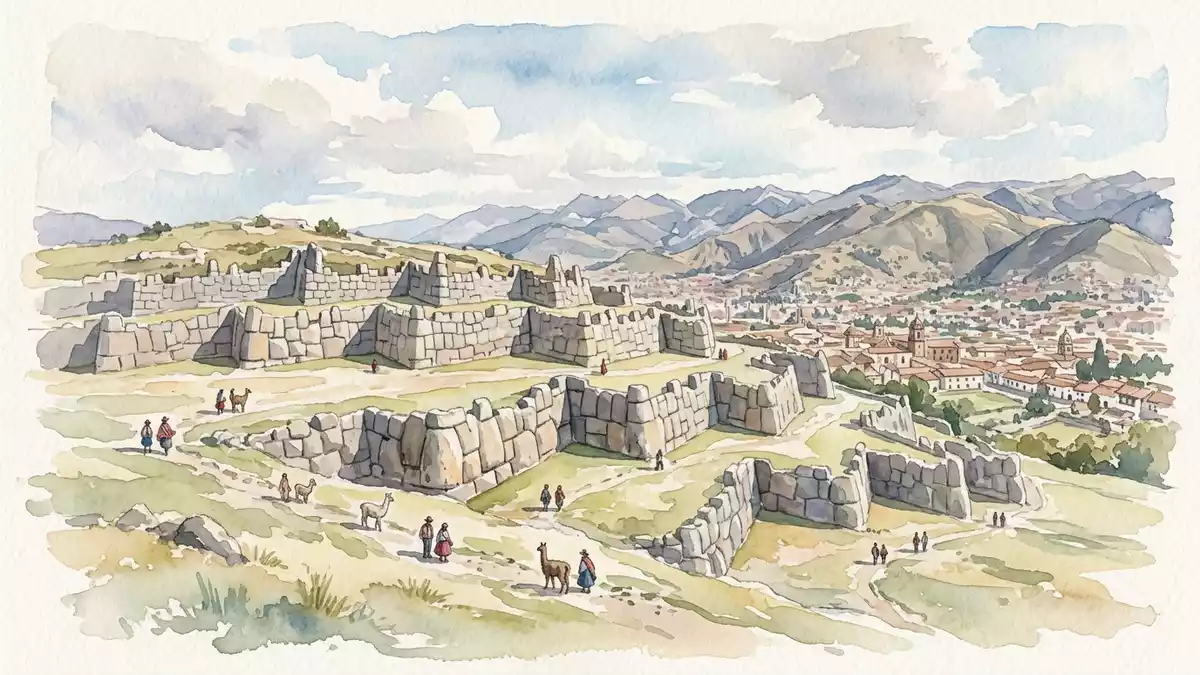
Sacsayhuaman rises on Cusco’s northern edge as a hilltop Inca fortress of stone terraces and tightly fitted walls. Built in the fifteenth century during the reign of Pachacuti Inca Yupanqui, it remains one of the clearest expressions of Inca masonry in the city.
Stone walls above Cusco
The site is known for massive dry-stone construction, with blocks cut to sit together without mortar. The masonry at Sacsayhuaman is among the most admired parts of Inca building practice, and its scale is visible from the city below.
The complex belongs to the Historic Sanctuary of Cusco, inscribed on the UNESCO World Heritage List in 1983. That designation links Sacsayhuaman to the wider Inca urban landscape, rather than treating it as an isolated ruin.
Pachacuti and Inca imperial Cusco
Sacsayhuaman belongs to the world of the Inca Empire and to the reign of Pachacuti Inca Yupanqui. The name of Pachacuti gives the place its historical frame, while the fortress itself shows the empire’s command of stone, scale and hilltop position.
The walls are built in a zigzag line, and the site includes terraces and a large ceremonial space. Its position above Cusco and its huge blocks make it one of the most distinctive surviving works from the Inca period.
From fortress to archaeological site
Sacsayhuaman has long been read as both a defensive work and a ceremonial complex. Its form includes heavy walls, open spaces and terraces, which together give the place a layered character rather than a single function.
The surviving fabric is only part of the original complex, but what remains still carries the power of the Inca stonework. The hilltop setting, the fitted masonry and the connection with Pachacuti keep the place central to Cusco’s historical identity.
Visiting Sacsayhuaman: what travellers from Western Europe should know
- The site lies on the northern side of Cusco, above the historic centre. It is reached from the city by road and on foot from the upper districts.
- The ground rises steeply in parts, and the stonework stands on a high ridge. The site sits at an altitude of 3,701 m (12,142 ft).
- The main interest lies in the terrace walls, the zigzag masonry and the broad ceremonial areas. Large blocks and tight joints are the defining features.
- The city of Cusco and the surrounding highland landscape form the immediate setting. Sacsayhuaman belongs to that Andean urban edge rather than to a remote mountain site.
Searching for Sacsayhuaman on social platforms
These links open searches for Sacsayhuaman on each platform.
Frequently asked questions about Sacsayhuaman
Where is Sacsayhuaman?
Sacsayhuaman stands on the northern outskirts of Cusco in Peru. It overlooks the city from a high ridge linked to the Inca capital.
What does a visit involve?
The site presents stone terraces, wide open spaces and steep ground in a high-altitude setting. The walk through the complex follows the lines of the surviving masonry.
What makes Sacsayhuaman distinctive?
Its scale, its fitted stone blocks and its link to Pachacuti Inca Yupanqui define it. The place is also part of the UNESCO-listed Historic Sanctuary of Cusco.


