

Sainte-Chapelle and its walls of medieval light
Published on 08/16/2026 at 14:02 | Editorial responsibility: Rafael Müller, Editor-in-Chief AD HOC NEWS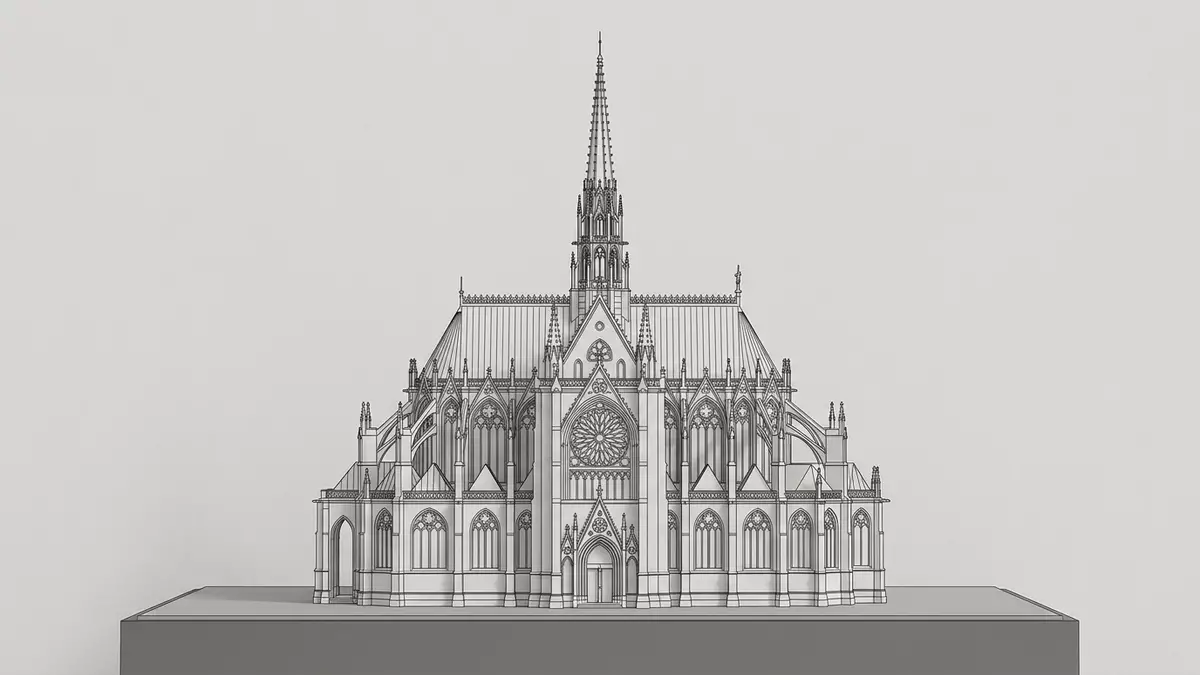
Sainte-Chapelle in Paris is a royal Gothic chapel where thirteenth-century stone structure gives way to extraordinary walls of stained glass, turning the upper interior into a volume defined by colour and light. Built in the thirteenth century within the medieval Palais de la Cité on the Île de la Cité, it formed part of the Paris residence of King Louis IX and was consecrated in 1248.
A royal chapel raised around relics and glass
Sainte-Chapelle stands inside the former royal palace complex on the Île de la Cité, on what is now 10 boulevard du Palais in Paris’s first arrondissement. The chapel was commissioned by King Louis IX of France, later canonised as Saint Louis, during his reign in the thirteenth century, as a palace chapel closely tied to the monarchy.royal chapel in the Gothic style The core fabric belongs to the Rayonnant phase of Gothic architecture, a style that emphasised verticality, delicate stonework and extensive use of stained glass.
The building is organised on two levels. The lower chapel, with a more enclosed feel and richly painted vaults and supports, was reserved for palace staff and household worship. Above it, the upper chapel forms a single tall space where the outer walls largely dissolve into glass, enclosing the relic shrine in a luminous envelope. The consecration of Sainte-Chapelle took place in 1248, marking the completion of a construction campaign that ran through the 1240s under Louis IX.consecrated in 1248 The thirteenth-century structure has undergone later restoration, but its basic layout as a two-storey royal chapel remains legible.
Rayonnant Gothic architecture reduced to essentials
Architecturally, Sainte-Chapelle pushes the Gothic vocabulary towards an almost skeletal frame. Stone walls in the upper chapel are reduced to narrow piers and tracery, so the stained glass windows occupy nearly the full height between floor and vaults. The Rayonnant style, named for the radiating effect of light through decorative tracery, finds a particularly pure expression here: elaborate window patterns, slender supports and an emphasis on uninterrupted wall surfaces of glass.masterpiece of the Rayonnant Gothic style Measurements given in several architectural descriptions place the chapel at roughly 36 m (118 ft) in length and more than 40 m (over 130 ft) in height, giving the narrow interior a pronounced vertical emphasis.measures 36 metres long
The lower chapel’s stone vaults rest on clustered columns, with capitals and ribs picked out in painted decoration that frames the more modest glazing. Above, the upper chapel’s vaults spring from slender shafts between the tall windows, further reducing the amount of visible wall. The building is usually attributed to the circle of Pierre de Montreuil, an architect associated with other major Gothic projects around Paris, situating Sainte-Chapelle within a network of high-medieval royal and ecclesiastical construction.architecte Pierre de Montreuil Structural stone, stained glass and polychrome surfaces work together to create a unified composition, in which the visual weight of glass far outweighs that of masonry.
Thirteenth-century stained glass as a continuous narrative
The most striking feature of Sainte-Chapelle is the ensemble of stained glass windows in the upper chapel, which form an almost continuous band around the space. Fifteen tall Gothic windows, including those around the eastern apse and the large west window, contain over a thousand individual narrative scenes in coloured glass.fifteen 13th century stained glass windows Descriptions by conservators and guides count 1,113 scenes in these windows, arranged in vertical panels that together create a sweeping biblical cycle and royal imagery.1,113 individual scenes
The narrative begins with episodes from Genesis and moves through Old Testament histories to the Passion of Christ, with additional emphasis on the discovery and transfer of relics associated with the Crucifixion. Borders and panels incorporate fleur-de-lis motifs and Castilian castles, linking the religious story to French royal heraldry and dynastic alliances.background and borders punctuated with fleurs-de-lis Much of the glass remains thirteenth-century work, complemented by nineteenth-century restorations, so the upper chapel reads as a single medieval narrative environment in coloured glass. The lower chapel, by contrast, carries later glazing with cycles focused on the Virgin Mary, underscoring the division between the palace staff’s space and the king’s relic chapel.
Visiting Sainte-Chapelle: what travellers from Western Europe should know
- Sainte-Chapelle stands on the Île de la Cité in central Paris, within the complex of the Palais de Justice; the closest Métro stations include Cité and Saint-Michel Notre-Dame.
- Access to the upper chapel is via a staircase from the lower level, and the interior involves standing on stone floors beneath high vaults rather than seated worship spaces.
- The chapel lies a short walk from the western end of the Île de la Cité, near the river Seine and Notre-Dame Cathedral, so it often forms part of a wider circuit around the historic island.
- The official language is French and the currency is the euro.
Searching for Sainte-Chapelle on social platforms
These links open searches for Sainte-Chapelle on each platform.
Frequently asked questions about Sainte-Chapelle
Where is Sainte-Chapelle located in Paris?
Sainte-Chapelle is located on the Île de la Cité in Paris, within the former royal palace complex at 10 boulevard du Palais in the first arrondissement.
What should visitors expect inside Sainte-Chapelle?
Visitors encounter a two-level Gothic chapel; the lower chapel is more enclosed and richly painted, while the upper chapel is dominated by thirteenth-century stained glass walls rising to ribbed vaults.
What makes Sainte-Chapelle distinctive among Paris’s churches?
The chapel’s Rayonnant Gothic architecture gives stained glass primacy over stone, and its upper windows together form an extensive thirteenth-century biblical and royal narrative in more than 1,000 individual scenes.


