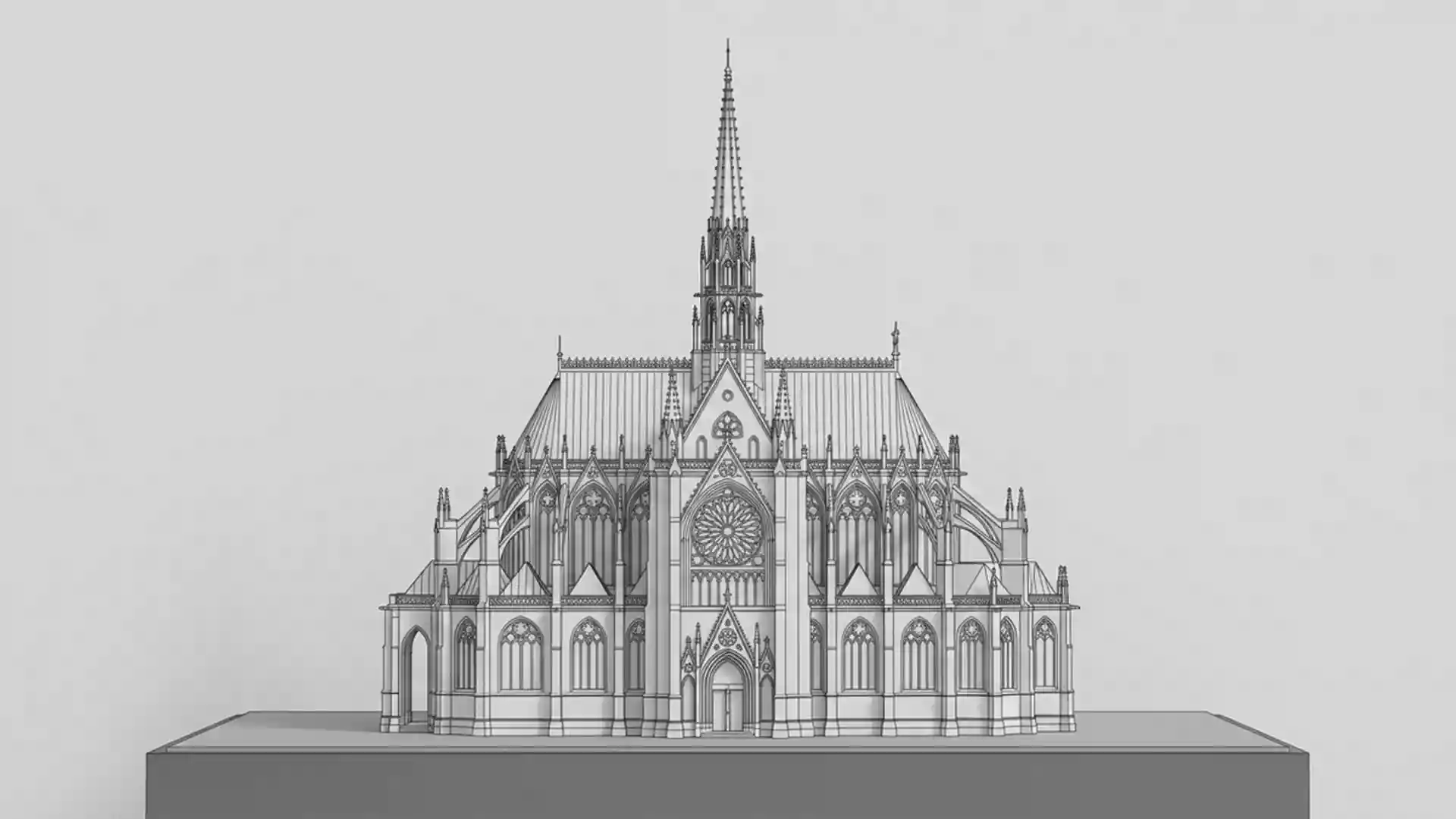
Sainte-Chapelle and the light-filled Gothic crown of Paris
Published on 09/01/2026 at 19:41 | Editorial responsibility: Rafael Müller, Editor-in-Chief AD HOC NEWS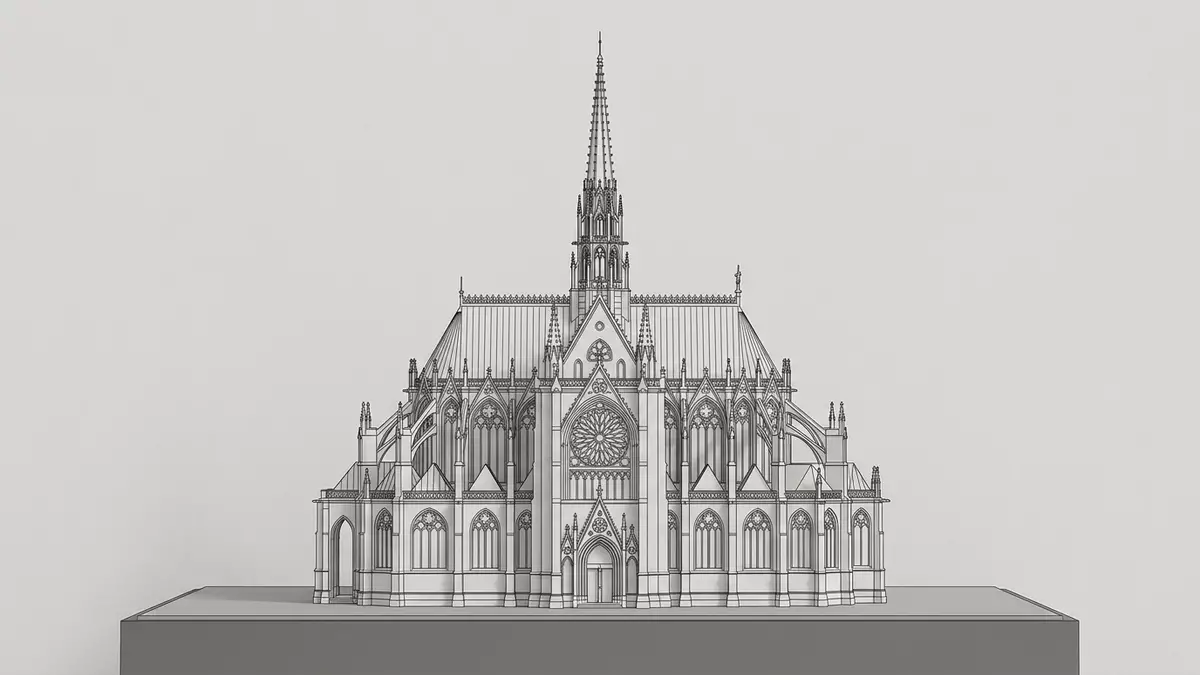
Sainte-Chapelle in Paris is a thirteenth-century royal chapel where Gothic architecture is pushed towards light, with coloured glass taking the place of much of the stone walling. Built within the medieval Palais de la Cité on the Île de la Cité, it was commissioned by King Louis IX of France and consecrated in 1248 as a shrine for relics of the Passion of Christ.
A royal reliquary rising above the palace courtyard
Sainte-Chapelle stands inside what is now the Palais de Justice complex on the Île de la Cité, the historic island in the Seine that formed the core of medieval Paris. The chapel was built between 1242 and 1248 at 8–10 boulevard du Palais, occupying a compact footprint yet rising to a considerable height over the surrounding palace buildings.Palais de la Cité The building is arranged on two levels: a lower chapel at courtyard level and an upper chapel raised above it, linked by a narrow internal stair.
Louis IX, later canonised as Saint Louis, ordered the creation of Sainte-Chapelle in the 1240s to house a group of Passion relics he had acquired from the Latin Emperor of Constantinople, including the Crown of Thorns and a fragment of the True Cross.Crown of Thorns and fragment of the True Cross Contemporary accounts and later documentation describe the chapel as a vast stone and glass reliquary, with the upper space conceived as an architectural treasure casket for these relics rather than as a conventional parish church.
Rayonnant Gothic and walls dissolved into stained glass
The architecture of Sainte-Chapelle is a prime example of the Rayonnant phase of Gothic design, a style characterised by an emphasis on verticality and on large traceried windows that admit extensive light. In the upper chapel the stone structure is reduced to slender piers and ribs, with the external walls largely filled by tall stained-glass windows divided by delicate mullions.Rayonnant Gothic style Seen from the interior, the effect is of a continuous band of glass running around almost the entire perimeter, broken only by the framing shafts and by the western rose window above the entrance.
The upper chapel’s glazing dates from the thirteenth century and forms one of the most extensive ensembles of medieval stained glass still preserved in situ in Europe.extensive ensemble of medieval stained glass Individual window panels depict biblical narratives from Genesis through the Passion, arranged in tall lancets rising above a painted stone dado. Measured from the floor of the upper chapel to the apex of the window heads, the main windows reach heights of around 15 m (49 ft), reinforcing the impression that the roof sits on a ring of coloured glass rather than on solid masonry walls.windows around 15 metres high
From medieval royal chapel to restored monument
When Sainte-Chapelle was completed and consecrated in 1248, it formed part of the royal residence complex, with the upper chapel reserved for the king and his close entourage and the lower chapel serving the wider household. The Palais de la Cité remained the principal seat of French royal power until the fourteenth century, and the chapel’s upper level functioned as a ceremonial and devotional space linked directly to the monarch’s apartments.royal chapel within the medieval palais
During the French Revolution in the late eighteenth century the chapel was secularised, its liturgical fittings removed and parts of its structure adapted to new uses, including storage for legal records. In the nineteenth century extensive restoration campaigns were undertaken under architects such as Félix Duban, Jean-Baptiste Lassus, Émile Boeswillwald and Eugène Viollet-le-Duc, repairing damaged masonry, recreating sculptural details and conserving the stained glass.nineteenth-century restoration campaigns Further work on the windows continued into the twenty-first century, with careful cleaning and consolidation aimed at preserving the medieval glass while maintaining the overall colour balance of the interior.
Visiting Sainte-Chapelle: what travellers from Western Europe should know
- Sainte-Chapelle stands on the Île de la Cité within the Palais de Justice complex at boulevard du Palais in central Paris and is reached via the surrounding streets and bridges over the Seine.
- The chapels are stacked vertically, with the upper chapel accessed by a fairly narrow stair; the ascent involves several flights of steps between the entrance level and the main stained-glass space.
- The official language is French and the currency is the euro (EUR).
Searching for Sainte-Chapelle on social platforms
These links open searches for Sainte-Chapelle on each platform.
Frequently asked questions about Sainte-Chapelle
Where is Sainte-Chapelle located in Paris?
Sainte-Chapelle stands on the Île de la Cité at boulevard du Palais, within the historic palace complex that today houses the Palais de Justice.
What should visitors expect inside Sainte-Chapelle?
Visitors encounter a two-level chapel, with a relatively plain lower space and an upper chapel where high stained-glass windows and painted stone surfaces create a predominantly luminous interior.
What makes Sainte-Chapelle distinctive among Gothic churches?
The chapel is distinctive for its Rayonnant Gothic design, in which slender stone supports and tall thirteenth-century stained-glass windows leave very little solid wall surface in the upper chapel.