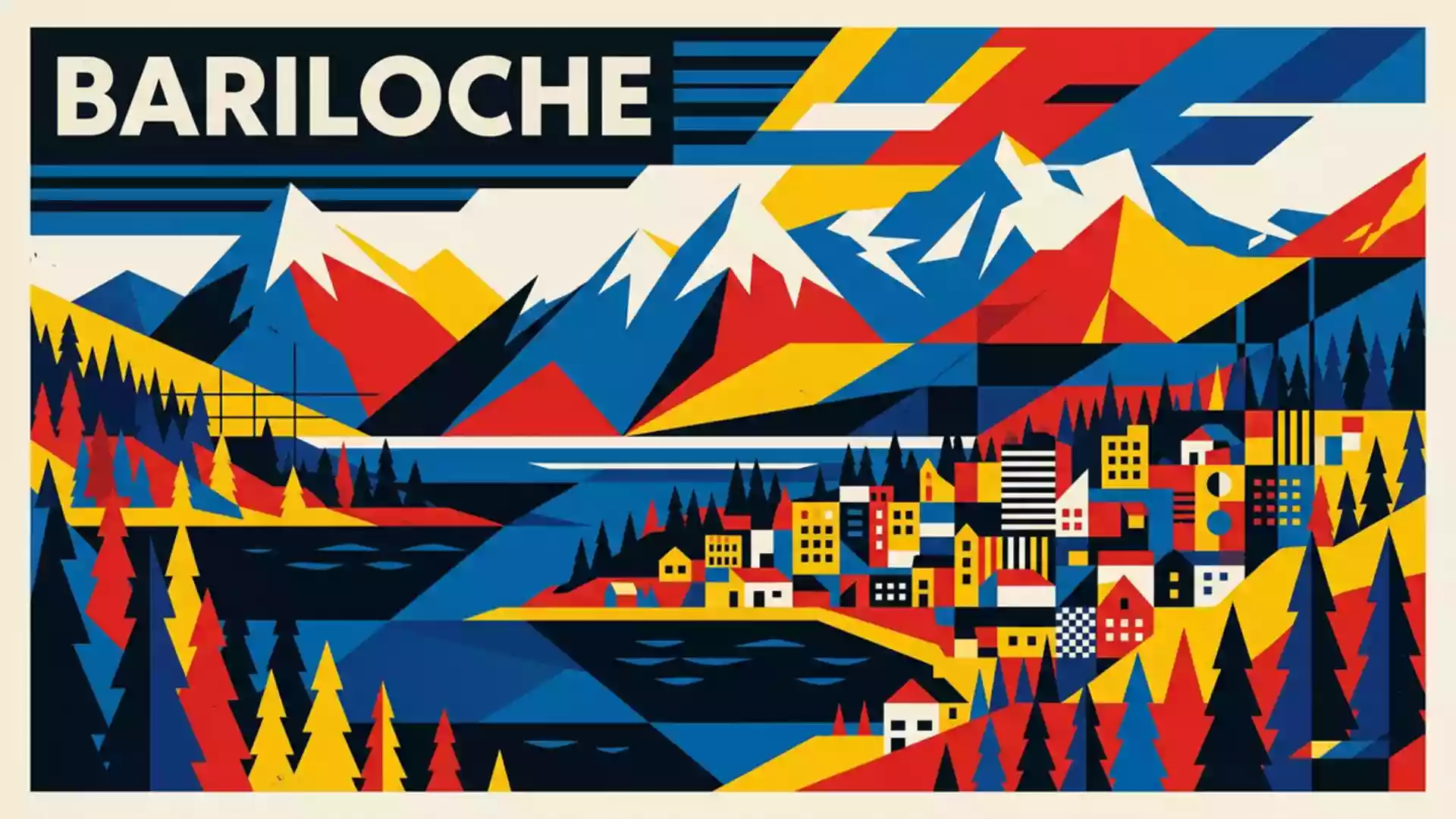
San Carlos de Bariloche between lake and Andes peaks
Published on 08/25/2026 at 22:54 | Editorial responsibility: Rafael Müller, Editor-in-Chief AD HOC NEWS
San Carlos de Bariloche stretches along the southern shore of Lake Nahuel Huapi, framed by the Patagonian Andes and embedded within Argentina’s oldest national park. The city in Río Negro province grew into a resort town in the twentieth century, mixing chalet-style architecture with a landscape of glaciers, forests and Andean peaks.
Lake Nahuel Huapi and the Andean setting
The setting of San Carlos de Bariloche is defined by water and mountains, with the city lining the southeastern shore of Lake Nahuel Huapi in the Andean lake district of Argentina. The lake lies within Nahuel Huapi National Park, a protected area created in 1934 that is recognised as Argentina’s first national parkin the Andean lake district. The combination of a sizeable lake and nearby peaks gives the city its characteristic contrast between broad stretches of water and steep slopes rising behind.
San Carlos de Bariloche stands at an elevation of around 770 m (2,526 ft) above sea level, with the surrounding ranges of the Patagonian Andes forming a backdrop of rugged summits and forested ridgeson the south shore of the Nahuel Huapi Lake. The wider region belongs to the Andean Patagonia, where glacial lakes, volcanic forms and southern beech forests shape the terrainon the shores of Lake Nahuel Huapi. Travellers arriving from Western Europe encounter a landscape that brings together long wooded peninsulas, rocky headlands and clear water extending towards the Chilean border.
From Patagonian outpost to alpine-style resort town
San Carlos de Bariloche lies in the province of Río Negro and serves as an important centre for the northern sector of Argentine Patagoniathe largest city in the Argentine province of Río Negro. The town’s development gathered pace in the early twentieth century, when new buildings, roads and services linked the lakeside settlement more firmly with the rest of Argentina and with routes into the Andes. Chalet-style construction became a distinctive feature after Swiss settlers and other European immigrants introduced wooden façades, steep roofs and stone bases around 1905chalet-type building construction. This gave the centre of San Carlos de Bariloche an alpine visual language that still contrasts with the Patagonian steppe beyond the lake district.
The city grew along the shore rather than concentrating in a compact grid, so many streets run parallel to Lake Nahuel Huapi with views towards the water and nearby peninsulasspread along the shores of Nahuel Huapi. San Carlos de Bariloche’s population passed 100,000 inhabitants in the early twenty-first century, reflecting its role as a regional hub with schools, public institutions and services as well as guesthouses and hotelsa city in the province of Río Negro. The combination of administrative functions and resort facilities means that everyday Patagonian life and seasonal tourism share the same streets and squares.
Outdoor routes from the city into Nahuel Huapi National Park
San Carlos de Bariloche stands inside the boundaries of Nahuel Huapi National Park, so the transition from urban blocks to protected landscape is relatively shortwithin Nahuel Huapi National Park. Peninsulas such as Llao Llao extend into Lake Nahuel Huapi with a mix of forest, bays and viewpoints, while ferries and excursion boats connect to inlets and islands on the lake system. The park’s lakes and rivers, fed by rain and snowmelt from the Andes, form a network of waterways that define much of the local geographyone of the most significant features in the area are the lakes and large rivers. Trails through southern beech forests and along shorelines give access to viewpoints where the Andes rise above the water surface.
Cerro Catedral is one of the main mountains associated with San Carlos de Bariloche and lies within the national park, around 19 km (12 mi) from the city centrea mountain located 19 kilometres from San Carlos de Bariloche. It functions as a major ski area in the southern winter, with lifts and pistes reaching into high terrain where views extend over Lake Nahuel Huapi and the surrounding ranges. Outside the snow season, the slopes serve as a starting point for hiking and other mountain activities, linking an urban base on the lakeshore with routes into the Andean landscape.
Visiting San Carlos de Bariloche: what travellers from Western Europe should know
- San Carlos de Bariloche stands in southwestern Argentina, in the province of Río Negro, on the southeastern shore of Lake Nahuel Huapi in the Andean Patagonia. The city is reached by road routes through the lake district and by flights to Teniente Luis Candelaria Airport.
- The urban area extends along the lakeshore and includes streets with noticeable gradients as they climb away from Lake Nahuel Huapi towards the hills. Some viewpoints and residential districts sit above the central area, reached by roads and paths that rise from the waterfront.
- Cerro Catedral lies to the west of the city within Nahuel Huapi National Park and functions as a developed mountain area for snow and summer activities, reached by road from San Carlos de Bariloche. Other routes lead to peninsulas and viewpoints inside the park, where paths may involve uneven ground and natural forest terrain.
- The official language is Spanish and the currency is the Argentine peso. Entry requirements depend on your nationality; UK travellers can check the FCDO travel advice at gov.uk/foreign-travel-advice, Irish travellers the Department of Foreign Affairs at ireland.ie.
Searching for San Carlos de Bariloche on social platforms
These links open searches for San Carlos de Bariloche on each platform.
Frequently asked questions about San Carlos de Bariloche
Where is San Carlos de Bariloche?
San Carlos de Bariloche is a city in the Argentine province of Río Negro, on the southeastern shore of Lake Nahuel Huapi in the Andean Patagonia.
What can visitors expect in and around the city?
Visitors find an elongated lakeside city with chalet-style buildings, views of the Patagonian Andes and quick access to forests, lakes and mountains inside Nahuel Huapi National Park.
What makes San Carlos de Bariloche distinctive among Patagonian cities?
San Carlos de Bariloche combines an alpine-style urban centre, a location inside Argentina’s first national park and nearby mountains such as Cerro Catedral rising above Lake Nahuel Huapi.