
Sanxia in Yichang, the Three Gorges river corridor
Published on 09/17/2026 at 19:25 | Editorial responsibility: Rafael Müller, Editor-in-Chief AD HOC NEWS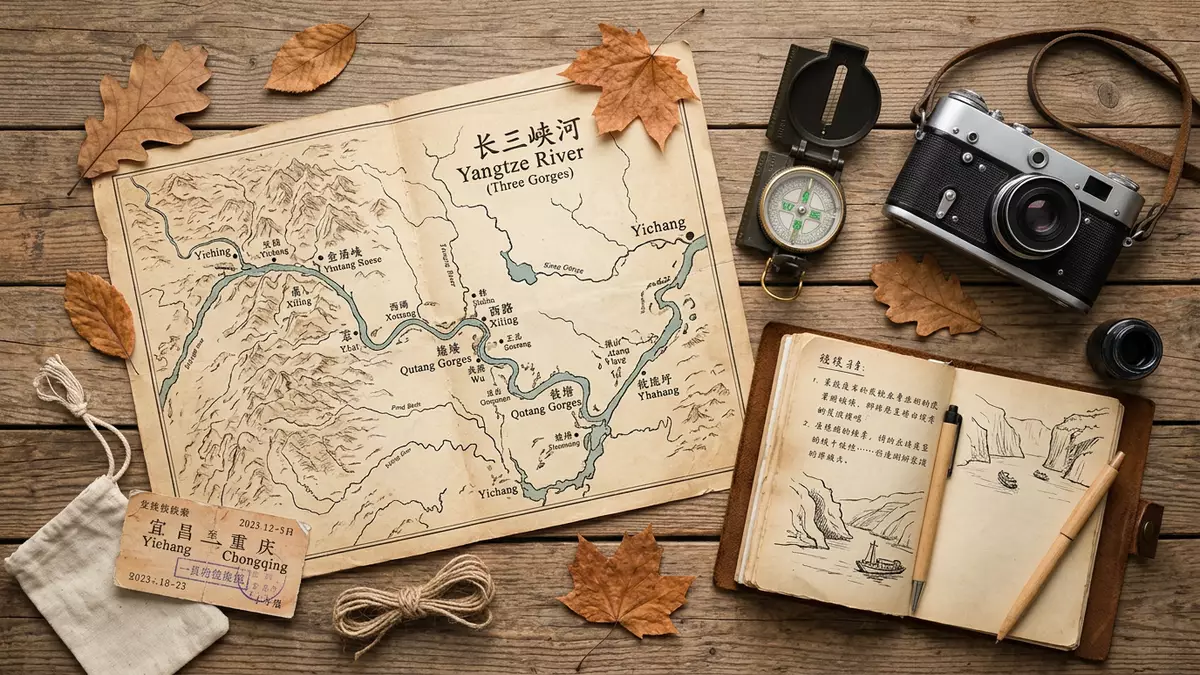
Sanxia near Yichang in Hubei Province is the Chinese name for the Three Gorges stretch of the Yangtze River, a long river corridor where cliff-lined gorges and the vast Three Gorges Dam form one continuous landscape in central China.Sanxia near Yichang The name Sanxia, meaning “Three Gorges”, refers to a sequence of river gorges rather than a single point on the map, tying the mountain country around Chongqing to the region near Yichang through one defined reach of the Yangtze.
The Three Gorges as a continuous river landscape
Sanxia denotes three contiguous gorges on the middle reaches of the Yangtze River: Qutang Gorge, Wu Gorge and Xiling Gorge, each carved into the surrounding rock as the river cuts through the uplands of central China.Qutang, Wu and Xiling Together they form a continuous corridor of deep water and steep valley sides between areas under the municipality of Chongqing in the west and the region around Yichang in Hubei Province in the east.corridor between Chongqing and Yichang
Along this reach the Yangtze narrows between mountain slopes and threads through successive gorge sections before emerging towards the plains near Yichang, giving Sanxia a strong sense of progression from enclosed, cliff-like valleys to more open river scenery.Three Gorges stretch of the Yangtze River Many references use the English phrase Three Gorges and the German term Drei Schluchten for this same section, mirroring the Chinese name Sanxia and underlining that it describes a defined part of the Yangtze rather than an administrative district.
The Three Gorges Dam within the Sanxia corridor
Near the eastern end of Sanxia, the Three Gorges Dam stands at Sandouping in Yiling District in Hubei Province, a short distance upstream from Yichang, anchoring the river corridor with large-scale hydroelectric engineering.Three Gorges Dam at Sandouping The structure, known in Chinese as S?nxiá Dàbà and in German as the Drei-Schluchten-Talsperre, combines a dam wall with a hydroelectric power station, ship locks and a ship lift on the Yangtze River.dam, power station, locks and ship lift
The dam forms the centrepiece of a broader project that many references describe as the Drei-Schluchten-Projekt, comprising the main dam at Sandouping, the impounded reservoir extending upstream through the Three Gorges region, associated power facilities and navigation works such as a multi-stage lock system and a ship lift.Drei-Schluchten-Projekt description This complex sits above an earlier dam at Gezhouba near Yichang, placing the major engineering works firmly within the eastern part of the Sanxia landscape on the Yangtze.
Sanxia as a cultural and geographic reference
Sanxia functions both as a geographic label and as a cultural shorthand for one of China’s best-known river landscapes, marking the section of the Yangtze where deep water, high valley sides and large dams share the same corridor.river gorges, dam and deep water The name links mountain country under the jurisdiction of Chongqing with the river region near Yichang, giving a single term to a stretch of the Yangtze that appears frequently in mapping, travel material and general descriptions of central China.
In multilingual contexts Sanxia sits alongside terms such as Three Gorges and Drei Schluchten, each pointing to the same trio of gorges and the same reach of river between Chongqing and Yichang.Sanxia as the Chinese name for the Three Gorges For travellers and readers in Western Europe, the term Sanxia therefore connects directly to familiar references to the Three Gorges on the Yangtze while retaining its specific Chinese meaning of “three gorges”.
Visiting Sanxia: what travellers from Western Europe should know
- Sanxia lies along the middle reaches of the Yangtze River between the metropolis of Chongqing and the region surrounding Yichang in Hubei Province in central China, with access commonly framed through these two cities.
- The terrain in the Three Gorges region combines steep valley sides, high slopes and deep river water, and viewpoints or river approaches may involve stairways, gradients and uneven ground along access paths.
- Sections of the Sanxia corridor near Yichang include major dam structures such as the Three Gorges Dam at Sandouping, where purpose-built viewing areas and transport links provide organised access to parts of the site.
- The official language in the Sanxia region is Chinese and the national currency is the Chinese yuan.
- Entry requirements depend on your nationality; UK travellers can check the FCDO travel advice at gov.uk/foreign-travel-advice, Irish travellers the Department of Foreign Affairs at ireland.ie.
Searching for Sanxia on social platforms
These links open searches for Sanxia on each platform.Frequently asked questions about Sanxia
Where is Sanxia in relation to Yichang and Chongqing?
Sanxia refers to the Three Gorges reach of the Yangtze River between the mountain country under the municipality of Chongqing and the region near Yichang in Hubei Province in central China.
What should travellers expect on a visit to the Sanxia region?
Travellers encounter a defined river corridor where the Yangtze passes through three linked gorges with steep valley sides and deep water, alongside major hydroelectric works such as the Three Gorges Dam near Yichang.
What makes Sanxia distinctive among Chinese river landscapes?
Sanxia is distinctive because the named trio of Qutang, Wu and Xiling gorges, together with large-scale dam engineering at Sandouping, form a single, widely recognised stretch of the Yangtze River connecting mountain country with the plains near Yichang.


