
Scalinata di Trinita dei Monti, Rome’s theatrical staircase
Published on 09/19/2026 at 19:20 | Editorial responsibility: Rafael Müller, Editor-in-Chief AD HOC NEWS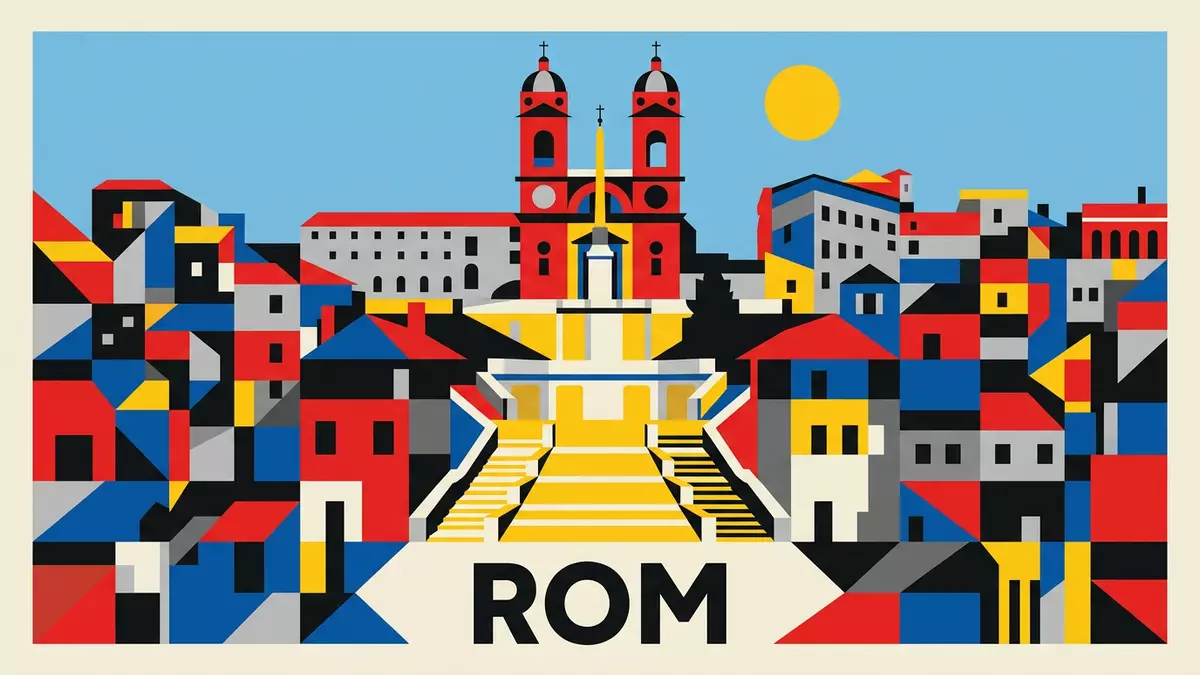
Scalinata di Trinita dei Monti in Rom, better known to many as the Spanish Steps, is a monumental stone staircase that turns a steep hillside into an urban theatre between Piazza di Spagna and the church of Trinita dei Monti. Built in the early eighteenth century in travertine, it links the square with the Pincio hill and frames one of Rome’s most recognisable views.
A baroque stairway between piazza and hill
The staircase climbs the slope between Piazza di Spagna at the base and Piazza Trinita dei Monti beside the late Renaissance church at the top, stitching together the lower streets and the higher Pincio terrace.Piazza di Spagna at the base The ensemble as visitors experience it today dates from the first half of the eighteenth century, when the long?planned project to connect the French church and the Spanish square finally took permanent stone form.built between 1723 and 1725
Scalinata di Trinita dei Monti is laid out in ramps that advance, divide and rejoin, creating landings and terraces where the staircase widens and narrows as it rises.ramps that divide and wind Its travertine steps and balustrades follow the natural gradient of the hill, turning what was once a bare, steep slope into a carefully staged route up to the church and the small square around the Sallustiano obelisk.
From French vineyard to Roman landmark
Long before the staircase was laid out, the hill above the square was tied to France through the monastery and church of Trinita dei Monti. Construction of the church began in the early sixteenth century under the patronage of French kings, and the building in its present form was consecrated in 1585 by Pope Sixtus V.consecrated in 1585 by Pope Sixtus V The façade with its two symmetrical bell towers, looking down over the future Spanish Steps, belongs to that sixteenth?century phase.
The staircase itself was realised in the early 1700s in a period when Rome’s urban landscape was being reshaped with scenographic routes and new squares. In travertine, Scalinata di Trinita dei Monti was completed in the 1720s and attributed to the Roman architect Francesco De Sanctis, whose design treated the hill as a long stage for movement and perspective.built in Rococo style between 1723 and 1726 The result is both a practical connection and a composition that links French and Spanish presences in Rome through stone, space and elevation.
Stone, terraces and the life of the steps
Seen from Piazza di Spagna, Scalinata di Trinita dei Monti rises in a series of flights and terraces, with balustrades tracing gentle curves across the slope. The staircase is in travertine, the cream?coloured limestone used for many Roman monuments, and its repeated flights give the ascent a rhythm that visitors recognise immediately.edificata in travertino At the top, the stairway meets the small square around the Sallustiano obelisk and the entrance to the church, marking a clear threshold between the commercial streets below and the quieter hill above.
Over the centuries the staircase has become one of the city’s emblematic urban spaces, appearing in paintings, literary descriptions and films that use its multiple levels as a setting. The long stone balustrades, the central ramps and the changing width of the stairway give it a theatrical character, turning everyday movement into a sequence of framed views both up towards Trinita dei Monti and down to Piazza di Spagna.
Visiting Scalinata di Trinita dei Monti: what travellers from Western Europe should know
- Scalinata di Trinita dei Monti stands in central Rom, connecting Piazza di Spagna with the square by the church of Trinita dei Monti on the Pincio hill.
- The staircase rises over a steep slope, and reaching the church from the square involves climbing a long succession of stone steps without mechanical assistance.
- The area around Piazza di Spagna is part of Rome’s historic centre, with narrow streets and a dense pattern of buildings immediately surrounding the base of the staircase.
- The official language is Italian and the currency is the euro.
Searching for Scalinata di Trinita dei Monti on social platforms
These links open searches for Scalinata di Trinita dei Monti on each platform.
Frequently asked questions about Scalinata di Trinita dei Monti
Where is Scalinata di Trinita dei Monti located in Rom?
Scalinata di Trinita dei Monti connects Piazza di Spagna in central Rom with the square around the church of Trinita dei Monti on the Pincio hill.
What can visitors expect when climbing the staircase?
Visitors climb a long sequence of travertine steps arranged in ramps and terraces, with changing views towards the church above and the square and streets below.
What makes Scalinata di Trinita dei Monti distinctive among Rome’s staircases?
Its eighteenth?century design in travertine, linking a major square with a hilltop church through curving ramps and terraces, gives it a strongly theatrical presence in the city.


