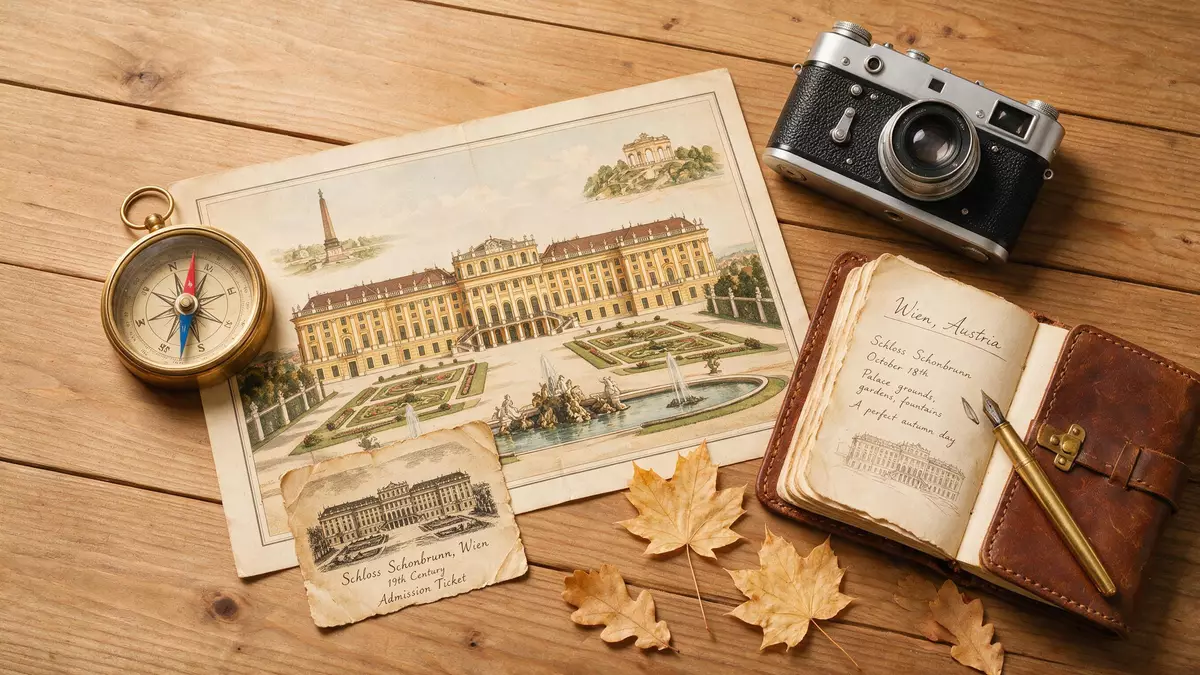
Schloss Schonbrunn and its Baroque landscape in Wien
Published on 08/12/2026 at 14:03 | Editorial responsibility: Rafael Müller, Editor-in-Chief AD HOC NEWS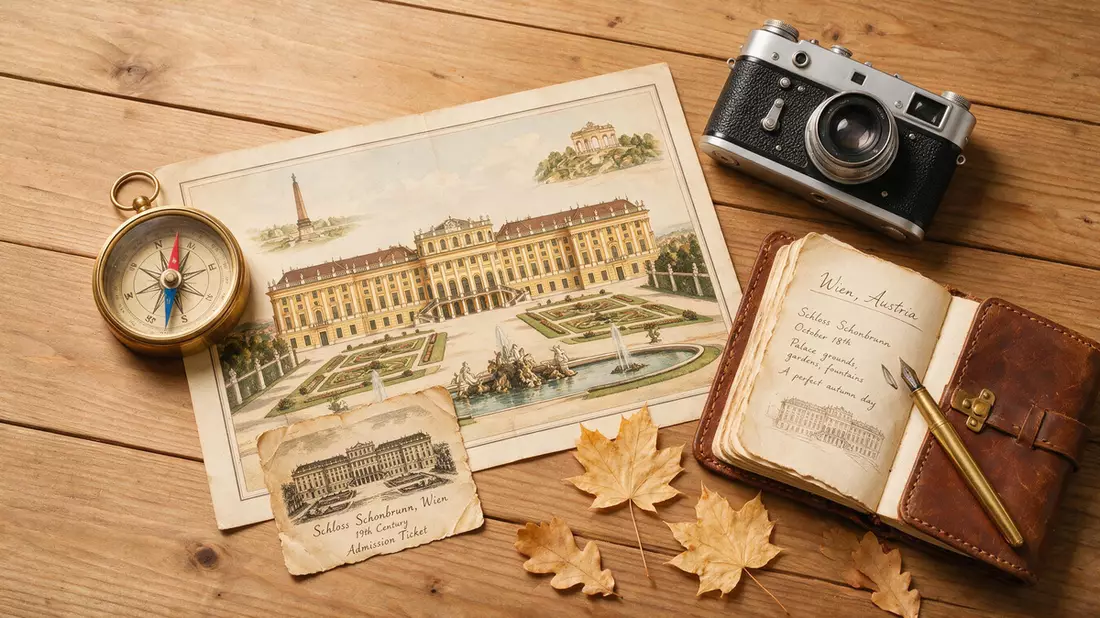
Schloss Schonbrunn in Wien is an expansive Baroque palace set within formal gardens, a place where architecture, landscape and court life once formed a single imperial stage. From the eighteenth century until 1918 it served as a residence of the Habsburg rulers, and its buildings and park still read as a continuous record of that dynasty’s presence in Austria.
An imperial summer residence shaped over centuries
Schloss Schonbrunn stands in Hietzing, in the western part of Wien, and developed from a hunting estate into the principal summer residence of the Habsburg family.summer palace of the Habsburgs The site entered Habsburg hands in the sixteenth century and the palace complex was largely formed at the end of the seventeenth and during the eighteenth century.residence of the Habsburg emperors
At the end of the seventeenth century Emperor Leopold I commissioned the architect Johann Bernhard Fischer von Erlach to design a Baroque lodge that grew into the palace visitors see today.commissioned Fischer von Erlach Later in the eighteenth century the architect Nicolaus Pacassi reworked the complex, and during the reign of Maria Theresa the residence became a central setting for court life, with interiors and gardens adjusted to imperial ceremonial and hospitality.Maria Theresa and Pacassi
Baroque palace architecture and Rococo interiors
The palace at Schonbrunn is long and low when viewed from the main forecourt, organised around courtyards and ceremonial axes that reflect Baroque planning. The exterior is characterised by repetitive window bays and a central emphasis, while the interiors display Rococo decoration, with stucco, gilding and textiles arranged in enfilades of reception rooms.Rococo-style palace Inside, suites such as the audience rooms and salons retain historic finishes that show the tastes of different Habsburg monarchs over more than two centuries.changing tastes of monarchs
Among these rooms certain spaces have become widely known: for example, the Great Gallery with its chandeliers and ceiling paintings, and the apartments associated with Maria Theresa, which illustrate imperial domestic life in the eighteenth century.important cultural monument The palace also contains smaller chambers and studies, laid out along corridors and side wings, that contrast with the grand halls and provide a sense of how a vast court residence functioned as both a formal and private space.
Gardens, Gloriette and the world’s oldest zoo
Behind the palace the Baroque gardens extend over a broad area, with straight avenues, clipped hedges and water features arranged around a main axial vista.palace and gardens ensemble These grounds include formal parterres close to the building and more distant landscape elements such as wooded sections and ornamental structures that punctuate the slopes and level terraces.Baroque and Rococo gardens
One of the most recognisable features of the park is the Gloriette, a garden pavilion placed on higher ground that forms a focal point for the main axis and offers views back towards the palace and across Wien.Gloriette pavilion Another historic attraction within the grounds is the Tiergarten Schönbrunn, the zoo founded in 1752, which is documented as the oldest zoo in continuous operation in the world and remains part of the wider Baroque ensemble of buildings, paths and planted areas.oldest zoo in Europe
Visiting Schloss Schonbrunn: what travellers from Western Europe should know
- Schloss Schonbrunn lies in Hietzing in western Wien and is reached by city transport, including stations on Vienna’s urban rail and U-Bahn network close to the palace grounds.
- The estate combines extensive formal gardens, broad gravel paths and lawns with stretches of woodland, so a visit can involve substantial walking across gently sloping terrain.
- The official language is German and the currency is the euro.
Searching for Schloss Schonbrunn on social platforms
These links open searches for Schloss Schonbrunn on each platform.
Frequently asked questions about Schloss Schonbrunn
Where is Schloss Schonbrunn located?
Schloss Schonbrunn is in Hietzing, the thirteenth district of Wien, in Austria, set west of the historic city centre.
What can visitors expect at Schloss Schonbrunn?
Visitors encounter a large Baroque palace with Rococo interiors, extensive formal gardens, ornamental structures and the historic Tiergarten Schönbrunn zoo within the grounds.
What makes Schloss Schonbrunn distinctive among European palaces?
The combination of palace, gardens and zoo has been recognised as a single Baroque ensemble and was placed on the UNESCO World Heritage List in 1996.