
Schloss Schonbrunn and its vast Baroque landscape in Wien
Published on 09/19/2026 at 13:15 | Editorial responsibility: Rafael Müller, Editor-in-Chief AD HOC NEWS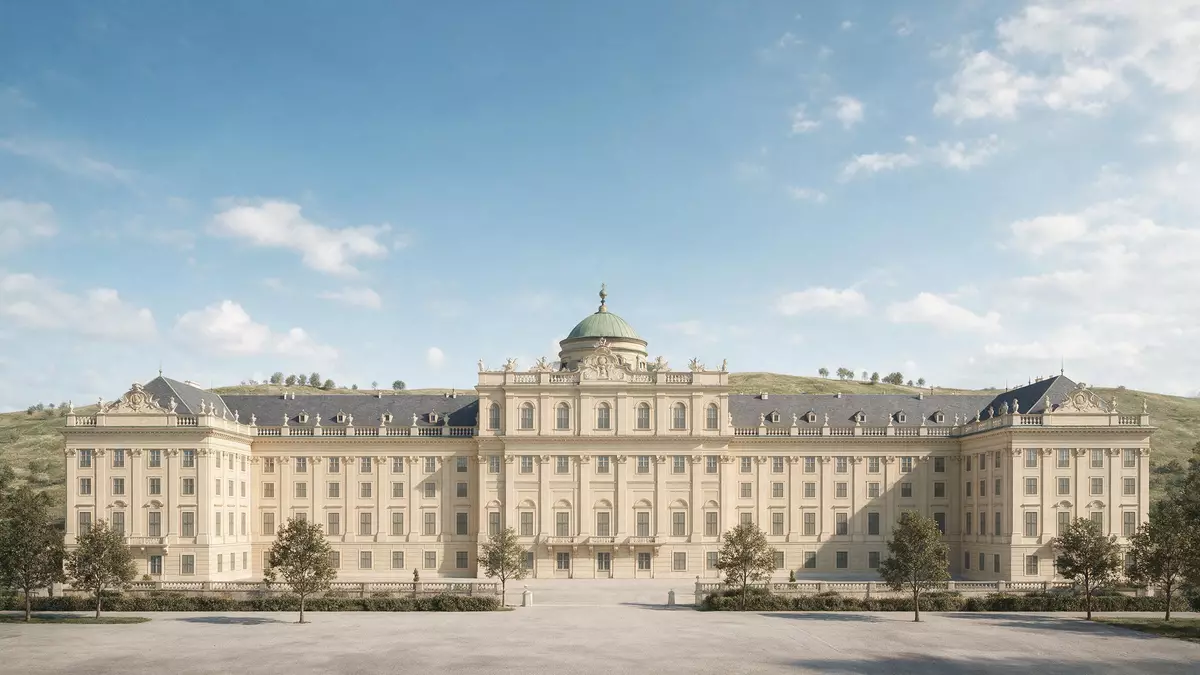
Schloss Schonbrunn in Wien is an imperial Baroque palace set within an extensive park, a place where architecture and landscape are woven into a single, planned ensemble from the Habsburg era. Its present form took shape between the late seventeenth and eighteenth centuries, and it later became part of Austria’s story as the monarchy gave way to a republic.
A Baroque summer residence shaped over centuries
Schloss Schonbrunn began as an imperial retreat on the western side of Wien, evolving from earlier country estates into a formal residence for the Habsburg rulers. The estate entered Habsburg hands in the sixteenth century, when Holy Roman Emperor Maximilian II acquired land on the floodplain of the Wien river beneath a low hill between Meidling and Hietzing.Maximilian II purchased the land in 1569 The name Schönbrunn, meaning “beautiful spring”, is linked to a spring associated with Emperor Matthias, whose discovery gave the estate the name it still bears.
The palace in its recognisable Baroque form was commissioned by Emperor Leopold I, who engaged the architect Johann Bernhard Fischer von Erlach towards the end of the seventeenth century.Leopold I commissioned Fischer von Erlach Construction of the main Baroque complex began in the 1690s, and by the early eighteenth century the palace formed a substantial residence with a central block and extended wings. In the mid eighteenth century, under Empress Maria Theresa, the architect Nikolaus von Pacassi reworked the interiors and façades, giving Schloss Schonbrunn much of the Rococo character visitors recognise in its state rooms today.Maria Theresa’s mid eighteenth-century remodelling
Architecture, interiors and the palace–garden ensemble
The palace itself forms a broad Baroque complex with a central block and projecting wings, aligned on an east–west axis that connects palace and gardens. The exterior presents long, ordered façades punctuated by evenly spaced windows and pilasters, with a main entrance facing a forecourt that opens towards the city. Inside, a sequence of ceremonial rooms reflects Habsburg taste in the eighteenth century, with decorative schemes that combine stucco, gilding and ceiling painting in Rococo style.Rococo-style palace interiors The building’s long axis continues into the park, where geometry and planting extend the architecture into landscape.
Schloss Schonbrunn and its gardens together form a Baroque ensemble that is formally recognised on the World Heritage List.Palace and Gardens of Schonbrunn The formal gardens immediately behind the palace follow symmetrical patterns of lawns and paths, while further upslope the landscape incorporates architectural features such as the Gloriette and grand fountains, including the Neptunbrunnen, which were added in the later eighteenth century by designers such as Johann Ferdinand Hetzendorf von Hohenberg.Gloriette and Neptunbrunnen in the park The result is a continuous composition linking palace, parterre and wooded slopes.
From imperial residence to public landmark
From the eighteenth century until 1918, Schloss Schonbrunn served as a principal summer residence of the Habsburg emperors, hosting court life and diplomatic encounters in its halls and gardens.Residence of the Habsburg emperors The palace bears traces of this political role in rooms adapted for councils, receptions and state apartments. Over three centuries, successive rulers altered decoration and use, but the overall Baroque layout remained largely intact, preserving a clear picture of imperial taste and ceremony.
With the end of the Austro-Hungarian Empire in 1918, Schloss Schonbrunn passed from dynastic possession into the ownership of the Republic of Austria, a transfer that marked its shift from court residence to heritage property.Palace passed to the Republic of Austria in 1918 In 1996 the Palace and Gardens of Schonbrunn were inscribed as a UNESCO World Heritage Site, recognising the ensemble as one of Europe’s most complete Baroque landscapes.UNESCO inscription in 1996 The site is now maintained as a cultural monument, with the palace interiors, formal gardens and wider park accessible for visits.
Visiting Schloss Schonbrunn: what travellers from Western Europe should know
- Schloss Schonbrunn stands in the Hietzing district on the western side of Wien, reached by city tram and underground lines that stop near the main gates.
- Moving between the palace and the upper park involves walking on sloping paths and broad stairways, and the grounds extend over a sizeable area for exploration on foot.
- The grounds include wooded sections, open lawns and formal garden layouts, so footwear suited to mixed surfaces is helpful when covering the distance between the palace and the higher viewpoints.
- The official language is German and the currency is the euro.
Searching for Schloss Schonbrunn on social platforms
These links open searches for Schloss Schonbrunn on each platform.Frequently asked questions about Schloss Schonbrunn
Where is Schloss Schonbrunn located?
Schloss Schonbrunn is in the Hietzing district in the western part of Wien, set between Meidling and Hietzing on land once lying by the Wien river.
What should visitors expect when exploring Schloss Schonbrunn?
Visitors encounter a Baroque palace with Rococo interiors, formal gardens directly behind the building and a broad park that rises towards the Gloriette and other eighteenth-century features.
What makes Schloss Schonbrunn distinctive among European palaces?
The combination of a large Habsburg summer residence, its Rococo decoration and a World Heritage-listed palace-and-garden ensemble makes Schloss Schonbrunn a distinctive Baroque landscape in Wien.


