
Seoraksan Gungnip Gongwon and the granite peaks above Sokcho
Published on 09/21/2026 at 13:32 | Editorial responsibility: Rafael Müller, Editor-in-Chief AD HOC NEWS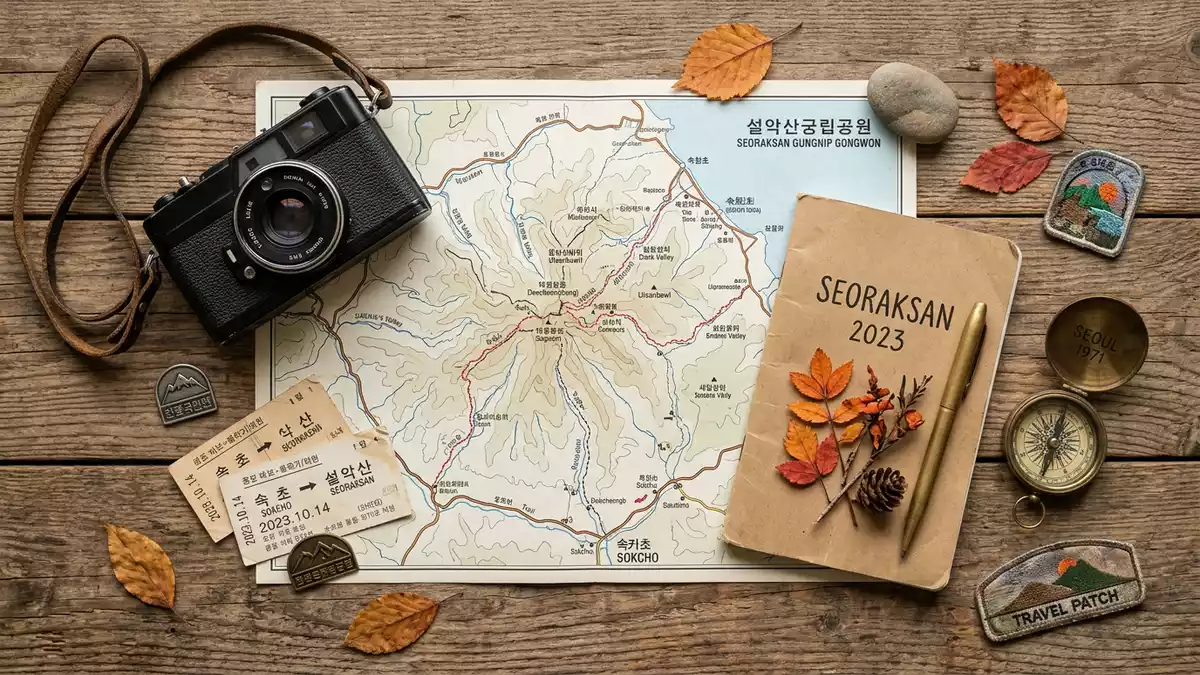
Seoraksan Gungnip Gongwon is the national park that protects Seoraksan, the highest mountain of the Taebaek range rising above Sokcho in Gangwon Province in eastern South Korea. The park is known for its granite peaks and steep valleys, with Daecheongbong summit reaching 1,708 m (5,604 ft) above sea level as the highest point on Seoraksan and in the Taebaek Mountains.Daecheongbong summit at 1,708 m The national park was designated in 1970 and covers roughly 398 km² of rugged terrain between the coastal city of Sokcho and the interior districts of Inje, Yangyang and Goseong.about 398 km² of rugged terrain
Granite ridges, deep valleys and contrasting sections
Seoraksan Gungnip Gongwon is primarily a mountain landscape carved into hard granite, which produces steep cliffs, jagged ridgelines and narrow gullies across the park. These granite formations stand above forested valleys that run down towards Sokcho and the East Sea, creating a marked contrast between bare rock on the upper slopes and dense vegetation below.rugged peaks, forests and granite formations The terrain belongs to the Taebaek Mountains, a long range that follows the eastern spine of the Korean Peninsula, and Seoraksan is its highest mountain.highest mountain of the Taebaek range
The park is traditionally divided into Outer Seorak on the eastern side and Inner Seorak further inland, each with its own character. Outer Seorak lies closest to Sokcho and includes the main entrance area at Sogongwon, where granite walls rise directly above the valley floor. Inner Seorak reaches into deeper gorges and higher interior slopes, with long ridges and more remote valleys extending towards Inje and Yangyang. Together these sections give Seoraksan Gungnip Gongwon a varied profile, from roadside viewpoints near Sokcho to long back-country routes along the crest of the Taebaek Mountains.park land across Sokcho, Yangyang, Inje and Goseong
Daecheongbong summit and classic hiking routes
Daecheongbong is the highest peak in Seoraksan Gungnip Gongwon and a central destination for hikers. It rises to 1,708 m (5,604 ft) and is recognised as the tallest summit of the Taebaek Mountains and the third-highest peak in South Korea, following Hallasan on Jeju and Jirisan in the southern ranges.third-highest peak in South Koreatallest summit of the Taebaek Mountains Trails to Daecheongbong typically climb from valley trailheads through mixed forest, then onto steeper rocky slopes and exposed ridges as they approach the summit area.
Beyond Daecheongbong, Seoraksan Gungnip Gongwon is known for a dense network of marked hiking paths ranging from short valley walks to demanding ridge traverses. Routes in the Outer Seorak section often combine forest paths with stairways and sections of rock underfoot, while Inner Seorak routes reach higher altitudes and run along longer ridgelines. Many paths connect to mountain shelters or information centres, such as the Namseoraksan Information Centre at the start of a 15 km (9.4 mi) ascent towards Daecheongbong with substantial elevation gain.15 km trail from Namseoraksan Information Center The combination of steep gradients, stone steps and rocky ground makes Seoraksan a destination for fitted walking or hiking rather than casual strolling.
A national park above a gateway city
Seoraksan Gungnip Gongwon holds formal status as one of South Korea’s national parks and appears on international conservation lists for its mountain ecosystems. The park’s designation in 1970 marked the protection of Seoraksan’s granite peaks, forests and river valleys over a large area spanning several local jurisdictions, including Sokcho, Yangyang, Inje and Goseong.designated as a national park in 1970listed area and jurisdictions Within this protected area, rivers cut down from the high slopes towards the coast, and forest types change with altitude, giving the park a layered appearance from the sea.
Sokcho is the main urban gateway to Seoraksan Gungnip Gongwon, lying on the East Sea coast just outside the Outer Seorak section. City buses run from Sokcho into the Seorak-dong valley and up to the park gates, linking coastal streets and bus terminals with the national park entrance.Sokcho City bus towards Seorak-dong and the gates From the entrance area, paths spread into the valleys and up the lower slopes, and the presence of Sokcho means that visitors can combine mountain walks with time on the city’s beaches and harbour.
Visiting Seoraksan Gungnip Gongwon: what travellers from Western Europe should know
- Seoraksan Gungnip Gongwon lies inland from Sokcho on the East Sea coast in Gangwon Province, and is reached overland from Sokcho by local buses heading towards Seorak-dong and the park entrance.
- Trails in Seoraksan Gungnip Gongwon include long ascents on mountain paths, stairways and stone steps, with significant altitude changes and sections of rocky ground that require steady footing.
- The landscape of Seoraksan Gungnip Gongwon is mountainous, with peaks rising above 1,700 m (5,577 ft), and weather conditions at higher altitudes can differ markedly from those at sea level in Sokcho.
- The official language is Korean and the currency is the South Korean won.
- Entry requirements depend on your nationality; UK travellers can check the FCDO travel advice at gov.uk/foreign-travel-advice, Irish travellers the Department of Foreign Affairs at ireland.ie.
Searching for Seoraksan Gungnip Gongwon on social platforms
These links open searches for Seoraksan Gungnip Gongwon on each platform.Frequently asked questions about Seoraksan Gungnip Gongwon
Where is Seoraksan Gungnip Gongwon located?
Seoraksan Gungnip Gongwon lies in Gangwon Province in eastern South Korea, inland from the coastal city of Sokcho and extending towards Inje, Yangyang and Goseong.
What should travellers expect when visiting Seoraksan Gungnip Gongwon?
Travellers encounter a mountainous national park with granite peaks, forested valleys and marked trails that include steep stairways, rocky paths and significant altitude differences.
What makes Seoraksan Gungnip Gongwon distinctive among South Korea’s mountain parks?
Seoraksan Gungnip Gongwon is distinctive for Seoraksan’s status as the highest mountain of the Taebaek range, the 1,708 m Daecheongbong summit and its extensive granite ridges above Sokcho.


