
Shahi Qila and the layered citadel of Lahore
Published on 09/19/2026 at 13:38 | Editorial responsibility: Rafael Müller, Editor-in-Chief AD HOC NEWS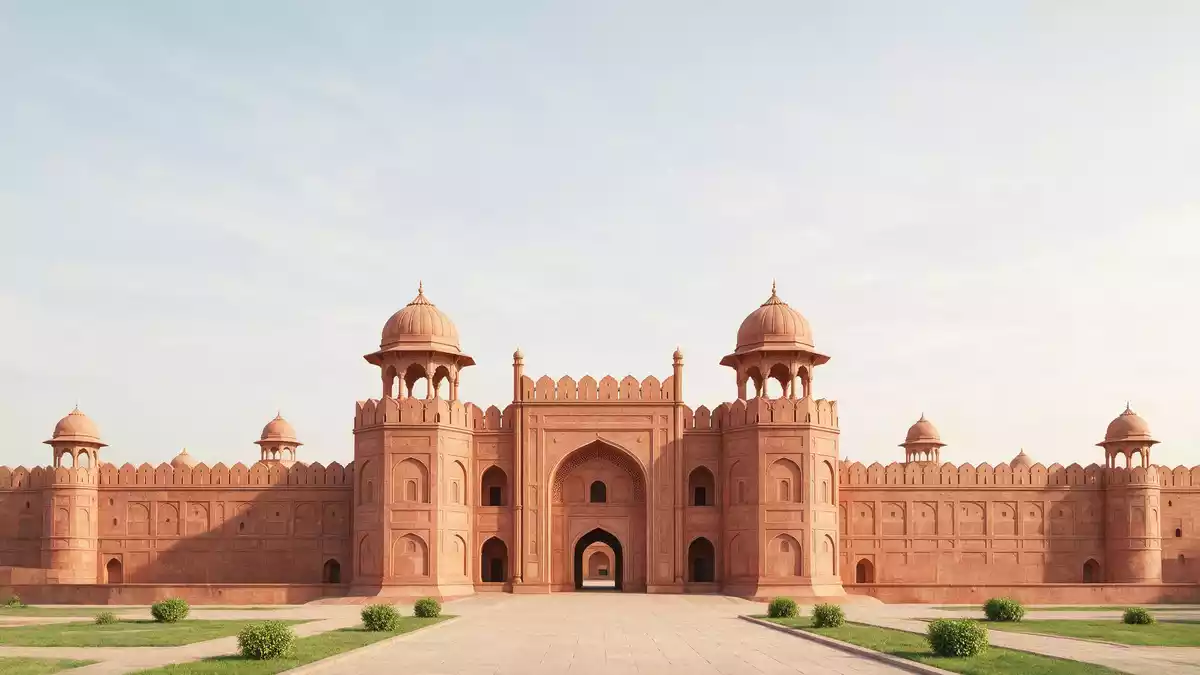
Shahi Qila in Lahore is a layered citadel of brick, red sandstone and marble, tied to the Mughal period and the name of Akbar. The surviving complex carries the memory of a long fortified site, but its present face belongs above all to the sixteenth and seventeenth centuries.
Shahi Qila’s Mughal layers in Lahore
The strongest visual impression comes from the fort’s mixed fabric. Brick masonry, red sandstone and white marble sit together in a compound that was enlarged under Mughal rulers including Akbar, Jahangir, Shah Jahan and Aurangzeb.
That sequence matters because the fort is not a single-phase monument. It reads as a citadel shaped by successive imperial additions, with each layer leaving its own character in plan, material and finish.
Akbar, Jahangir and Shah Jahan at the fort
Akbar’s rebuilding in 1566 gives Shahi Qila one of its clearest historical anchors, and the name of the emperor remains central to the site’s identity. The fort in Lahore is also linked with later Mughal phases, especially the refinement of courts and palace buildings under Jahangir and Shah Jahan.
Shah Jahan’s marble work stands out within the larger defensive mass, while Aurangzeb is associated with the Alamgiri Gate. The result is a complex that combines state power, domestic court architecture and ceremonial entry within one enclosure.
From fortress to heritage ensemble
Shahi Qila belongs to the wider historic fabric of Lahore, where the walled city and the fort form the city’s most legible imperial core. The site is also part of the UNESCO-listed Fort and Shalamar Gardens ensemble, a formal designation that fixes its place in Mughal architectural history.
The ensemble makes the fort easier to read as a cultural document rather than as a single landmark. Its walls, gateways and palace structures preserve the visible sequence of rule that shaped Lahore under the Mughals.
Visiting Shahi Qila: what travellers from Western Europe should know
- Shahi Qila stands at the northern end of Lahore’s Walled City. It is reached through the dense urban fabric around the historic centre, with the Alamgiri Gate marking a major point of entry.
- The fort is a large enclosed complex with substantial walls and internal courtyards. The ground underfoot is paved in parts and uneven in others, so the walk follows the site’s old masonry surfaces.
- Several named monuments belong inside the enclosure, including the Alamgiri Gate and the Shish Mahal. Their presence gives the place a sequence of gateways, halls and palace rooms rather than a single viewpoint.
- The official language is Urdu and the currency is the Pakistani rupee. Entry requirements depend on your nationality; UK travellers can check the FCDO travel advice at gov.uk/foreign-travel-advice, Irish travellers the Department of Foreign Affairs at ireland.ie.
Searching for Shahi Qila on social platforms
These links open searches for Shahi Qila on each platform.
Frequently asked questions about Shahi Qila
Where is Shahi Qila?
It stands in Lahore, at the northern edge of the Walled City. The fort is part of the city’s historic imperial core.
What does a visit involve?
The place is an enclosed fort with gates, courts and palace buildings, so the experience centres on moving through a sequence of masonry spaces. The setting is urban and historic rather than open or landscaped.
What makes Shahi Qila distinctive?
Its distinguishing feature is the combination of Mughal layers in one fortified complex, from Akbar’s rebuilding to later additions by Jahangir, Shah Jahan and Aurangzeb. The materials and monuments preserve that sequence in visible form.


