
Sigiriya and its lion rock fortress above the Sri Lankan plain
Published on 08/15/2026 at 14:52 | Editorial responsibility: Rafael Müller, Editor-in-Chief AD HOC NEWS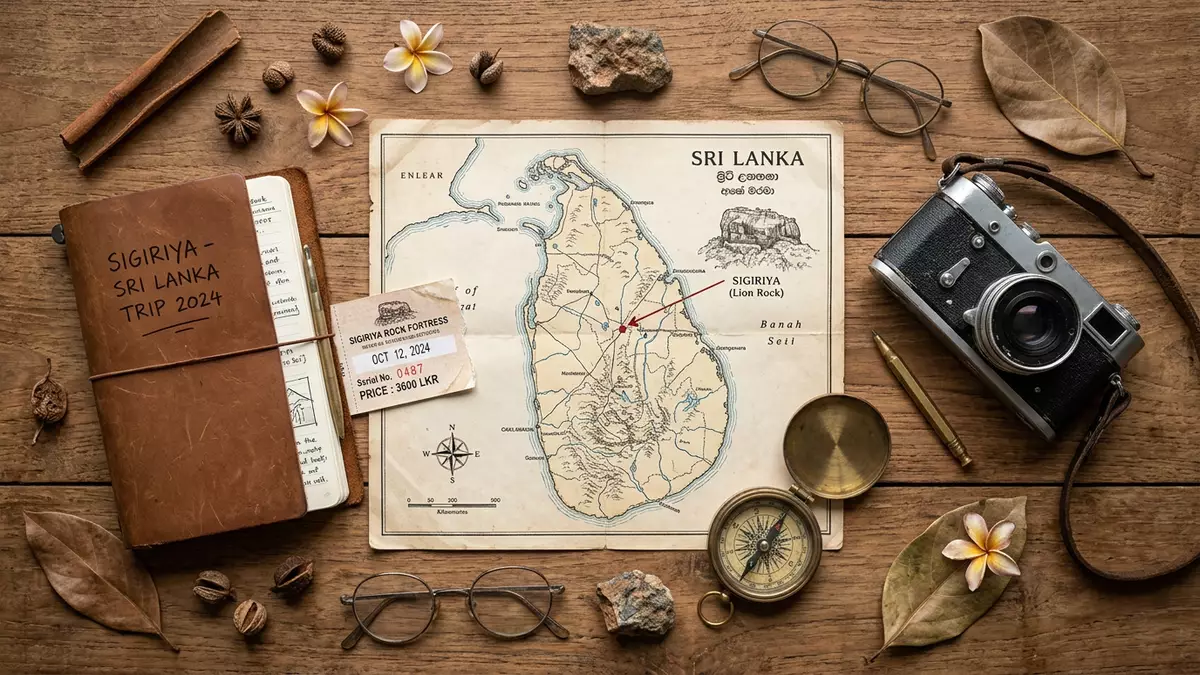
Sigiriya in central Sri Lanka centres on a vast column of dark rock that carries the remains of a fifth?century royal palace high above the surrounding plain. In and around this rock fortress, stone stairways, painted cliff walls and delicate water gardens sketch out an entire ancient capital in three dimensions.
Lion Rock and the fifth?century royal citadel
The heart of Sigiriya is a single granite or gneiss outcrop that rises around 180 to 200 m (590 to 656 ft) above the surrounding landscape.The rock towers above the plain and forms a natural pedestal for the ruins of an ancient palace complex. The site lies in Sri Lanka’s Central Province, in the northern part of the Matale District near the town of Dambulla, placing it firmly inside the island’s cultural heartland.The Ancient City of Sigiriya is recorded in this area
Sigiriya is closely tied to the reign of King Kassapa I (also written Kasyapa), who ruled Sri Lanka from 477 to 495 CE and made this isolated rock the centre of his capital.Kassapa I is named as the builder of the fortress palace The summit holds the foundations of his palace and royal compounds, laid out across the relatively level top of the rock with stone walls and pools marking separate courts. Sigiriya was inscribed as a cultural UNESCO World Heritage site in 1982, recognising both this royal architecture and the wider ancient city at its base.The UNESCO listing dates from 1982
Terraced ascent, lion gateway and painted cliff walls
Reaching the top of Sigiriya means following a staged ascent that was set out in the fifth century. At ground level, remains of brick ramparts and earthworks define the lower city, from which stone stairways and terraced paths begin to climb the flanks of the rock.A series of galleries and staircases leads up the rock Higher up, narrow walkways cling to the cliff face, bordered in places by mirror?smooth plastered walls that once reflected both visitors and paintings.
Sigiriya is particularly renowned for its surviving frescoes, which decorate a protected stretch of the rock face partway up the ascent.These paintings depict richly adorned female figures against cloud?like backgrounds Further along the route, the path passes through a monumental gateway formed by a pair of colossal lion paws sculpted from brick and plaster at the base of the upper stairway.The lion figure once framed the entrance to the summit The name “Lion Rock” reflects this sculpted animal form, which originally included a full lion figure built against the rock.
Gardens, waterworks and later monastic life
Below the rock itself, Sigiriya spreads out into a carefully structured landscape of gardens, reservoirs and channels that show a high level of fifth?century planning. Straight, axial pathways align with the rock and are flanked by pools and embankments, forming what is widely described as one of the earliest surviving examples of planned royal gardens in South Asia.The layout combines water gardens, boulder gardens and terraced gardens Stone?cut channels and ponds collect and distribute water across the site, linking the lower gardens to the moats and reservoirs that ring the rock.
After Kassapa I’s defeat in 495 CE, the royal capital at Sigiriya lost its political role, and the rock and its surroundings took on a religious function as a Buddhist monastery complex.Monastic use continued for many centuries Stone shelter caves with drip?ledges and inscriptions on the slopes below the main rock indicate that Buddhist monastic communities were established in the area even before Kassapa, and they continued to use parts of the site after the royal palace fell into ruin.These caves form part of the broader ancient city
Visiting Sigiriya: what travellers from Western Europe should know
- Sigiriya stands in Sri Lanka’s Central Province, north of Kandy, between the settlements of Dambulla and Habarana; it forms part of the country’s Cultural Triangle.
- The ascent to the summit involves a long series of stairways, metal walkways fixed to the cliff and terraced paths that gain several hundred metres in elevation.
- The approach across the gardens runs on generally level ground, but exposed rock steps and narrow flights higher up require steady footing and comfort with heights.
- The official language is Sinhala alongside Tamil, and the currency is the Sri Lankan rupee.
- Entry requirements depend on your nationality; UK travellers can check the FCDO travel advice at gov.uk/foreign-travel-advice, Irish travellers the Department of Foreign Affairs at ireland.ie.
Searching for Sigiriya on social platforms
These links open searches for Sigiriya on each platform.
Frequently asked questions about Sigiriya
Where is Sigiriya and what kind of place is it?
Sigiriya is an ancient rock fortress and former royal capital in Sri Lanka’s Central Province, built around a towering column of rock near Dambulla.
What should visitors expect when climbing Sigiriya?
Visitors follow a stepped route through gardens, along cliff?side walkways and past rock frescoes before reaching the exposed summit ruins of the fifth?century palace.
What makes Sigiriya distinctive among historic sites?
Sigiriya combines a dramatic freestanding rock, a lion?shaped gateway, elaborate water gardens and extensive painted cliff walls into a single fifth?century royal and monastic landscape.


