
Sigiriya and its lion rock fortress rising above Sri Lanka’s plains
Published on 09/17/2026 at 18:02 | Editorial responsibility: Rafael Müller, Editor-in-Chief AD HOC NEWS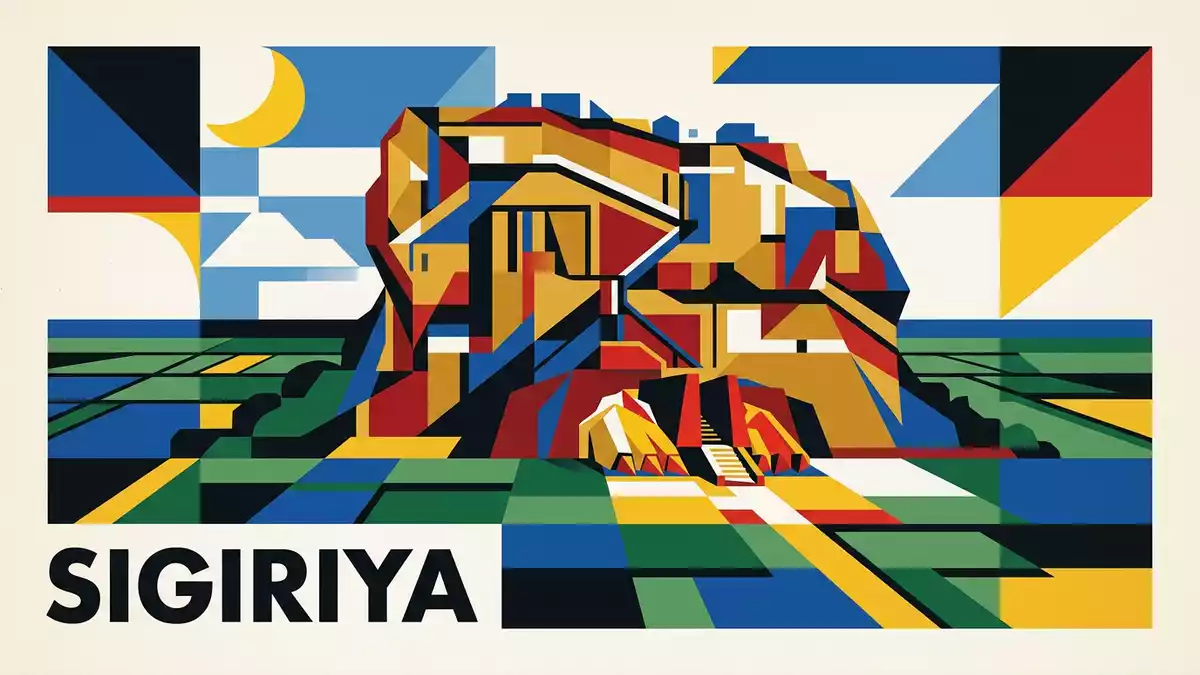
Sigiriya in central Sri Lanka is dominated by a vast rock fortress where King Kashyapa I built his capital in the late fifth century, crowning the summit with a palace complex and gardens. The site, inscribed as the Ancient City of Sigiriya on the UNESCO World Heritage List in 1982, combines a towering monolithic rock with formal water gardens and archaeological remains laid out across the surrounding plain.
The lion rock and its fifth?century royal city
The centre of Sigiriya is a column of granite rising about 180 m (590 ft) above the surrounding terrain, a landmark widely known as Lion Rock for the colossal sculpted lion that once framed the final entrance to the summit.a colossal column of granite At its apex lie the ruins of a royal palace built by the Sinhalese king Kashyapa I, whose reign from 477 to 495 CE marks the site’s golden age as a fortified capital.king Kashyapa I
Approaching the rock, visitors first encounter the remains of a planned city laid out around its base, where axial avenues lead towards ornamental pools and terraces aligned on the monolith.one of the most sophisticated royal complexes Archaeological evidence points to the use of caves and rock shelters in this area by Buddhist monks as early as the third century BC, long before Kashyapa chose the summit for his palace.earliest evidence of human habitation
Gardens, frescoes and the Mirror Wall
At the foot of the rock, the remains of landscaped water gardens spread out in a geometric pattern, with pools, channels and island?like platforms aligned on the central axis leading towards the cliff.fortress, gardens, and masterworks of engineering These gardens are an important example of early urban design in South Asia, combining hydraulic works with ornamental planting and carefully positioned pavilions within the royal precinct.gardens and palace
Climbing the rock itself, the path passes a polished plastered surface known as the Mirror Wall, once finished to a sheen and later covered with inscriptions.the "Mirror Wall" Nearby, on the western face of the rock, fragments of vivid frescoes survive from a larger cycle of paintings, depicting figures whose colours and contours remain visible despite centuries of exposure.decorated its sides with colourful frescoes
Monastery, rediscovery and World Heritage status
After Kashyapa’s death in 495 CE, Sigiriya ceased to serve as a royal capital, and the complex became a Buddhist monastery that remained active for many centuries before being abandoned around the fourteenth century.functioned as a monastery until the 14th century The surrounding jungle gradually reclaimed the site, and its ruins entered local memory until nineteenth?century surveys and excavations brought them back into documented history.
Sigiriya’s significance as an ancient stronghold and planned royal city led to its inscription on the UNESCO World Heritage List in 1982 as a masterpiece of urban planning and landscape design.inscribed 1982 The site now forms part of Sri Lanka’s so?called Cultural Triangle, a cluster of archaeological locations in the country’s interior that trace successive capitals and religious centres.
Visiting Sigiriya: what travellers from Western Europe should know
- Sigiriya lies in the Central Province of Sri Lanka, near the town of Dambulla; road links connect the area with Colombo and other major settlements.
- The ascent to the summit involves stairways attached to the rock face and metal staircases near the lion platform, requiring steady footing and comfort with heights.
- The lower gardens and approach paths extend across uneven stone surfaces and earth tracks, so footwear suited to warm weather and rough ground is useful.
- The official language is Sinhala and the currency is the Sri Lankan rupee.
- Entry requirements depend on your nationality; UK travellers can check the FCDO travel advice at gov.uk/foreign-travel-advice, Irish travellers the Department of Foreign Affairs at ireland.ie.
Searching for Sigiriya on social platforms
These links open searches for Sigiriya on each platform.
Frequently asked questions about Sigiriya
Where is Sigiriya located in Sri Lanka?
Sigiriya is situated in Sri Lanka’s Central Province, in the northern Matale District near Dambulla, with the rock fortress rising above the surrounding plains.
What should a visit to Sigiriya involve?
A visit combines walking through ancient water gardens at the base, climbing stairways attached to the rock, and exploring palace ruins on the summit plateau.
What makes Sigiriya distinctive among historic sites?
Sigiriya stands out for its combination of a fifth?century royal capital, a towering granite monolith and planned gardens that integrate architecture, hydraulic works and landscape.


