
Sigiriya and its lion rock fortress rising above Sri Lanka’s plains
Published on 09/18/2026 at 18:28 | Editorial responsibility: Rafael Müller, Editor-in-Chief AD HOC NEWS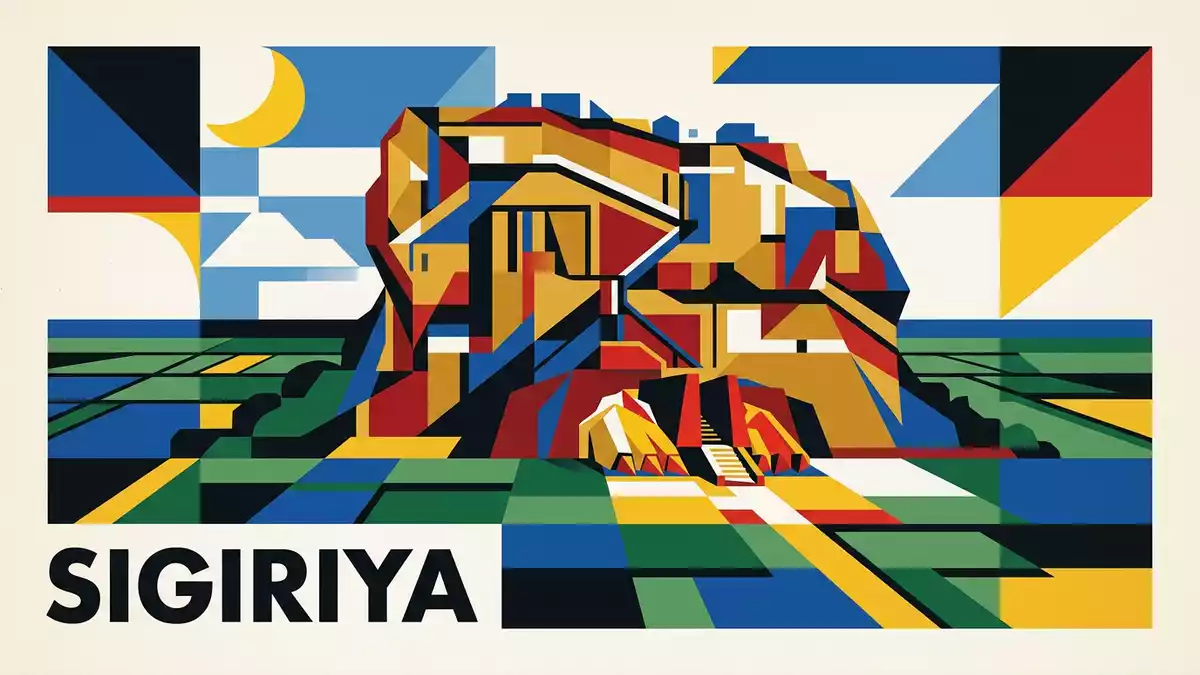
Sigiriya in central Sri Lanka is dominated by a sheer granite rock that carries the ruins of a fifth?century royal complex on its summit. Rising far above the surrounding plains, this “Lion Rock” combines palace remains, gardens and celebrated frescoes in a single vertical landscape that has earned recognition as the Ancient City of Sigiriya on the UNESCO World Heritage List since 1982.Ancient City of Sigiriya
A granite monolith turned royal citadel
Sigiriya stands in Sri Lanka’s Central Province, near the town of Dambulla, where a massive column of granite rises abruptly from the plain.massive column of granite The rock reaches roughly 180 m (590 ft) above its base, forming a flat?topped summit that could be adapted as a platform for a palace and defensive stronghold.rock height above plain
In the late fifth century, King Kashyapa I, who ruled between 477 and 495, established his capital on this monolith and built an elaborate palace complex at the top.built in the 5th century CE by King Kasyapa I The remains on the summit include brick foundations, terraces and pools arranged across several acres of level rock, giving a sense of the scale of the royal residence that once occupied the site.acres of ground at the summit
Lion imagery, frescoes and the ascent through the rock
The best known feature of Sigiriya is the monumental lion motif that gives the rock its name. At a terrace below the summit, a pair of large stone and brick paws frame the start of the final stairway, marking the position where a massive sculpted lion once formed the entrance to the upper palace complex.galleries and staircases emerging from the mouth of a gigantic lion Visitors reach this terrace via a sequence of stairways and galleries cut into and attached to the rock face, with metal and stone structures clinging to the granite as they climb.
Halfway up Sigiriya’s western face, a sheltered rock wall preserves a celebrated series of frescoes dating to the fifth century.Sigiriya Frescoes These paintings depict richly adorned female figures against a reddish background and form part of a once much larger decorative programme on the rock. Nearby, a polished plastered surface known as the “mirror wall” runs along a section of the path; it carries ancient inscriptions in the Sinhalese language, recording visitors’ impressions in centuries following Kashyapa’s reign.ancient texts in the Sinhalese language
Gardens, waterworks and the wider cultural landscape
At the foot of Sigiriya, formal gardens spread out from the base of the rock, aligning pools, channels and stone pathways with views to the summit. These grounds form part of an integrated palace complex that brings together boulder gardens, terraced slopes and structured water features, illustrating advanced approaches to urban planning and hydraulic engineering in fifth?century Sri Lanka.ancient urban planning and landscape architecture
Sigiriya lies within Sri Lanka’s so?called Cultural Triangle, a region of historic capitals and religious sites linked by roads that connect it with places such as Colombo and the international airport near Katunayake.Cultural Triangle of Sri Lanka Over centuries after Kashyapa’s defeat in 495, the rock became part of a monastic landscape, with evidence of Buddhist occupation in and around the site until the second millennium.palace fell into ruin and site as pilgrimage destination
Visiting Sigiriya: what travellers from Western Europe should know
- Sigiriya stands in Sri Lanka’s Central Province near the settlement of Sigiriya, north of Kandy, and is reached by road connections across the Cultural Triangle.
- The approach from the entrance area crosses level garden paths and stone walkways before rising to stairways on the rock, including narrow flights and metal steps attached to the cliff.
- The climb from the base gardens to the summit involves sustained ascent on stairs and platforms, and the upper sections are exposed to the open air on ledges and terraces.
- The official language is Sinhala and the currency is the Sri Lankan rupee.
- Entry requirements depend on your nationality; UK travellers can check the FCDO travel advice at gov.uk/foreign-travel-advice, Irish travellers the Department of Foreign Affairs at ireland.ie.
Searching for Sigiriya on social platforms
These links open searches for Sigiriya on each platform.
Frequently asked questions about Sigiriya
Where is Sigiriya and what kind of place is it?
Sigiriya is an ancient rock fortress and former royal complex on a granite monolith in Sri Lanka’s Central Province, near Dambulla and the small settlement of Sigiriya.ancient rock fortress located in the northern Matale District near the town of Dambulla
What should visitors expect on a visit to Sigiriya?
Visitors encounter landscaped gardens at the base, a sustained stairway ascent past frescoes and the lion paws terrace, and palace ruins spread across the flat summit of the rock.
What makes Sigiriya distinctive among Sri Lanka’s historic sites?
Sigiriya combines a towering monolithic rock, a fifth?century capital built by King Kashyapa I, preserved frescoes and sophisticated water gardens, all recognised together as a UNESCO World Heritage Site inscribed in 1982.UNESCO World Heritage Site inscribed in 1982


