
Sirmione, where a Roman villa meets a lakeside fortress
Published on 09/19/2026 at 14:54 | Editorial responsibility: Rafael Müller, Editor-in-Chief AD HOC NEWS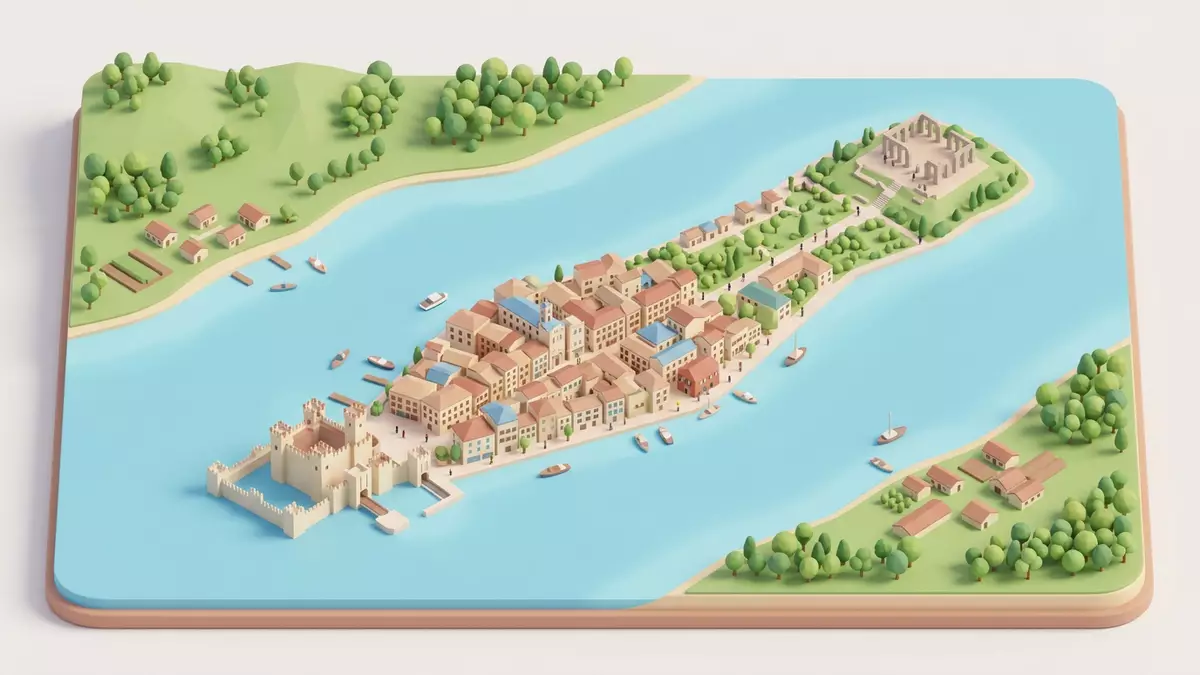
Sirmione is a small town on the southern shore of Lake Garda in northern Italy, set on a narrow peninsula that runs out into the water. The town is known for the remains of an extensive Roman villa at its tip, the Grotte di Catullo, and for the later Scaliger castle that guards its entrance, placing two distinct eras of Italian history within a short walk of each other.
A peninsula shaped by lake and history
The Sirmione peninsula projects from the southern shore of Lake Garda, giving the town long waterfronts on either side and a distinct sense of separation from the mainland. Archaeological finds show human presence here from the Bronze Age, with lake-dwelling settlements on stilts recorded in the area, and by the first century BC the surroundings of Lake Garda had become a resort region for wealthy families from Verona, the major Roman city of north-eastern Italy.wealthy families from Verona Over the centuries Sirmione’s position on the lake turned it into a fortified strongpoint and later into the centre of a small judicial district under Lombard rule, before it developed into a medieval town.
Sirmione later came under the control of the Scaliger family of Verona in the early thirteenth century, a period that left its most visible mark in the form of the castle at the entrance to the old town.came under the control of the Scaliger family In 1405 Sirmione passed to the Venetian Republic, which held the area until 1797, bringing it into the orbit of Venice during the late medieval and Renaissance periods.Venetian Republic, which held the area until 1797 After the era of Venetian rule and subsequent inclusion in the Habsburg domains, Sirmione became part of the Kingdom of Italy in the nineteenth century, leaving layers of political history behind the present-day holiday atmosphere.
Grotte di Catullo: a Roman villa above the lake
At the very end of the peninsula lie the remains of a large Roman villa traditionally known as the Grotte di Catullo, set within an archaeological park and an olive grove. Excavations and studies date the main phase of construction to the Augustan age, in the late first century BC and early first century AD, making it a high-status residence from the period when Roman rule was consolidating under Augustus.Augustan age, in the late first century BC and early first century AD The villa occupies around two hectares of ground at the tip of the peninsula, with terraced levels and traces of colonnaded walkways giving a sense of the scale at which it was built.occupies around two hectares of ground
The name Grotte di Catullo reflects its appearance during the Renaissance, when the ruins were covered by earth and vegetation and the spaces resembled caves, as well as a long-standing association with the Latin poet Catullus. Catullus, born in Verona in the first century BC, wrote verses addressed to Sirmione and had a house here, but research shows that this particular villa was constructed after his death and therefore cannot have been his residence.constructed after his death Walking through the site today, visitors encounter masonry walls, fragments of frescoes in Pompeian style and open areas planted with olive trees, all set against views across Lake Garda that underline why this position appealed to wealthy owners in the Roman period.fragments of frescoes in Pompeian style
Scaliger Castle and the medieval waterfront
The entrance to Sirmione’s historic core is marked by the Scaliger Castle, a fortress associated with the Scaliger lords of Verona who controlled the town in the thirteenth and fourteenth centuries.associated with the Scaliger lords of Verona The castle stands by the water, enclosed by walls and towers that form a compact defensive complex beside the harbour. Its form reflects the need to guard the approach to the peninsula from the land side and to control movements along the lake, turning the entrance into the old town into a gateway that is both practical and strongly characterised by medieval architecture.gateway that is both practical and strongly characterised
Within the historic centre, narrow streets run between buildings that reflect the town’s long development, while along the waterfront promenades reveal views over Lake Garda and towards the surrounding hills. Thermal springs in Sirmione have been noted since antiquity, and spa establishments form part of the town’s identity alongside its historical sites, linking Roman, medieval and more recent layers of use. The combination of a lakeside fortress, archaeological park and spa town on a single strip of land makes Sirmione distinct among settlements on Lake Garda.
Visiting Sirmione: what travellers from Western Europe should know
- Sirmione lies on the southern shore of Lake Garda in northern Italy, reached by road links from nearby towns and by regional transport connections serving the lake area.
- The historic centre stands on a narrow peninsula, with streets that are compact and in parts pedestrian, and approaches to the Grotte di Catullo involving an uphill walk through the town and parkland.
- The surrounding landscape includes the open waters of Lake Garda and low hills inland, with the archaeological park at the tip of the peninsula offering exposed stone structures and planted terraces rather than enclosed interiors.
- The official language is Italian and the currency is the euro.
Searching for Sirmione on social platforms
These links open searches for Sirmione on each platform.
Frequently asked questions about Sirmione
Where is Sirmione located?
Sirmione stands on a peninsula projecting into the southern part of Lake Garda in northern Italy, in the province of Brescia in the Lombardy region.
What can visitors expect on a visit to Sirmione?
Visitors encounter a compact historic town with a lakeside fortress, thermal establishments and an archaeological park at the peninsula’s tip containing the remains of a Roman villa.
What makes Sirmione distinctive among Lake Garda towns?
Sirmione combines an Augustan-age Roman villa, a medieval Scaliger castle and a spa tradition on a single narrow strip of land surrounded by Lake Garda.


