
Skeleton Coast where the Namib meets the Atlantic
Published on 09/23/2026 at 12:52 | Editorial responsibility: Rafael Müller, Editor-in-Chief AD HOC NEWS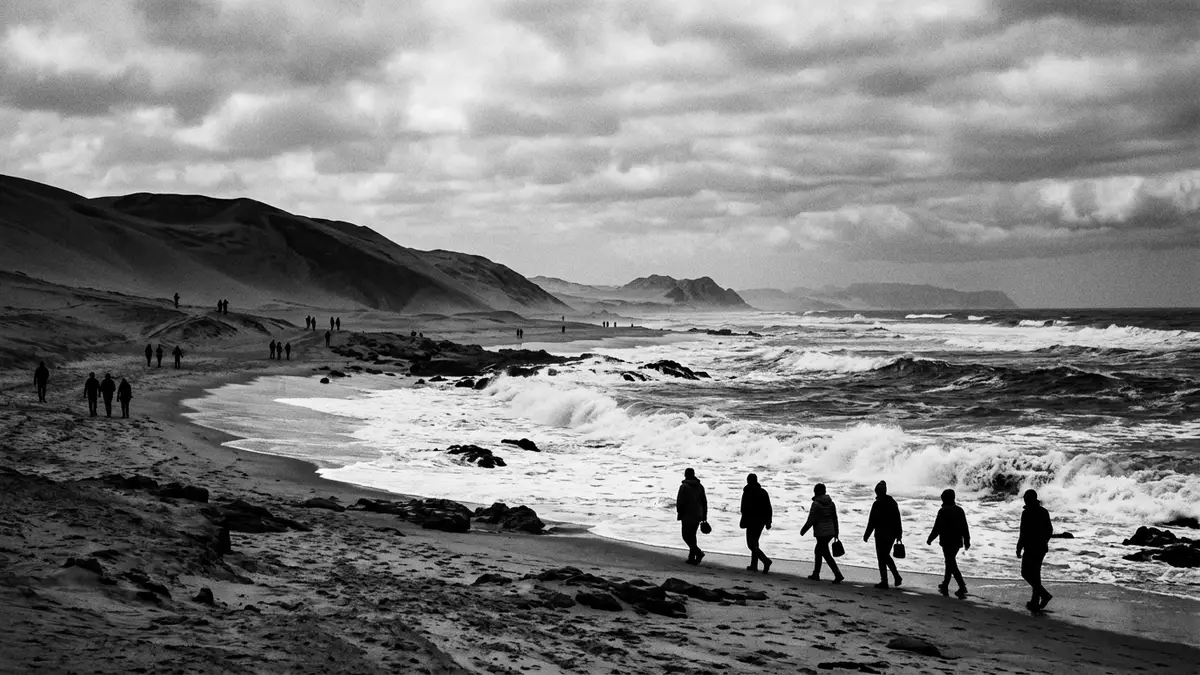
Skeleton Coast is a long Atlantic shoreline in north-western Namibia, where the Namib Desert reaches the sea. At Torra Bay, open beaches, gravel, dunes and cold surf form a landscape with no clear divide between desert and ocean.
Skeleton Coast between desert and Atlantic surf
Skeleton Coast National Park extends from the Ugab River towards the Kunene River. The protected strip reaches inland across desert, ephemeral riverbeds, canyons and mountain country, while the Atlantic forms its western edge.
The park covers about 16,390 km² and stretches for roughly 500 km along the coast. Its present form dates from 1973, after the area was first proclaimed in 1971. The Namib Desert biome includes northern and central desert zones, north-western escarpment landscapes and isolated rocky mountains.
At the shoreline, beaches alternate between sand and rounded pebbles. Inland, the surface changes into gravel plains, dunes and dry river courses. In places, volcanic rock gives the canyons richly coloured walls. The scale is coastal, but the landscape is also geological: watercourses cut through land where surface water is scarce.
Torra Bay and the coast of wrecks
Torra Bay lies within the southern section of Skeleton Coast National Park. It is associated with a simple fishing camp and an open Atlantic shore, surrounded by the desert forms that define this part of Namibia.
The coast’s name recalls the remains of vessels scattered along beaches and reefs. Fog, offshore currents, shifting sand and a difficult shoreline belong to the region’s established character, while beaches may carry timber, metal and other material from wrecks.
The Benguela Current runs along Namibia’s Atlantic coast. Cool offshore water meets the desert air beside the shoreline, and fog is a recurring feature of the coastal belt. The result is a landscape that can appear spare from inland, yet supports plants and animals adapted to very limited rainfall.
Springbok, gemsbok, brown hyena and jackal occur in the wider Skeleton Coast region. Lions and black rhinoceros are also recorded in the broader Kunene area. Near the shore, seals and seabirds form part of the coastal wildlife, with the surf and beaches providing the visible setting.
From river boundaries to protected wilderness
The park’s boundaries give Skeleton Coast a clear geographic identity. The Ugab River marks its southern extent, while the Kunene River lies towards the northern end beside the Angolan border. Between them, the coast passes through several desert environments.
The formal park area includes about 40 km of land inland from the shoreline. This relationship between narrow coast and broad desert explains the place’s distinctive visual arrangement: the ocean, beach, dunes, gravel plains and distant ranges occupy successive bands.
The northern coast is associated with more restricted wilderness areas, while Torra Bay belongs to the southern part of the park. The bay therefore provides a named coastal point within a protected landscape whose settlements are sparse and widely separated.
Torra is also linked with an early Portuguese name for dark hills visible in the region. The name preserves a small piece of maritime history within a landscape better known for surf, fog, desert and wrecks.
Visiting Skeleton Coast: what travellers from Western Europe should know
- Skeleton Coast lies in north-western Namibia along the Atlantic. Torra Bay is reached by road through the southern part of Skeleton Coast National Park.
- The approach crosses desert roads, gravel plains and dry riverbeds. A robust vehicle and careful route planning are part of the character of travel in this remote coastal area.
- The coast is exposed to Atlantic surf, fog, wind and shifting sand. Conditions on the mountain change with the seasons; the local cable-car operators and alpine clubs provide information.
- The official language is English and the currency is the Namibian dollar.
- Entry requirements depend on your nationality; UK travellers can check the FCDO travel advice at gov.uk/foreign-travel-advice, Irish travellers the Department of Foreign Affairs at ireland.ie.
Searching for Skeleton Coast on social platforms
These links open searches for Skeleton Coast on each platform.Frequently asked questions about Skeleton Coast
Where is Skeleton Coast?
Skeleton Coast lies along Namibia’s north-western Atlantic shore. The national park extends between the Ugab River and the Kunene River, with Torra Bay in its southern section.
What does a visit to Torra Bay involve?
Torra Bay combines an open beach, Atlantic surf, desert terrain and a simple fishing-camp setting. Travel takes place across remote coastal roads, gravel plains and dry riverbeds.
What makes Skeleton Coast distinctive?
Its identity comes from the meeting of the Namib Desert and the Atlantic, alongside fog, wreck-strewn beaches, riverbeds, dunes and protected wildlife habitats.


