
Sossusvlei’s red dunes and white pan in Namib-Naukluft
Published on 09/19/2026 at 06:59 | Editorial responsibility: Rafael Müller, Editor-in-Chief AD HOC NEWS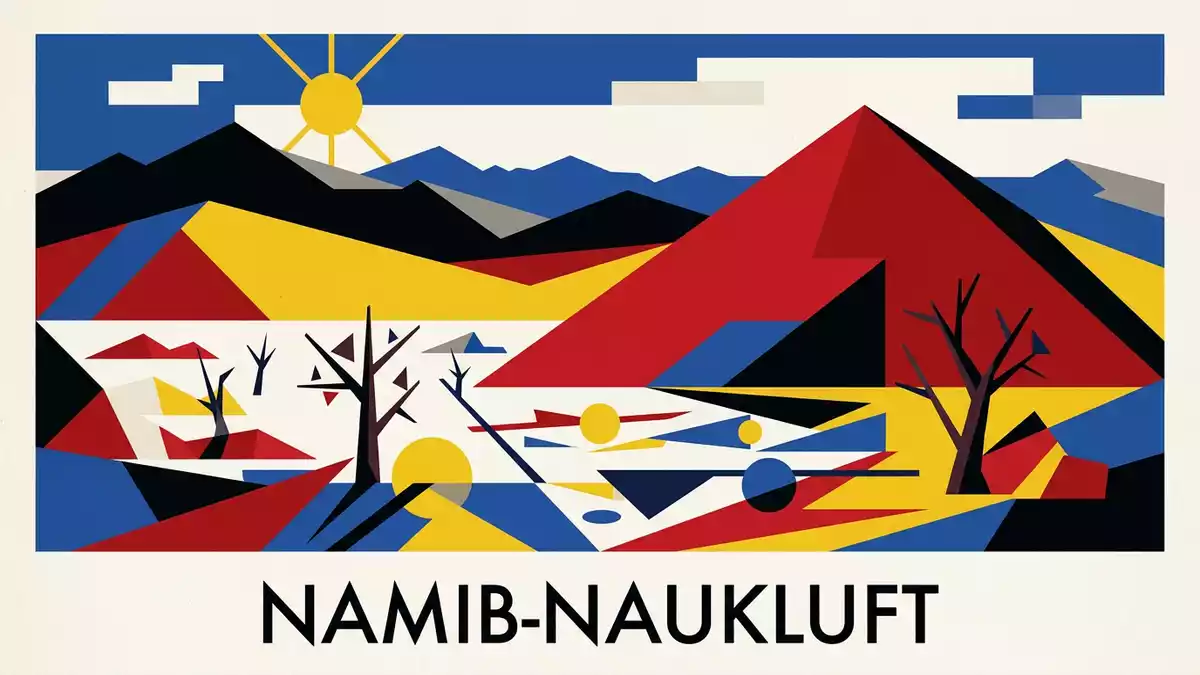
Sossusvlei in Namibia’s Namib-Naukluft National Park is a salt-and-clay pan enclosed by high red sand dunes, where a pale, cracked basin meets slopes of deep orange and red sand. The contrast between the flat white pan and the surrounding dunes forms the clearest impression of the place and underpins every visit.
A pan of salt and clay at the end of a desert river
Sossusvlei lies in the southern part of the Namib Desert, within the Namib Sand Sea, a dune field covering tens of thousands of square kilometres across western Namibia.southern region of the Namib Desert Here the Tsauchab River, usually a dry riverbed, reaches the dunes and ends in an enclosed basin rather than continuing to the Atlantic coast.end of the Tsauchab River’s course Water gathers in the basin only after rare rainfall, leaving behind dissolved minerals as it evaporates.
The result is a broad salt-and-clay pan whose surface is typically light in colour and flat enough that cracks in the clay form irregular patterns across the ground.flat-bottom depression of salt and clay The name Sossusvlei refers specifically to this terminal basin, where the dunes meet and block any further flow of the river, but travellers commonly use it for the wider area of pans and dunes.name used for the wider area Within Namib-Naukluft National Park this basin sits among dune ridges that delineate several shallow hollows in the desert floor.
Red dunes surrounding a white basin
The sand dunes around Sossusvlei rise steeply from the desert plain and enclose the pan on almost all sides, forming a natural amphitheatre of sand around the white surface. Their colour ranges through shades of orange and red, especially clear when the sun sits low and light strikes the slopes at an angle.large red dunes that surround it The dunes are composed mainly of sand blown inland from the Atlantic coast, accumulated into long ridges and star-shaped forms over long periods.
Some dunes near the pan reach heights measured in hundreds of metres and are among the tallest sand dunes recorded in desert environments.dunes in this area are some of the highest in the world Their crests run in sweeping lines, while slip faces drop sharply towards the hollows where clay pans lie. The red tone of the sand contrasts strongly with the pale clay and salt of the basin, making the boundary between pan and dune a distinct edge underfoot. Standing on the clay, the dunes rise around the horizon; climbing one of the ridges reveals patterns of further dune lines and additional pans beyond.
Sossusvlei and its neighbouring pans
Although Sossusvlei is the terminal pan of the Tsauchab River, visitors encounter a broader grouping of pans and dunes within the same desert pocket. The wider area includes well-known dunes and hollows such as Dune 45, a prominent dune beside the access road, and deeper basins where the sand gives way to clay.entire area including Dune 45 Among these hollows Deadvlei stands out as a separate white clay pan near Sossusvlei, reached by crossing sand between enclosing dunes.white clay pan located near Sossusvlei
Deadvlei lies in a shallow basin close to where the Tsauchab’s course into the dunes comes to its end, but it differs from the main Sossusvlei pan in one striking respect: its floor holds no living trees.Deadvlei forms part of a group of pans The basin contains dark, dead camel thorn trunks rooted in the clay, their branches bare against the sand and sky. In the wider visitor area, Sossusvlei and Deadvlei appear as neighbouring basins within the Namib Sand Sea, linked by the same dune system and desert river.
Visiting Sossusvlei: what travellers from Western Europe should know
- Sossusvlei lies within Namib-Naukluft National Park in south-western Namibia, in the southern part of the Namib Desert. Access by road runs through the settlement of Sesriem at the park entrance.main entrance at Sesriem
- The last stretch of the approach to the pan crosses soft desert sand, and reaching the basin from vehicle parking involves a walk over dunes and clay surfaces with no shade.
- The wider area of dunes and pans lies in a desert climate where daytime temperatures can be high and the ground is exposed; travellers need to be prepared for strong sun and dry conditions.
- The official language is English and the currency is the Namibian dollar.
- Entry requirements depend on your nationality; UK travellers can check the FCDO travel advice at gov.uk/foreign-travel-advice, Irish travellers the Department of Foreign Affairs at ireland.ie.
Searching for Sossusvlei on social platforms
These links open searches for Sossusvlei on each platform.
Frequently asked questions about Sossusvlei
Where is Sossusvlei?
Sossusvlei is a salt-and-clay pan in the Namib Sand Sea within Namib-Naukluft National Park in south-western Namibia, in the southern region of the Namib Desert.location in Namib Sand Sea
What should travellers expect on a visit?
A visit centres on a pale salt-and-clay basin reached by walking over soft desert sand, with high red dunes surrounding the pan and further hollows such as Deadvlei within reach.
What makes Sossusvlei distinctive?
Sossusvlei is distinctive for the meeting of a terminal desert river with an enclosed salt-and-clay basin, framed by some of the tallest red sand dunes recorded in the Namib Sand Sea.terminal pan framed by dunes


