
Spitzkoppe’s granite peaks rising from the Namib Desert
Published on 09/22/2026 at 12:41 | Editorial responsibility: Rafael Müller, Editor-in-Chief AD HOC NEWS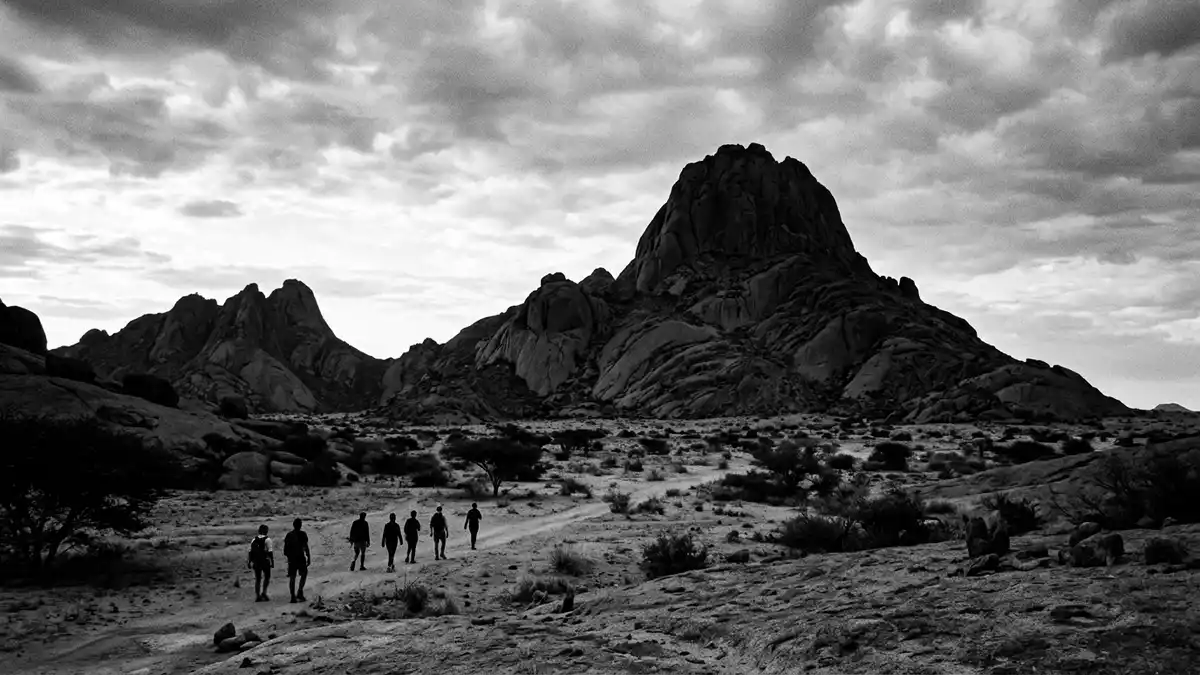
Spitzkoppe is a group of bald granite peaks rising abruptly from the gravel plains between Usakos and Swakopmund in western Namibia, forming one of the most distinctive rock landscapes on the central route between Windhoek and the Atlantic coast.Spitzkoppe means “pointed dome” in German and the name fits the steep domes and faces that lift above the Namib Desert.
Granite domes on the Erongo plains
The formation stands in the Erongo region of western Namibia as a granite inselberg group set in largely flat desert terrain.Spitzkoppe is described as a group of bald granite peaks rising from the central Namibian plain, with rounded domes, isolated blocks and steep rock faces that catch light from dawn into night.Mapping services place the peaks in Erongo, Namibia, giving them a clear position between inland town and Atlantic coast.
The highest summit, often called Groot Spitzkoppe, reaches about 1,728 m (5,669 ft) above sea level, lifting desert rock hundreds of metres above the surrounding plains.English-language references consistently give 1,728 m as the elevation of the main peak, while nearby domes such as Klein Spitzkoppe and the Pontok range rise to slightly lower heights and extend the cluster into a short range.Digital mapping notes a minor peak called Little Spitzkoppe and a spur of Pontok Mountains, reinforcing the sense of a compact group rather than a single isolated hill.
Ancient granite and desert geology
The rock at Spitzkoppe is granite, part of a wider belt of intrusions that includes Brandberg and the Erongo Mountains in western Namibia.Geological surveys describe Spitzkoppe and nearby Pontok granites as intrusive bodies emplaced into older metamorphic rocks of the Damara Supergroup, later overlain by younger sediments as the Gondwana supercontinent broke apart.Travel guides emphasise the granite geology and inselberg form, linking the peaks to a long history of volcanic and magmatic activity.
The granite is more than 100 million years old, with several sources placing it at roughly 120 to 135 million years.Non-technical mapping notes describe the granite as more than 120 million years old, while an academic study of Klein Spitzkoppe’s mineral deposits dates the alkali granites in the area to approximately 135 million years in the Late Jurassic to Early Cretaceous.Gemological work on topaz and beryl from Klein Spitzkoppe places the granite at about 135 million years old, tying the inselbergs to the tectonic events that led to the opening of the South Atlantic.
Rock landscape, features and human traces
Spitzkoppe is known for its juxtaposition of bare rock and desert floor, with the granite domes rising abruptly from gravel plains scattered with scrub and sand.Descriptions of the site highlight the steep faces and rounded summits above flat surroundings, creating a landmark visible from far along the main highway linking Windhoek to the coast.Guidebooks group Spitzkoppe with the Erongo Mountains as one of Namibia’s recognisable granite hiking landscapes, making clear its role as a focus for walkers and climbers.
The area around Spitzkoppe contains features that have become part of how visitors experience the landscape, from rock arches to shallow rock basins and protected panels of San rock art.Named spots such as the Rock Arch, Bushman’s Paradise and Small Bushman’s Paradise are listed in hiking guides as focal points, reflecting long-standing human presence around the granite outcrops.Regional overviews note San rock paintings, walking routes and climbing lines on the domes, showing how the bare rock has been read and used over generations.
Visiting Spitzkoppe: what travellers from Western Europe should know
- Spitzkoppe lies in the Erongo region of western Namibia between Usakos and Swakopmund, on the inland route linking Windhoek with the Atlantic coast.
- The peaks rise steeply from the desert plains, and approaches on foot involve uneven granite slabs, loose gravel and sections of steeper scrambling on solid rock.
- Spitzkoppe is reached from the B2 highway by a signposted gravel road, with access tracks leading towards the domes and nearby ranges such as the Pontok Mountains.
- The terrain is arid desert with limited natural shade away from the rock faces, and temperatures can be high under clear skies.
- The official language is English and the currency is the Namibian dollar; entry requirements depend on your nationality, UK travellers can check the FCDO travel advice at gov.uk/foreign-travel-advice, Irish travellers the Department of Foreign Affairs at ireland.ie.
Searching for Spitzkoppe on social platforms
These links open searches for Spitzkoppe on each platform.Frequently asked questions about Spitzkoppe
Where is Spitzkoppe in Namibia?
Spitzkoppe stands in the Erongo region of western Namibia, between the inland town of Usakos and the coastal city of Swakopmund on the central route.
What should visitors expect at Spitzkoppe?
Visitors encounter steep granite domes rising from desert plains, with walking and scrambling routes on bare rock, wide open views and limited natural shade.
What makes Spitzkoppe distinctive among Namibian landscapes?
Spitzkoppe is distinctive for its bald granite peaks, inselberg form and long geological history, lifting ancient rock high above surrounding desert terrain.


