
Stare Miasto w Warszawie and its reconstructed medieval heart
Published on 08/14/2026 at 14:45 | Editorial responsibility: Rafael Müller, Editor-in-Chief AD HOC NEWS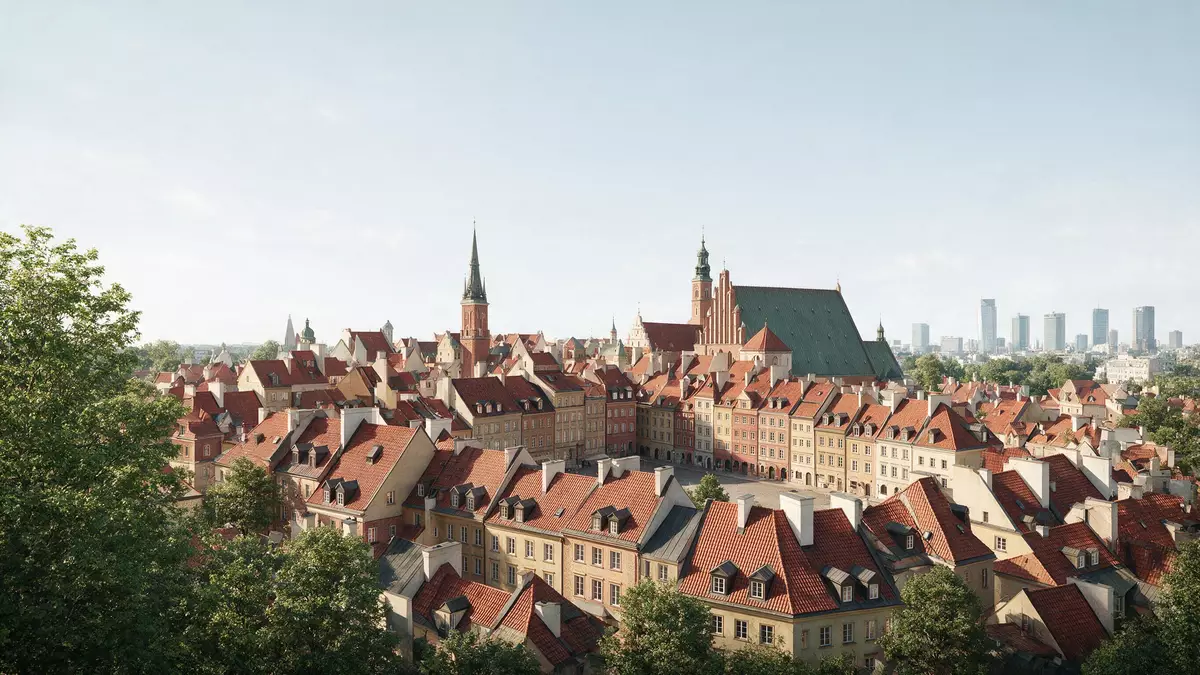
Stare Miasto w Warszawie, known in English as Warsaw Old Town, is the historic centre of Poland’s capital where a medieval street plan meets post-war reconstruction on a remarkable scale. The district’s fabric combines townhouses modelled on seventeenth and eighteenth-century fronts with a layout whose origins reach back to the thirteenth century.
A medieval core shaped by centuries of urban life
The Old Town grew on a terrace above the Vistula River as the earliest municipal centre of Warsaw, with beginnings dating to the thirteenth century when the first fortified settlement took shape.Its origins are dated to the thirteenth century The street grid retains this medieval structure, with narrow lanes converging on the Old Town Market Square and leading towards the river.
From the seventeenth and eighteenth centuries, merchants and nobles lined these streets with masonry townhouses, giving the area an architectural character dominated by Baroque and Classicist facades built over earlier Gothic foundations.A compact ensemble of seventeenth and eighteenth-century architecture with a medieval layout Defensive walls from the fourteenth to sixteenth centuries encircled the district, parts of which remain visible as brick ramparts and the Barbican fortification at the northern edge.Medieval defensive walls dating from the fourteenth to sixteenth centuries
Reconstruction and UNESCO recognition
During the Second World War, Stare Miasto w Warszawie suffered near-total destruction, with a large proportion of its buildings reduced to rubble in 1944. In the years that followed, architects, craftspeople and engineers undertook a comprehensive reconstruction that sought to recreate the historic appearance of the district while embedding original fragments where possible.Post-war rebuilding of the Old Town between the late 1940s and early 1960s Eighteenth-century paintings by Bernardo Bellotto, known as Canaletto, together with pre-war surveys, served as a visual and documentary guide for townhouses and public buildings along the main routes.
In 1980 the Historic Centre of Warsaw, which includes Stare Miasto w Warszawie, was inscribed on the UNESCO World Heritage List as an outstanding example of a near-total reconstruction of a historic city core spanning the thirteenth to the twentieth century.UNESCO inscription of the Historic Centre of Warsaw in 1980 The listed area covers around 25.93 ha (64.1 acres), with a substantial buffer zone where the rebuilt fabric of streets, churches and palaces is protected as cultural heritage.Historic Centre of Warsaw World Heritage listing
Streets, squares and monuments of the Old Town
Several distinct spaces define Stare Miasto w Warszawie. Castle Square forms a broad forecourt between the Royal Castle and the start of the Old Town streets, marked by Sigismund’s Column commemorating King Sigismund III Vasa.Castle Square and Sigismund’s Column From this square, ?wi?toja?ska Street leads towards the Old Town Market Square, passing St John’s Archcathedral and other ecclesiastical buildings with Gothic and later additions.
The Old Town Market Square itself is enclosed by rows of colourful townhouses whose fronts reflect seventeenth and eighteenth-century styles. At its centre stands a sculpture of the Warsaw mermaid, a symbol associated with the city, surrounded by paving from which eight streets radiate into the surrounding quarter.Old Town Market Square with its mermaid monument and radiating streets Towards the north, the brick mass of the Barbican marks the former boundary between the Old Town and the New Town, while sections of the city wall extend outwards.
Visiting Stare Miasto w Warszawie: what travellers from Western Europe should know
- Stare Miasto w Warszawie occupies the central part of Warsaw within the ?ródmie?cie district and lies on a rise above the Vistula River; it is reached by city transport including the Ratusz Arsena? metro station and nearby tram and bus stops serving Castle Square.
- The terrain within the Old Town consists of cobbled streets, short inclines and flights of outdoor steps, particularly around the approaches to the defensive walls and the Barbican.
- Stare Miasto w Warszawie lies in Poland, where the official language is Polish and the currency is the z?oty.
- The Old Town sits close to the New Town and the riverfront; Castle Square connects directly to the Royal Route leading towards Krakowskie Przedmie?cie.
Searching for Stare Miasto w Warszawie on social platforms
These links open searches for Stare Miasto w Warszawie on each platform.
Frequently asked questions about Stare Miasto w Warszawie
Where is Stare Miasto w Warszawie located?
Stare Miasto w Warszawie forms the historic centre of Warsaw within the ?ródmie?cie district, on a terrace above the Vistula River.
What should a visitor expect when walking through the Old Town?
Visitors encounter cobbled streets, enclosed squares, reconstructed townhouses, segments of medieval walls, churches and the Barbican along short, interconnected lanes.
What makes Stare Miasto w Warszawie distinctive among historic districts?
The Old Town combines a thirteenth-century street plan with twentieth-century reconstruction and carries UNESCO World Heritage status as the Historic Centre of Warsaw.


