

Staromestske namesti, Prague’s layered Old Town stage
Published on 08/29/2026 at 11:45 | Editorial responsibility: Rafael Müller, Editor-in-Chief AD HOC NEWS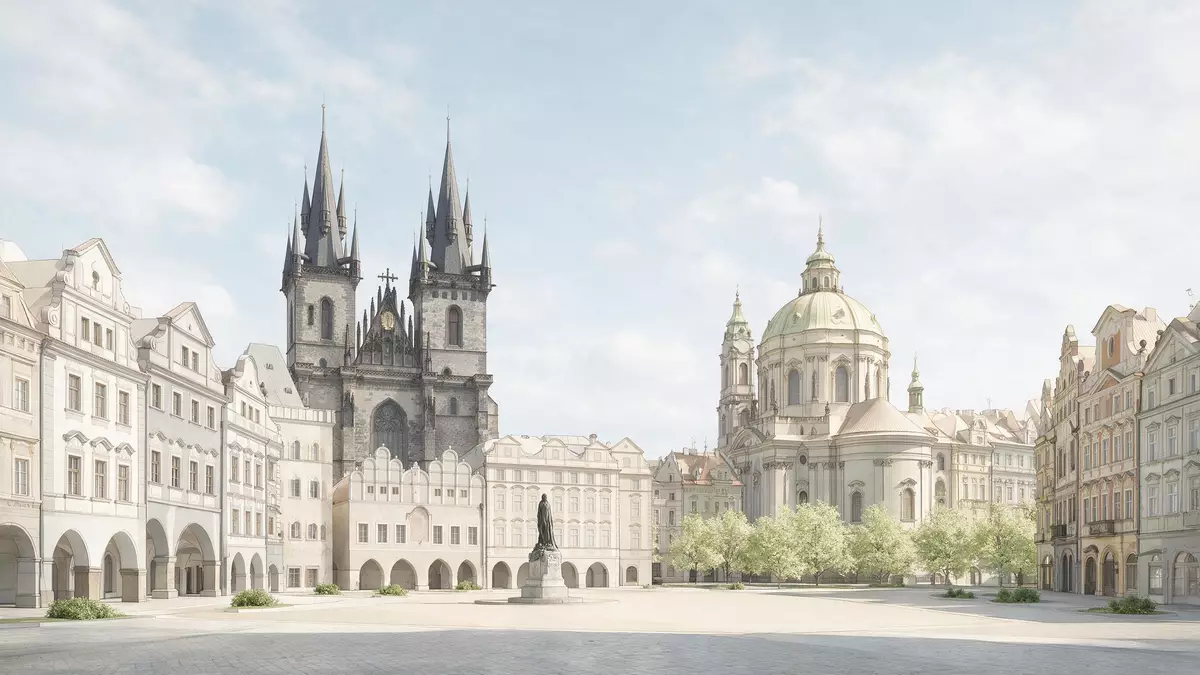
Staromestske namesti, known in English as Old Town Square, is the historic plaza at the heart of Prague’s Old Town and part of the city’s UNESCO-listed historic centre. The space took shape as a marketplace in the twelfth century and still gathers civic buildings, churches and town houses around its open cobbled floor.
A medieval market that became Prague’s civic stage
The origins of Staromestske namesti lie in the development of Prague’s Old Town as a trading hub in the eleventh and twelfth centuries, when merchants converged on this open area to exchange goods along long-distance routes across Europe.Its importance began to grow from the 11th century and the space evolved into the principal marketplace of the town.Old Town Square was established in the twelfth century as the city’s main marketplace
By the fourteenth century the square had taken on a civic role as well, with the Old Town Hall rising on its edge after Prague’s burghers received the right to build their own seat of government in 1338.The Old Town Hall was established in 1338 as a municipal seat The open space witnessed royal proclamations, public assemblies and judicial rituals, including the execution of Czech noblemen in 1621, and it remains closely associated with the political history of Bohemia.The square was the setting for events such as the election of Ji?í of Pod?brady and the 1621 executions
Gothic spires, Baroque churches and a working astronomical clock
Standing in Staromestske namesti, the skyline is dominated by the twin towers of the Church of Our Lady before Týn, a Gothic parish church that has been the principal church of this quarter since the fourteenth century.The Gothic Church of Our Lady before Týn has served as the main church of the area since the 14th century Opposite rises the Baroque Church of St Nicholas, associated with the architect Kilian Ignaz Dientzenhofer and completed in the eighteenth century, bringing a different rhythm and profile to the same shared space.The Baroque Church of St Nicholas by Dientzenhofer stands on the square
The Old Town Hall complex combines a medieval tower, later extensions and one of Prague’s most recognisable mechanisms, the astronomical clock mounted on its southern wall.The medieval town hall includes an astronomical clock added in 1410 Around the perimeter, town houses and palaces show Romanesque foundations, Gothic cores and later Renaissance, Rococo and Art Nouveau facades, among them the Kinský Palace and the House at the Stone Bell, which preserve traces of fourteenth-century masonry behind their later fronts.Buildings around the square combine Romanesque, Gothic, Baroque and later styles
Memorials, pavements and a UNESCO-listed setting
At the centre of Staromestske namesti stands the Jan Hus Monument, unveiled in the early twentieth century and created by sculptor Ladislav Šaloun as a national cultural monument commemorating the reformer burned at the stake in 1415.The Jan Hus Monument by Ladislav Šaloun is a national cultural monument on the square Embedded in the paving nearby are memorial stones marking the execution of Czech nobles in 1621 and the line of the historic Prague meridian, which once served as a reference for local timekeeping.Stones in the pavement mark the execution site of 1621 and the Prague meridian
Staromestske namesti forms part of the Historic Centre of Prague, which was inscribed on the UNESCO World Heritage List in 1992 for its dense concentration of Gothic, Renaissance and Baroque architecture.The square belongs to Prague’s Historic Centre, designated a UNESCO World Heritage Site in 1992 The irregular outline of the square preserves its origins as an organically grown marketplace rather than a planned plaza, and the surrounding streets lead towards the Vltava River, the Old Jewish Quarter and the newer boulevards of Prague’s central districts.The square’s irregular shape reflects its growth around a medieval market
Visiting Staromestske namesti: what travellers from Western Europe should know
- Staromestske namesti lies in Prague’s Old Town on the right bank of the Vltava River, within Prague 1, and is reached on foot from Starom?stská and M?stek metro stations.
- The surface of the square is paved with cobbles, and many side streets around it have uneven stone surfaces that can make wheeled access demanding.
- Prague is in the Czech Republic, where the official language is Czech and the currency is the Czech koruna.
Searching for Staromestske namesti on social platforms
These links open searches for Staromestske namesti on each platform.
Frequently asked questions about Staromestske namesti
Where is Staromestske namesti?
Staromestske namesti is the Old Town Square in Prague, in the Czech Republic, located in the Old Town quarter on the right bank of the Vltava River.
What can visitors expect when they arrive at Staromestske namesti?
Visitors encounter a cobbled square framed by Gothic and Baroque churches, the Old Town Hall with its astronomical clock, historic town houses and a prominent Jan Hus Monument.
What makes Staromestske namesti distinctive among European squares?
The square combines a medieval marketplace layout with layers of Gothic, Renaissance, Baroque and later architecture, and it remains closely linked to major episodes in Czech history.


