Stellenbosch Winelands and the Cape Dutch landscape
Published on 08/09/2026 at 15:03 | Editorial responsibility: Rafael Müller, Editor-in-Chief AD HOC NEWS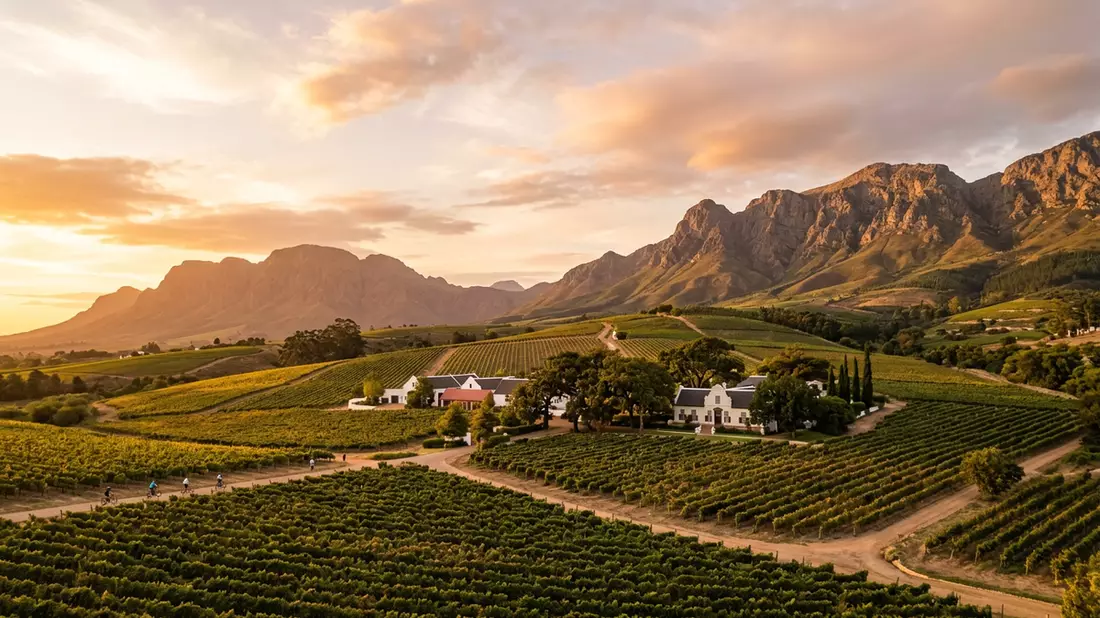
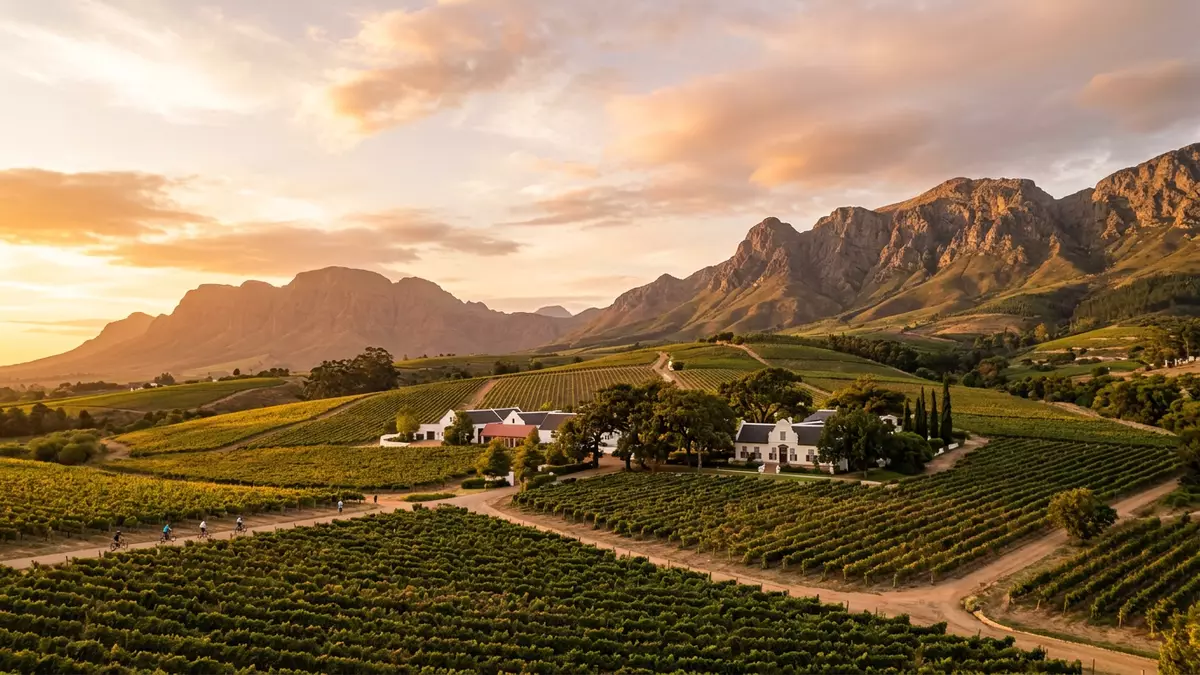
Stellenbosch Winelands stretches across a landscape of vineyards, farmsteads and town streets linked to the Cape’s oldest wine region. Stellenbosch gives the area its name and its centre, while the surrounding valley keeps the view open to granite-backed hills and long rows of vines.
Stellenbosch, vineyards and Cape Dutch estates
The strongest visual thread in Stellenbosch Winelands is the mix of working wine farms and historic buildings. Many estates around Stellenbosch include whitewashed Cape Dutch gables, tree-lined drives and cellars beside the vines.
The town of Stellenbosch was founded in 1679 under Simon van der Stel, and that seventeenth-century origin still shapes the area’s identity. The name appears on street signs, cellar doors and property names, tying the university town to the farms around it.
A landscape shaped by wine and farming
The winelands are not a single monument but a region of roads, slopes and estates. Vineyards run along the valley floor and climb into the foothills, with mountains closing the horizon in several directions.
Stellenbosch is one of South Africa’s best-known wine centres, and the area is associated with Cabernet Sauvignon, Chenin Blanc, Pinotage and other Cape varieties. Visitors move between tasting rooms, farm shops and old homesteads, with the town itself providing cafés, galleries and museums.
Architecture, heritage and everyday life
Much of the appeal lies in the built environment as much as in the wine. The region includes restored manor houses, university buildings, churches and streets of oaks and gabled facades.
Stellenbosch University adds an academic layer to the area, and the town has a lively year-round character beyond the farms. That combination of heritage architecture, student life and agriculture gives the district a distinct rhythm.
Visiting Stellenbosch Winelands: what travellers from Western Europe should know
- The area lies in and around Stellenbosch in the Western Cape of South Africa, and it is reached from Cape Town by road.
- Admission arrangements and opening hours are set by the site's operator and change with the season; the official website is the only binding source.
- The best light for vineyard views is often in the morning or late afternoon, when the valley and the mountain backdrop read clearly.
- Expect some uneven ground on estates, along with gravel paths, steps and short walks between buildings and tasting rooms.
- English is widely used in hospitality, and card payment is common, though small purchases may be easier with cash.
- Entry requirements depend on your nationality. UK travellers should check the FCDO travel advice at gov.uk/foreign-travel-advice; Irish travellers the Department of Foreign Affairs at ireland.ie; EU and EEA citizens their own national foreign ministry.
Searching for Stellenbosch Winelands on social platforms
These links open searches for Stellenbosch Winelands on each platform.
Frequently asked questions about Stellenbosch Winelands
Where is Stellenbosch Winelands?
It is in the Western Cape of South Africa, centred on Stellenbosch and the surrounding wine estates. Cape Town is the main large city used as a starting point.
What does a visit involve?
Most visits combine wine estates, historic buildings and walks or drives through vineyard country. The town adds restaurants, shops and museum stops between the farms.
What makes it distinctive?
The area combines wine production, Cape Dutch architecture and a university town in one compact region. The result is a landscape that feels agricultural, historic and lived-in at the same time.