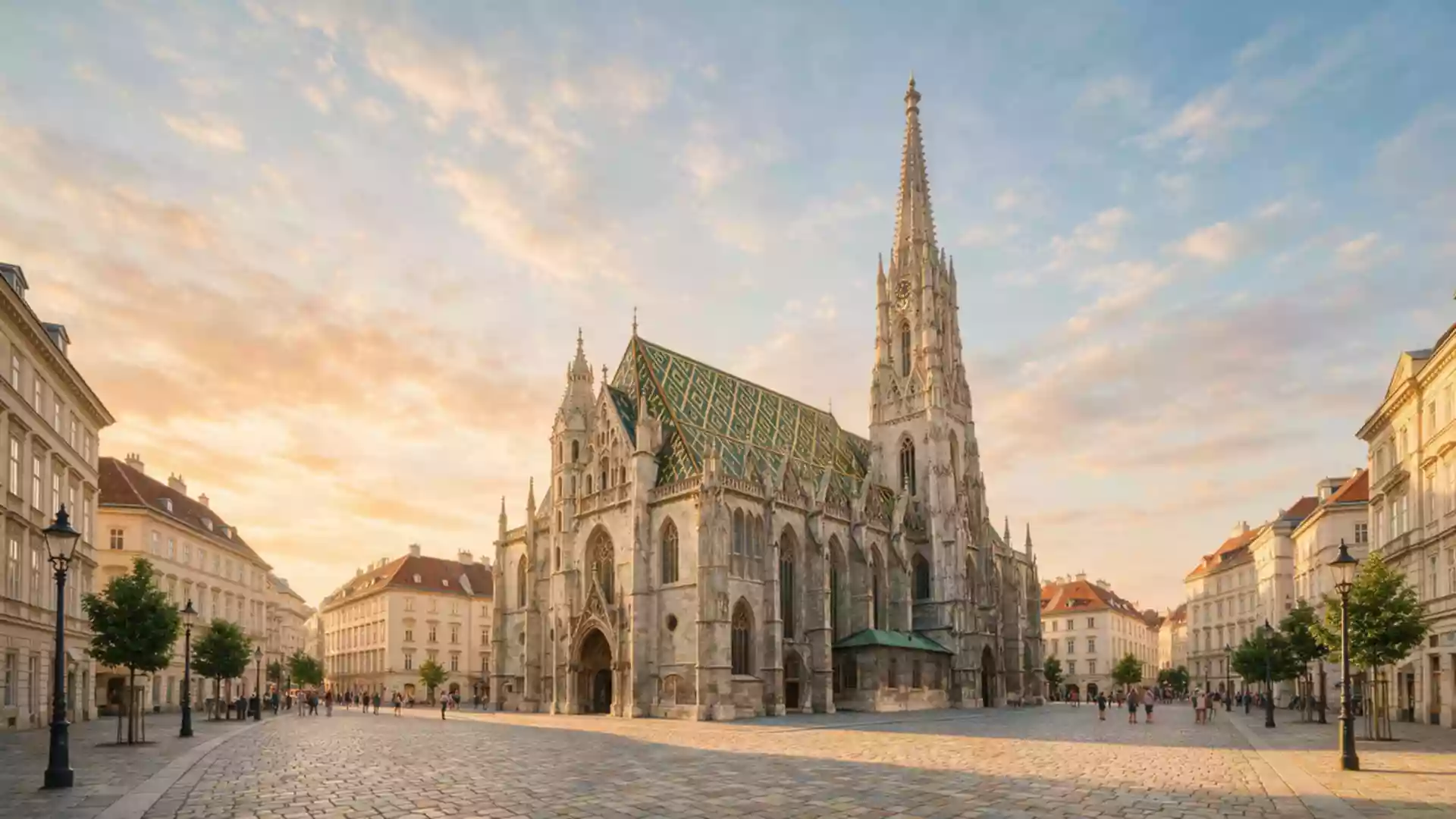
Stephansdom in Wien and its soaring Gothic tower
Published on 09/05/2026 at 22:53 | Editorial responsibility: Rafael Müller, Editor-in-Chief AD HOC NEWS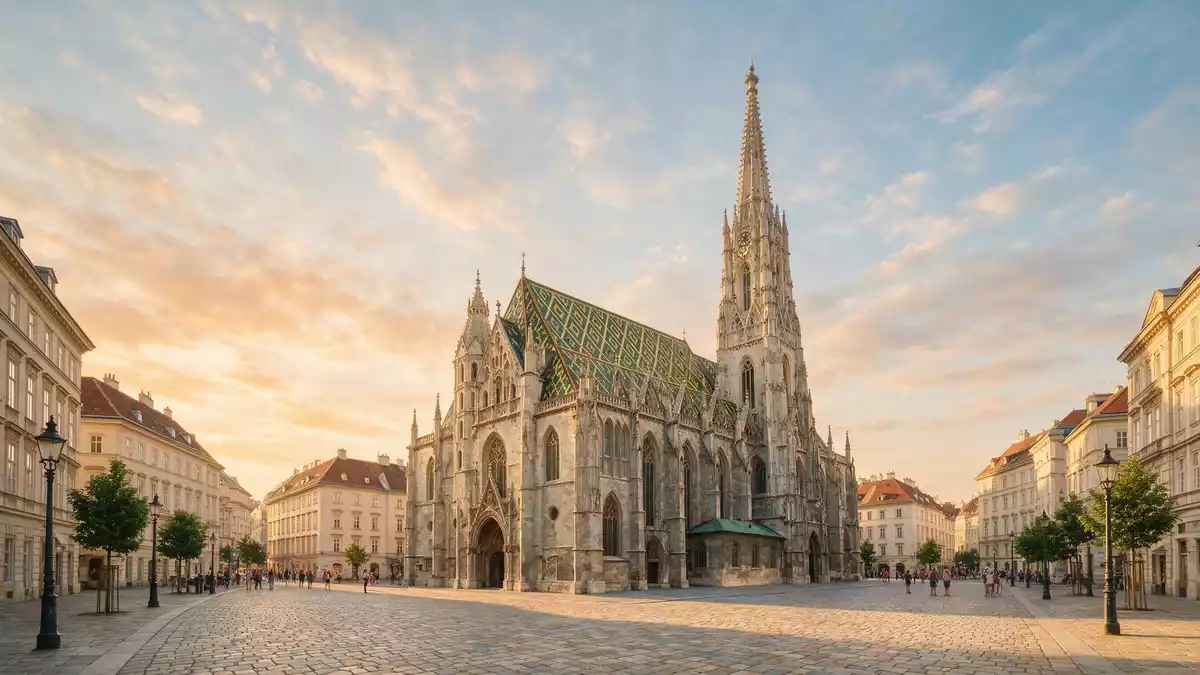
Stephansdom in Wien is a Gothic cathedral that has grown through centuries of construction, with its tall south tower rising over the compact streets of the city centre. The building stands on Stephansplatz and combines Romanesque remnants with a later Gothic hall church, making its layered structure one of the clearest chronicles of Vienna’s architectural history.
A cathedral shaped across the Middle Ages
The story of Stephansdom begins with a Romanesque parish church consecrated in 1147 under the influence of local rulers and the bishopric of Passau, placing its origins firmly in the twelfth century.Romanesque church in 1147 That early structure was later damaged by fire in 1258, after which a larger Romanesque church was completed and consecrated in 1263, giving the site its first extended stone envelope.fire in 1258 and rebuilding
From 1304 the church entered its Gothic phase, as new choirs and a hall-like nave were added under rulers such as King Albert I and Duke Rudolf IV.Gothic reconstruction beginning 1304 Rudolf IV, known as “the Founder”, laid the foundation stone for the great south tower in 1359, initiating a campaign that would give Stephansdom its distinctive vertical accent and fix its silhouette in the memory of the city.Rudolf IV and the south tower
The soaring south tower and unfinished north
The south tower of Stephansdom rises to around 136 m (about 446 ft), making it the highest of the cathedral’s four towers and the tallest church tower in Austria.height of the south tower Its construction began in the late fourteenth century and was completed in 1433, giving the Gothic spire a clear dating within the long building history of the cathedral.completion of the south tower in 1433 The tower’s nickname, Steffl, captures how closely it is associated with the church’s patron, Saint Stephen, and with Vienna itself.
Opposite the south tower stands the shorter north tower, also known as the Adlerturm, whose construction began in the fifteenth century but stopped in 1511.halt of north tower works in 1511 A later belfry with a Renaissance cupola was added, giving the north side a different outline from the Gothic spire opposite and signalling the shift in architectural taste that followed the Middle Ages.Renaissance cupola on north tower
Romanesque roots and Gothic hall
Despite the later Gothic expansion, fragments of the initial Romanesque building survive in the west front and in the lower sections of the eastern towers known as the Heidentürme, which retain their earlier masonry.Romanesque remains in the Heidentürme Behind this façade the main body of the church forms a staggered Gothic hall church, with a long nave and chapels that show how the building was extended as liturgical needs and patronage evolved across the fourteenth and fifteenth centuries.staggered Gothic hall church
Stephansdom gained new status as the city grew: it became a cathedral in 1469 when Vienna was elevated to a bishopric, and since 1723 it has served as the metropolitan church of the archbishop of Vienna.elevation to cathedral and metropolitan church This ecclesiastical role, combined with its location at Stephansplatz, makes the building both a religious centre and a reference point for the urban fabric that grew around it.
Structure, dimensions and post-war rebuilding
The cathedral’s footprint extends to about 107 m (351 ft) in length and 34 m (112 ft) in width, giving the nave a narrow but elongated plan that fits closely within the blocks of the inner city.length and width of Stephansdom Inside, the Gothic vaulting over the nave and choir rests on clustered piers, and the hall-like character of the interior is reinforced by the way side chapels open off the main volume without deep transepts.
In April 1945, during the fighting around Vienna, a major fire burned out much of the cathedral’s timber roof and damaged the interior, leaving parts of the Gothic carpentry destroyed.fire damage in 1945 Reconstruction followed in the post-war years, with the roof rebuilt and the church restored as a working cathedral by the early 1950s, reinforcing its role as a symbol of the city’s recovery as well as a record of medieval stonework and later repairs.post-war reconstruction
Visiting Stephansdom: what travellers from Western Europe should know
- Stephansdom stands on Stephansplatz in Wien’s Innere Stadt, a short walk from streetcar and underground stations that serve the historic centre.
- The cathedral interior includes staircases, chapels and aisles; access to tower viewing platforms involves climbing narrow flights of steps within the masonry.
- German is the official language in Austria and the currency is the euro.
Searching for Stephansdom on social platforms
These links open searches for Stephansdom on each platform.
Frequently asked questions about Stephansdom
Where is Stephansdom located in Wien?
Stephansdom stands on Stephansplatz in the Innere Stadt district of Wien, forming a central landmark within the historic street network.
What should visitors expect inside Stephansdom?
Visitors encounter a Gothic hall church with a long nave, side chapels, Romanesque remnants in the west front and access routes to tower viewing platforms.
What makes Stephansdom distinctive among European cathedrals?
Its tall south tower, unfinished north tower with Renaissance cupola and blend of Romanesque and Gothic building phases give Stephansdom a distinctive mixed silhouette.