
Suomenlinna: a sea fortress woven into Helsinki’s islands
Published on 08/16/2026 at 13:45 | Editorial responsibility: Rafael Müller, Editor-in-Chief AD HOC NEWS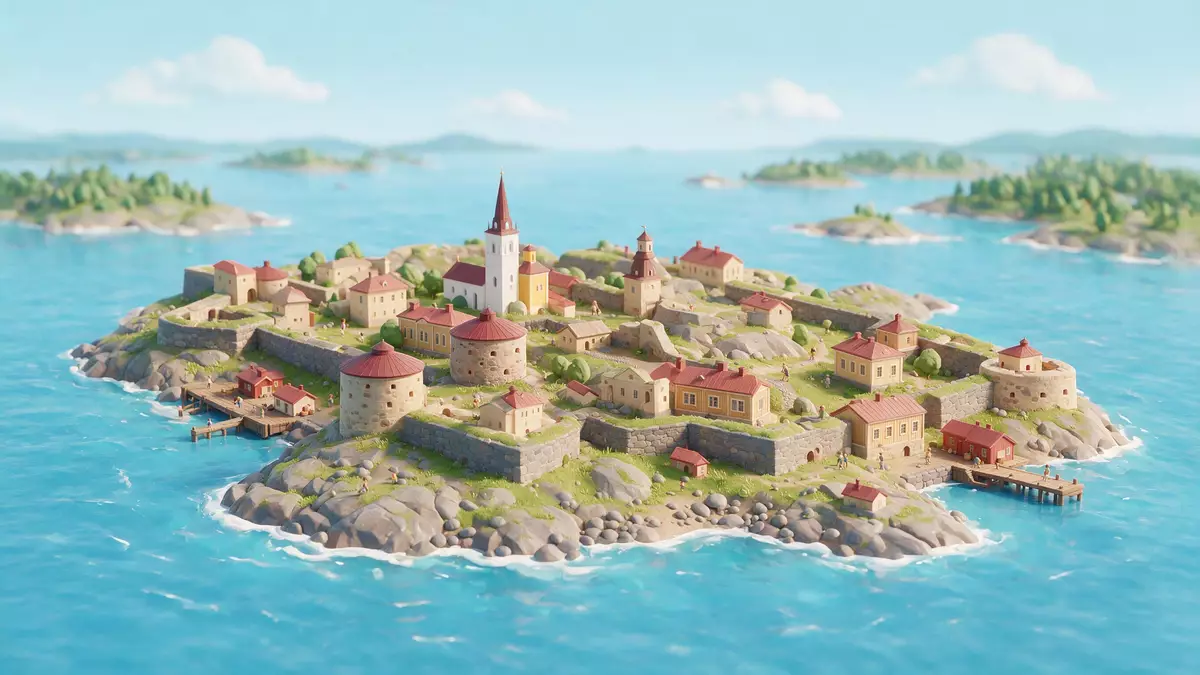
Suomenlinna is a sea fortress spread across low rocky islands off Helsinki, where eighteenth?century ramparts and barracks form a maritime district that is still inhabited. Built from 1748 onwards during the Swedish era and inscribed on the UNESCO World Heritage List in 1991, it turns a cluster of Baltic skerries into an open?air lesson in European military architecture.Fortress of Suomenlinna
Stone, bastions and the Baltic landscape
Suomenlinna occupies several islands guarding the approach to Helsinki’s harbour, their shorelines cut by inlets, docks and stretches of bare bedrock. The fortress originally followed the theories of the French engineer Sébastien Le Prestre de Vauban, adapted by the Swedish admiral Augustin Ehrensvärd to this archipelago terrain, so the walls and bastions track the contours of the rock rather than enclosing a single compact citadel.designed by the Swedish Admiral Ehrensvärd Built largely from local stone, the fortifications run for several kilometres, forming earth?covered ramparts, outer batteries and sheltered inner courtyards.
The islands carry a dense fabric of casemates, powder magazines, officers’ houses and barracks, their rendered façades and stone details reflecting the long military use of the site. Defensive lines face different directions along the channels into Helsinki, with low gun positions and higher bastions forming stacked layers of fire above narrow straits.80 hectares of land, 200 buildings and six kilometres of fortifications Between them, grassed commons open onto views of the open Gulf of Finland, so that military engineering and Baltic seascape sit side by side.
Three centuries of Northern power politics
Construction of the fortress began in 1748, when Finland formed part of the Kingdom of Sweden and the main concern was defence against Russian expansion across the Baltic.built during the Swedish era as a maritime fortress In this period the complex was known by its Swedish name Sveaborg, and served as a base for the Archipelago Fleet, which operated among the islands and shallow channels of the Gulf. The long construction phase extended into the early nineteenth century, adding docks, warehouses and further lines of fortification as naval technology evolved.
In 1808–1809 the Finnish War shifted control of the region: Russian forces bombarded the fortress, and it was surrendered to them along with Helsinki and the surrounding coast.in the Finnish War (1808–1809) Russians easily took Helsinki Under Russian rule the fortifications were repaired and extended, and later became part of the vast “Peter the Great’s naval fortification” system protecting the sea approaches to Saint Petersburg.called the Gibraltar of the North After Finland’s independence in 1917, the site passed to the new republic and acquired its Finnish name Suomenlinna; it continued to serve as a garrison through the twentieth century, with roles ranging from prison camp after the Civil War to air?surveillance base during the Second World War.renamed in Finnish as Suomenlinna
A lived?in World Heritage island district
Suomenlinna is listed by UNESCO as an outstanding example of European fortified architecture of its era and a historical, architectural and landscape monument that remains a living community.inscribed into the UNESCO World Heritage List in 1991 Unlike many fortress sites, its islands form an official district of Helsinki, with residential buildings, workshops and services integrated into the old military fabric. Housing occupies former barracks and officers’ quarters, schools and studios share space with coastal batteries, and the island lanes carry everyday traffic alongside visitors heading for viewpoints and museums.a living district of Helsinki with inhabitants
For travellers, the most striking experience is how domestic and defensive structures coexist. Narrow passageways run between earth?covered ramparts, then open onto small squares framed by timber?clad houses and brick facades. Old docks are still used as moorings, and lawns around bastions serve as picnic grounds within sight of cannon embrasures. The mixture of fortress heritage and day?to?day island life makes Suomenlinna both a monument to changing power in the Baltic and a functioning part of Helsinki’s urban fabric.
Visiting Suomenlinna: what travellers from Western Europe should know
- Suomenlinna lies south of central Helsinki on offshore islands reached by boat from the city’s harbour, with ferries departing from the area around the Market Square.
- Once ashore, movement across the islands involves walking along uneven stone paths and earth tracks, with several stretches that climb over bedrock and low rises between different parts of the fortress.
- The surrounding waters form part of the Gulf of Finland, so weather can shift quickly; exposed sections of wall, open commons and coastal paths are subject to wind off the sea.
- Helsinki is in Finland, where the official languages are Finnish and Swedish and the currency is the euro.
- Entry requirements depend on your nationality; UK travellers can check the FCDO travel advice at gov.uk/foreign-travel-advice, Irish travellers the Department of Foreign Affairs at ireland.ie.
Searching for Suomenlinna on social platforms
These links open searches for Suomenlinna on each platform.Frequently asked questions about Suomenlinna
Where is Suomenlinna and what kind of place is it?
Suomenlinna is a historic sea fortress on islands at the entrance to Helsinki’s harbour, forming an official district of Finland’s capital city.
What can visitors expect on a walk through Suomenlinna?
Visitors encounter long earth?covered ramparts, stone bastions, former barracks and officers’ houses, together with docks, commons and coastal paths overlooking the Gulf of Finland.
What makes Suomenlinna distinctive among European fortresses?
Suomenlinna combines eighteenth?century bastion fortification across several Baltic islands with a continuing role as both UNESCO World Heritage Site and lived?in neighbourhood of Helsinki.


