
Suomenlinna's islands, walls and naval history
Published on 09/18/2026 at 17:55 | Editorial responsibility: Rafael Müller, Editor-in-Chief AD HOC NEWS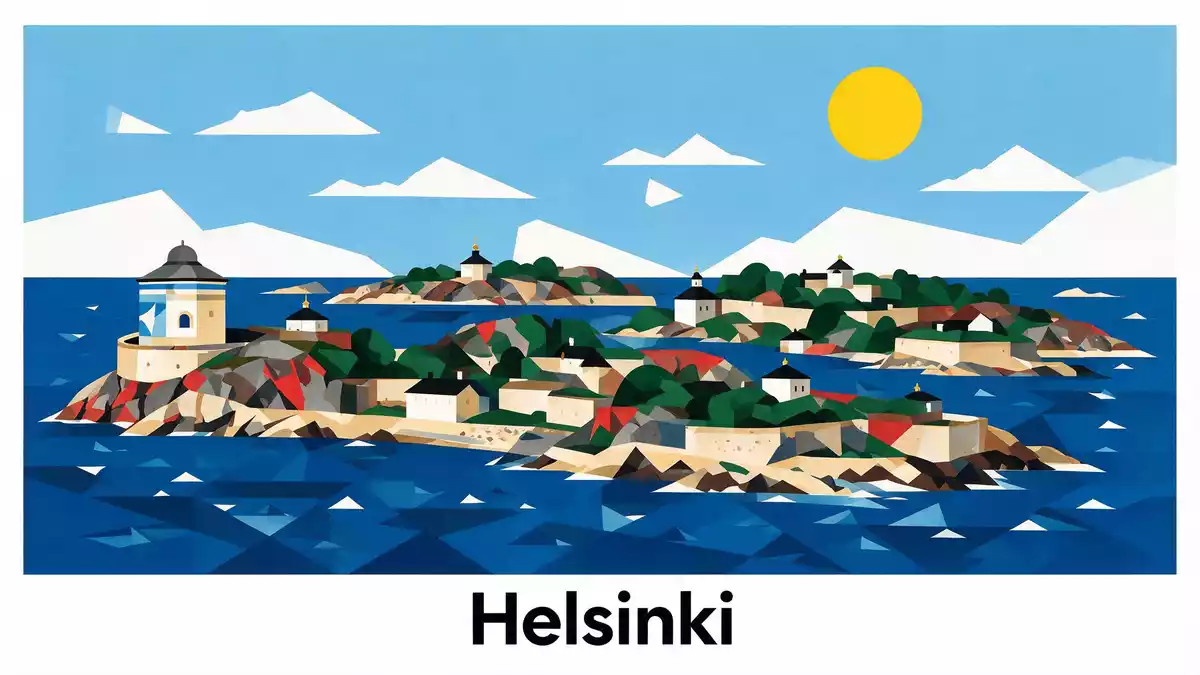
Suomenlinna spreads across islands off Helsinki as a sea fortress with bastions, dry docks and long stone walls. The whole ensemble was begun in 1748 under Augustin Ehrensvärd, and it carries a UNESCO World Heritage inscription.
Suomenlinna's sea fortress across the islands
The fortress was built gradually from 1748 onwards as part of the Swedish era, and the name Suomenlinna replaced Sveaborg after 1918. The site links military engineering with a landscape of water, rock and crossing causeways, and the main identity remains visible in the fortifications themselves.World Heritage inscription
Its setting on several islands gives it a fragmented plan rather than a single compact core. Bastions, curtain walls and detached parts of the fortress create a sequence of enclosed and open spaces that read as a working defensive system.history of the fortress
Augustin Ehrensvärd and the Swedish era
Augustin Ehrensvärd is the name most closely tied to the first phase of construction. Work began in 1748, when Finland belonged to the Kingdom of Sweden, and the fortress entered the Baltic world of rival empires and naval routes.
The result was not a palace or ceremonial citadel, but a fortification complex shaped by artillery, harbour access and island ground. That original military character remains legible in the masonry, the bastion forms and the spread across the water.built from 1748
From naval base to Helsinki district
After 1918, the site took the name Suomenlinna and passed into Finnish hands. It later became a residential district as well as a heritage landscape, so the island group combines fortification, housing and public paths in one place.
That layered use gives the site a different rhythm from a fortress left only to ruins. Dry docks, gun emplacements and stone arches sit beside everyday buildings, creating a district where military infrastructure and civilian life occupy the same ground.residential district of Helsinki
Visiting Suomenlinna: what travellers from Western Europe should know
- The fortress lies off Helsinki and is reached by ferry from the city. The island setting means water is part of the approach, not just the backdrop.
- The terrain includes stone, slopes and passages across the islands. Some routes follow uneven ground and fortification walls rather than broad streets.
- The site includes dry docks, bastions, barracks and harbour-facing structures. Those elements give the fortress a varied plan across several linked islands.
- English is widely used in visitor-facing settings, and the official language is Finnish; the currency is the euro.
Searching for Suomenlinna on social platforms
These links open searches for Suomenlinna on each platform.
Frequently asked questions about Suomenlinna
Where is Suomenlinna?
Suomenlinna lies on islands off Helsinki, in Finland. It is part of the city’s harbour landscape and sits in the water just beyond the mainland.
What should a visit feel like?
Expect a fortress district with stone defences, open water and paths across several islands. The site combines military structures, harbour views and residential buildings.
What makes Suomenlinna distinctive?
Its distinction lies in the combination of a Swedish-era sea fortress, a strong link to Augustin Ehrensvärd and a UNESCO World Heritage status. The island setting gives the fortifications an unusually spread-out form.


