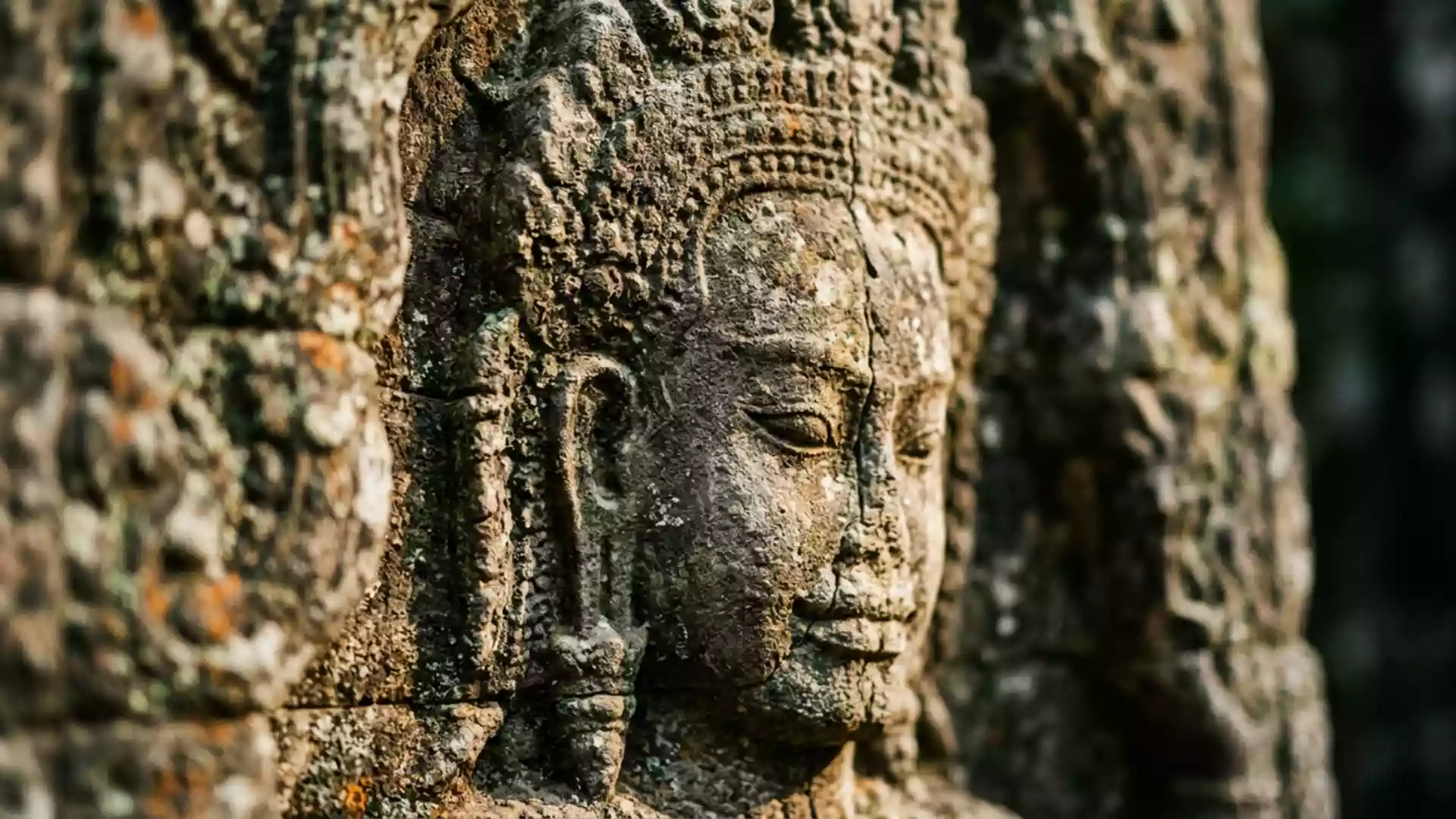
Ta Prohm and the jungle embrace of Angkor
Published on 08/16/2026 at 13:20 | Editorial responsibility: Rafael Müller, Editor-in-Chief AD HOC NEWS
Ta Prohm, tucked into the Angkor temple zone near Siem Reap in Cambodia, is a Mahayana Buddhist monastery complex where Khmer stonework and jungle roots share the same space. Built in the late twelfth century under King Jayavarman VII, it was originally known as Rajavihara, the “Royal Monastery”, and dedicated to the king’s mother in a period when Angkor was the political and spiritual centre of the Khmer Empire.near the city of Siem Reap
Stone monastery wrapped in living trees
The defining experience at Ta Prohm is the direct encounter between masonry and vegetation: sandstone galleries, towers and courtyards stand partly enveloped by towering trees whose roots press over walls and slip between individual blocks.tree roots intertwining with ancient stone structures The temple layout follows a series of low buildings on a single level, enclosed by laterite walls and punctuated by entrance pavilions, so visitors move through long corridors and chambers where stone surfaces and root systems are often side by side.series of long low buildings standing on one level
Unlike many other Angkor monuments that were fully cleared of vegetation, Ta Prohm retains significant jungle growth against and above its structures, giving it a recognisable appearance within the Angkor Archaeological Park.Ta Prohm temple is located in Angkor Archaeological Park Massive trunks rise from platform edges or from the remains of galleries, while smaller plants take root in joints and ledges, so the built fabric and the forest form a single visual field rather than two separate scenes.
Royal foundation in the Bayon period
Ta Prohm belongs to the Bayon style of Khmer architecture and dates to about 1186, when Jayavarman VII commissioned it as a royal Buddhist monastery and university.built about mid-12 th century to early 13 th century (1186) Inscriptions and later studies record Rajavihara as its original Sanskrit name and link the temple to the king’s mother, Jayarajachudamani, with the principal image of Prajnaparamita personified in her likeness.Ta Prohm was originally consecrated as Rajavihara
The monastic complex once supported a large resident community and extensive religious activity, forming part of Jayavarman VII’s programme of public works around Angkor, which included other major temples such as Bayon and Preah Khan.founded as a Buddhist Mahayana monastery and university Centuries later, after the decline of Angkor as the Khmer capital, Ta Prohm was left without maintenance and the forest advanced over its structures, producing the present-day combination of ruined stonework and mature jungle growth that visitors see.
Layout, reliefs and the wider Angkor setting
The overall compound of Ta Prohm consists of a central sanctuary surrounded by successive enclosures, with laterite boundary walls measuring hundreds of metres in each direction.rectangular laterite wall (600 by 1,000 meters) Within these, sandstone structures carry carved pediments, lintels and wall panels showing divine figures, floral patterns and narrative scenes, while courtyards and halls create a sequence of interior and exterior spaces under the open sky.
Ta Prohm stands just east of Angkor Thom and close to other temples on the so-called small circuit, making it part of a compact cluster of sites within the Angkor Archaeological Park.approximately one kilometre east of Angkor Thom The surrounding terrain is largely flat, with paths leading through woodland towards the monument’s western and eastern entrances, and traces of historic water management such as the East Baray lying nearby.on the southern edge of the East Baray
Visiting Ta Prohm: what travellers from Western Europe should know
- Ta Prohm lies within the Angkor Archaeological Park near Siem Reap, reached by road from the town and situated east of Angkor Thom on the park’s small circuit.
- Inside the temple complex, movement involves walking on uneven stone, packed earth and raised platforms, with numerous steps, narrow passageways and low lintels in the galleries.
- The site sits in lowland jungle terrain, so shade from trees alternates with exposed sections of courtyard and causeway where the sun falls directly on stone surfaces.
- The official language is Khmer and the currency is the Cambodian riel.
- Entry requirements depend on your nationality; UK travellers can check the FCDO travel advice at gov.uk/foreign-travel-advice, Irish travellers the Department of Foreign Affairs at ireland.ie.
Searching for Ta Prohm on social platforms
These links open searches for Ta Prohm on each platform.
Frequently asked questions about Ta Prohm
Where is Ta Prohm located?
Ta Prohm stands within Angkor Archaeological Park near Siem Reap in Cambodia, east of Angkor Thom and close to the southern edge of the historic East Baray.
What should visitors expect inside Ta Prohm?
Visitors encounter long stone corridors, enclosed courtyards and towers where extensive jungle growth, including large root systems, presses against and above the Khmer masonry.
What makes Ta Prohm distinctive among Angkor temples?
Ta Prohm is distinctive for the combination of Bayon-period monastic architecture, its foundation as Rajavihara under Jayavarman VII, and the prominent trees intertwined with its ruined structures.