

Tai Shan, the sacred mountain rising above Tai'an
Published on 09/14/2026 at 11:06 | Editorial responsibility: Rafael Müller, Editor-in-Chief AD HOC NEWS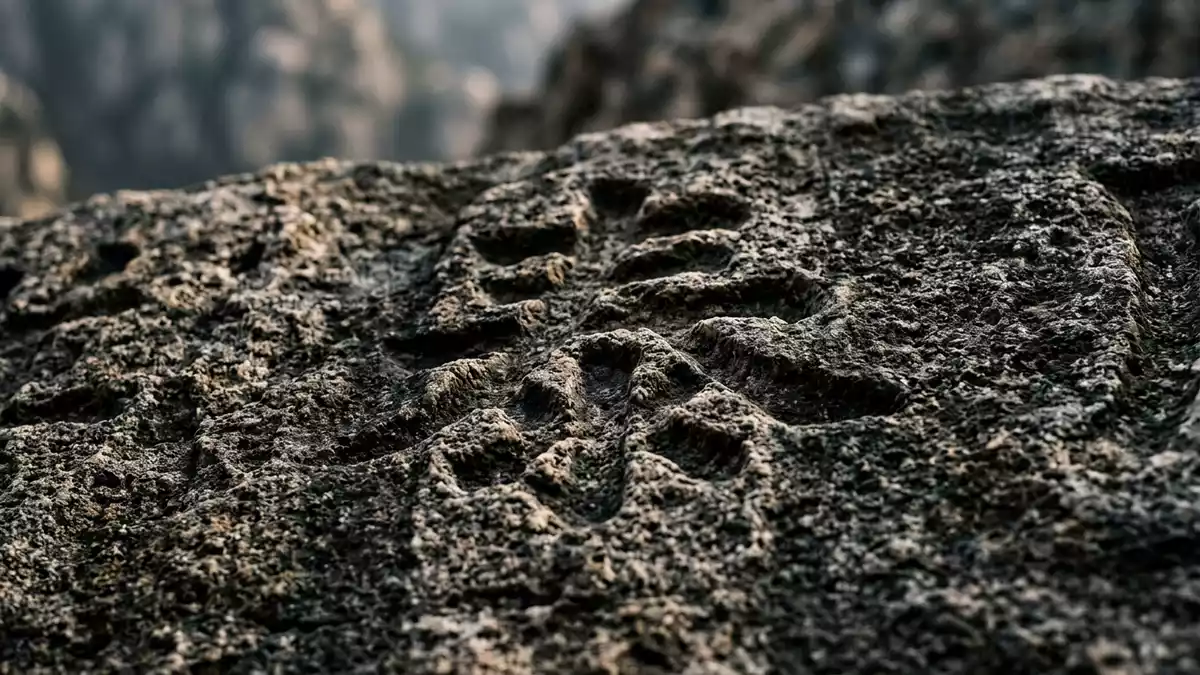
Tai Shan, known in English as Mount Tai, rises immediately north of Tai'an in Shandong province as a compact mountain massif layered with stone paths, temples and inscribed cliffs. It has long been counted among the Five Sacred Mountains of China and was inscribed in 1987 as a UNESCO World Heritage site for both its cultural significance and its landscape.
The eastern sacred peak of China
Tai Shan stands in eastern China, in the central part of Shandong province, just north of the urban area of Tai'an and south of the provincial capital Jinan. The mountain mass stretches along a broadly south-west to north-east axis above the North China Plain, with slopes that rise from foothills of around 150 m (492 ft) to summit ridges above 1,500 m (4,921 ft).mountain mass north of Tai'an The highest point on Tai Shan is commonly reported as Jade Emperor Peak, with an elevation in the region of 1,545 m (5,069 ft), making it the highest point in Shandong province and a prominent landmark on regional maps.maximum altitude of about 1,545 m
The mountain is traditionally associated with the east in Chinese cosmology and is described as the eastern peak among the Five Sacred Mountains, a set of sites that structure ritual geography across the country.one of five sacred Taoist mountains Over generations, emperors and officials travelled to Tai Shan to perform state rituals, reinforcing its status as a place where political authority and religious practice met on exposed rock terraces.
Temples, stone paths and carved rock
The ascent of Tai Shan is marked by a sequence of built and carved elements that reflect more than two millennia of attention to the mountain as a sacred route. At the base, just within Tai'an city, stands the Dai Temple, a complex of halls and courtyards that served as a ceremonial gateway to the ascent and as a place where rulers prepared before continuing upwards.Dai Temple at its base From this precinct, a paved path climbs into the mountain, lined with gateways, small shrines and occasional clusters of trees that follow the contours of the slope.
Higher up, the route becomes a long series of stone steps cut and built into the rock, forming stairways that link terraces, pavilions and cliff faces. Many of these faces carry inscriptions in Chinese characters carved directly into the stone, commemorating visits, imperial decrees or classical texts.cliff carvings and ancient sites The combination of stairways, temples and carved rock gives the ascent a layered character: the mountain appears at once as natural topography and as an archive of political and religious history set into its surfaces.
UNESCO recognition and modern access
In 1987 Tai Shan became one of the first properties in China to appear on the UNESCO World Heritage List, recognised as a mixed cultural and natural site. The inscription emphasises both the physical landscape of metamorphic rock and vegetation and the concentration of historical structures and inscriptions that stretch back at least three thousand years.Mount Taishan World Heritage inscription The mountain is also described as a world geological park and as a protected scenic area under Chinese national classifications, underscoring its dual status as a natural and cultural asset.Mount Tai scenic area administration
Access routes from Tai'an bring travellers by road into the foothills, where approaches converge near temple complexes and trailheads. From there, established paths on stone steps climb through gates and terraces towards the upper plateau near Jade Emperor Peak, while mechanical transport such as cable cars operates on selected sections of the slope. On the summit area, built structures stand close to exposed rock, giving views over the plains and towards the urban fabric of Tai'an and Jinan.
Visiting Tai Shan: what travellers from Western Europe should know
- Tai Shan rises just north of Tai'an in Shandong province in eastern China and is reached from the city by road routes that lead into the mountain’s foothills.
- The ascent on foot follows stone paths and long staircases, with substantial elevation gain; parts of the route climb steeply on stairways built directly into the rock.
- The terrain combines paved steps, rocky sections and exposed terraces, so footwear suited to sustained stair climbing on stone surfaces is important.
- The official language is Chinese and the currency is the yuan.
- Entry requirements depend on your nationality; UK travellers can check the FCDO travel advice at gov.uk/foreign-travel-advice, Irish travellers the Department of Foreign Affairs at ireland.ie.
Searching for Tai Shan on social platforms
These links open searches for Tai Shan on each platform.
Frequently asked questions about Tai Shan
Where is Tai Shan located in China?
Tai Shan is in Shandong province in eastern China, immediately north of the city of Tai'an and south of the provincial capital Jinan.
What should travellers expect on a visit to Tai Shan?
A visit centres on a mountain ascent along stone paths and stairways, passing temples, gateways and carved cliffs, with extensive views from terraces near the summit.
What makes Tai Shan distinctive among Chinese mountains?
Tai Shan combines a high summit ridge with centuries of imperial ritual, dense temple complexes and cliff inscriptions, and holds recognised mixed World Heritage status.


