
Tallinna vanalinn, Tallinn’s medieval heart on the Baltic Sea
Published on 08/16/2026 at 13:54 | Editorial responsibility: Rafael Müller, Editor-in-Chief AD HOC NEWS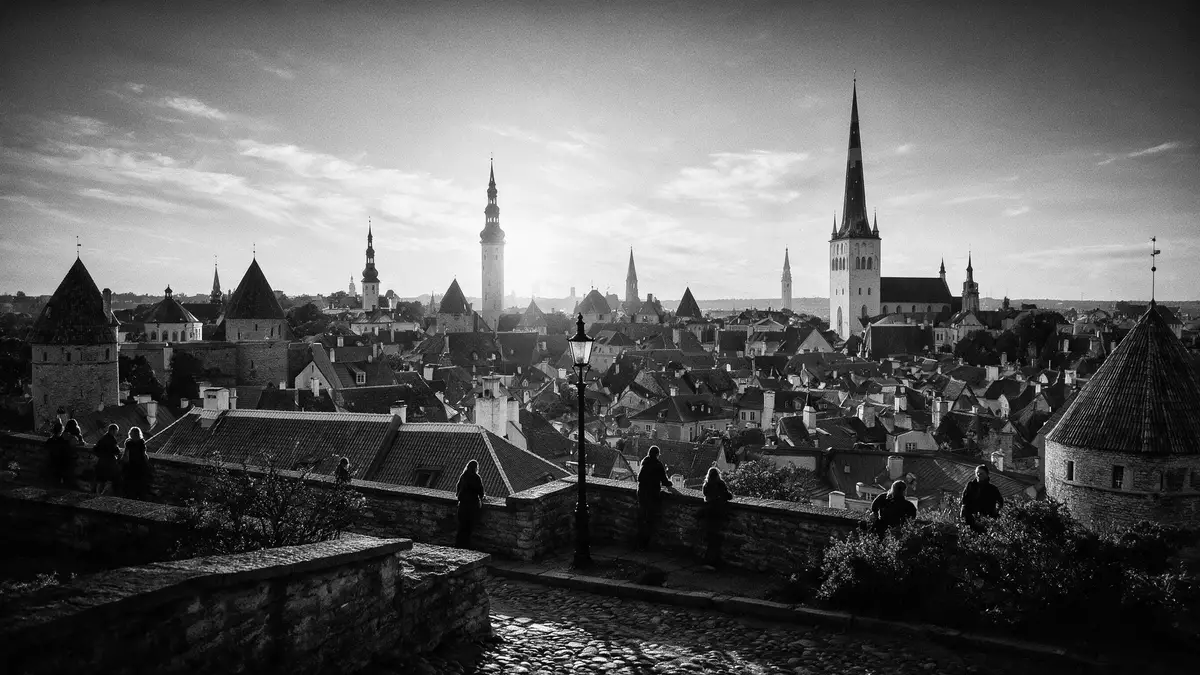
Tallinna vanalinn, the Old Town of Tallinn in Estonia, is a compact medieval city quarter where cobbled streets, fortifications and church towers still follow a Hanseatic-era plan laid out in the thirteenth century. Since 1997 it has been recognised as the Historic Centre (Old Town) of Tallinn on the UNESCO World Heritage List, a status that reflects how densely its stone houses, warehouses and town defences survive around the Baltic harbour.
A medieval trading city preserved in stone
Walk into Tallinna vanalinn and the first impression is of how complete the medieval city still feels: narrow streets bend between closely packed merchant houses, and the building plots largely follow the lines set out between the thirteenth and fifteenth centuries. The Old Town developed as a northern European trading centre within the Hanseatic League, and its urban fabric still reflects that commercial past with a tight web of lanes linking the main square, market streets and harbour approaches.Old Town represents an intact 13th-century city plan The UNESCO inscription identifies the Historic Centre as an exceptionally complete medieval trading city, with layers of town history spanning around eight centuries visible in the buildings and archaeological record.an exceptionally complete medieval trading city
The Old Town extends over more than 100 ha within its formal boundary, surrounded by a buffer zone that protects its skyline and views out towards the harbour and newer districts.Its area is 113 ha and there is a buffer zone Within that area the historic street network, plot divisions and townscape survive with remarkable continuity, giving Tallinna vanalinn a dense mix of Gothic and later architecture in stone and brick. The Old Town remains a lived-in urban quarter rather than a separate museum: residential houses line the same streets as guild buildings, churches and civic monuments.
Walls, towers and the split between upper and lower town
One of the defining features of Tallinna vanalinn is the way fortifications still mark its edge. Sections of the town wall stand along the boundary, punctuated by towers that once guarded gates and vulnerable stretches of the circuit. Around half of the Old Town’s historic perimeter remains in wall form, with a sequence of towers anchoring views across roofs and out to the Baltic.Tallinnas on säilinud 18 torni ja ligi 2 kilomeetrit müüri In places visitors can climb sections of the fortifications, gaining a sense of how the medieval city was defended and how its streets fitted within the ring of masonry.
The historic core divides between the hill of Toompea and the lower streets wrapped around it, a structure that dates back to when the upper town functioned as a castle district and the lower town housed merchants and craftsmen.the town once divided into Toompea upper town and lower town Toompea forms a rocky plateau within the Old Town boundary, carrying major civic and ecclesiastical buildings, while the surrounding lanes run between guild houses, townhouses and warehouses. Observation platforms on the hill offer broad views over Tallinna vanalinn’s tiled roofs, church spires and the more recent glass towers beyond, emphasising the contrast between the medieval core and the later city.Vaateplatvormidelt avaneb maaliline vaade Tallinna erinevatele osadele
UNESCO recognition and Hanseatic heritage
Tallinna vanalinn entered the UNESCO World Heritage List in 1997 under criteria that emphasise both its role in cultural interchange and the preservation of its medieval urban fabric.inscribed on the World Heritage List in 1997 The listing covers the Old Town as a cultural heritage site, highlighting its stone town houses, churches, public buildings and fortifications alongside the underlying archaeological layers. A detailed management plan developed in the early twenty-first century sets out how the outstanding universal value of the area is defined and maintained, stressing that Tallinna vanalinn is a complete and well-preserved medieval trading town on the Baltic coast.a complete and well-preserved medieval North-European trading town
Historically the Old Town grew as Reval, a member of the Hanseatic League whose merchants traded grain, timber and other goods across the Baltic and North Sea. Many of the buildings that line its streets date from the thirteenth to sixteenth centuries, when stone and brick houses with steep roofs replaced earlier timber structures, and when churches and guild halls were built in styles typical of northern European Gothic.Tallinn Old Town is one of the best preserved medieval old towns Museums and cultural institutions now occupy several of these historic buildings, presenting the city’s trading past and the wider history of Estonia within spaces where stone vaults, wooden beams and medieval street frontages remain visible.
Visiting Tallinna vanalinn: what travellers from Western Europe should know
- Tallinna vanalinn forms the historic core of Tallinn on Estonia’s northern coast, a short walk inland from the harbour and clustered around the central square and Toompea hill.
- The terrain within the Old Town includes cobbled streets, short but sometimes steep slopes and stairways leading up to the hill of Toompea and sections of the town wall.
- Nearby, the Baltic Sea waterfront lies just beyond the Old Town boundary, and newer commercial districts rise to the east with modern high-rise buildings visible from the observation platforms.
- The official language is Estonian and the currency is the euro.
Searching for Tallinna vanalinn on social platforms
These links open searches for Tallinna vanalinn on each platform.
Frequently asked questions about Tallinna vanalinn
Where is Tallinna vanalinn located?
Tallinna vanalinn occupies the historic centre of Tallinn, the capital of Estonia on the Baltic Sea, immediately inland from the harbour and central modern districts.
What can visitors expect when exploring Tallinna vanalinn?
Visitors encounter cobbled streets, medieval stone houses, churches and sections of the town wall, along with museums and viewpoints on the hill of Toompea.
What makes Tallinna vanalinn distinctive among Baltic cities?
Its largely intact thirteenth-century street plan, surviving fortifications and dense layers of Hanseatic-period architecture give Tallinna vanalinn an unusually complete medieval trading-town character.


