Teatro Colon and its grand gilded auditorium
Published on 08/09/2026 at 15:10 | Editorial responsibility: Rafael Müller, Editor-in-Chief AD HOC NEWS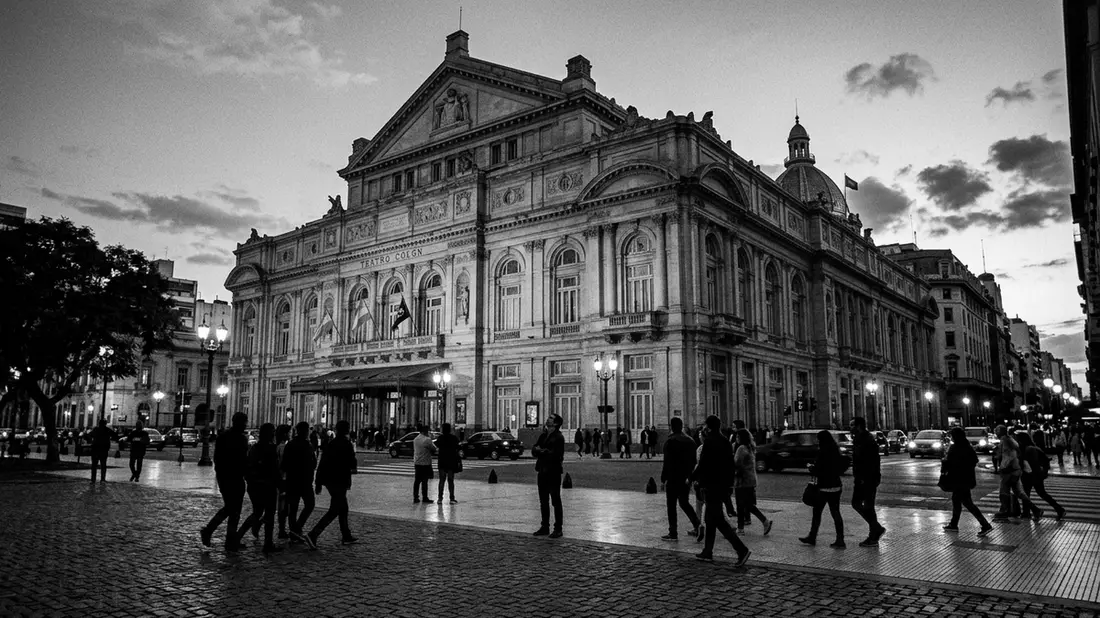
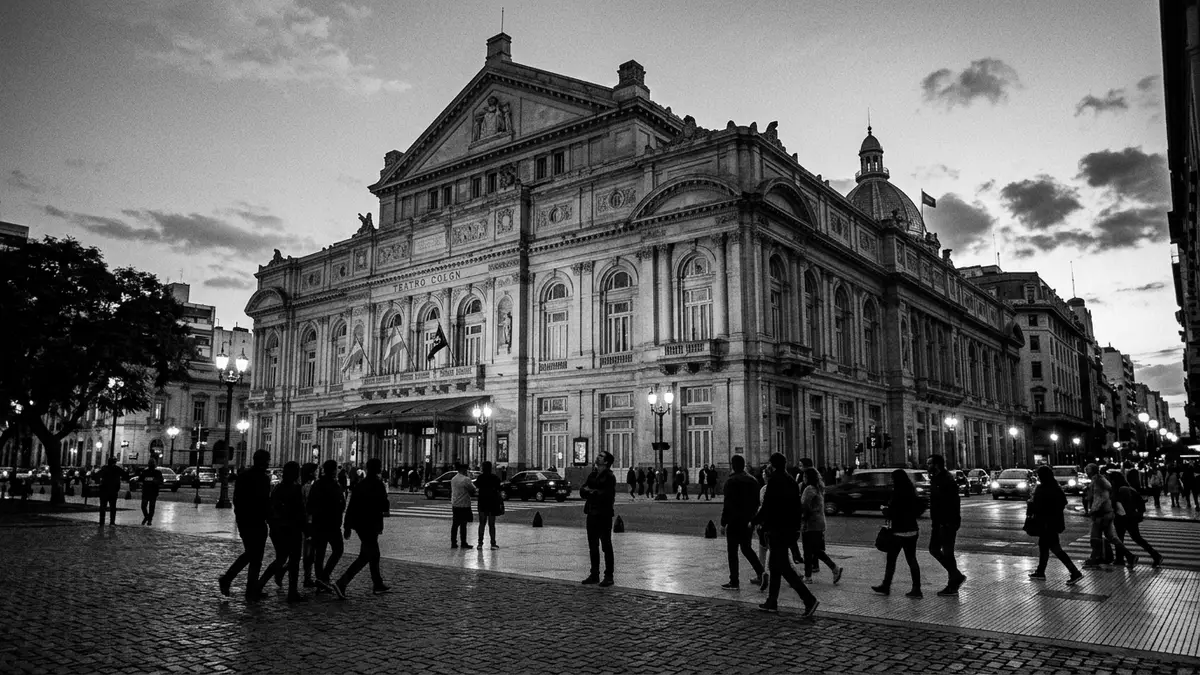
Teatro Colon in Buenos Aires is a late nineteenth- and early twentieth-century opera house whose interior is defined by gilded ornament, marble, and a large horseshoe-shaped auditorium. Opened in 1908, it remains one of the city’s most important cultural buildings and one of the clearest examples of Beaux-Arts theatre design in South America.
Beaux-Arts theatre in the centre of Buenos Aires
The building occupies a prominent city-centre setting and presents a formal stone exterior before opening into layered public spaces inside. Its plan reflects the traditions of grand European opera houses, with foyers, staircases, and a main hall arranged for ceremonial movement through the building.
The auditorium is framed by tiers of boxes and balconies, with heavy decoration across the ceiling, walls, and proscenium. The result is a theatre that is as much about interior surface and proportion as about performance.
A stage for opera, ballet, and concerts
Teatro Colon serves opera, ballet, and orchestral music, and its stage has long been central to Buenos Aires’ performing-arts life. The theatre’s scale allows large productions, while the auditorium keeps the audience close enough to read the detail in the decoration.
The building also includes rehearsal and support spaces linked to the main performance rooms. That combination makes it more than a showpiece: it is a working theatre with a strong institutional life.
Materials, decoration, and interior detail
Inside, marble, gilding, velvet, and painted surfaces create a dense decorative scheme. Chandeliers, carved surfaces, and formal stairways give the public rooms a distinctly ceremonial character.
The exterior is more restrained, which makes the interior reveal more striking. The contrast between the street facade and the theatre rooms is one of its most memorable features, especially when entering the main auditorium.
Visiting Teatro Colon: what travellers from Western Europe should know
- Teatro Colon is in central Buenos Aires and is reached by road, taxi, bus, or metro from the city centre.
- Admission arrangements and opening hours are set by the site's operator and change with the season; the official website is the only binding source.
- Late morning and afternoon visits suit the building’s public rooms, when the interiors are easier to appreciate without the pressure of a performance schedule.
- The building includes stairs, formal interiors, and a theatrical layout that may require some walking between spaces.
- Spanish is the main language used on site, and card payment is widely accepted in Buenos Aires, though carrying some cash remains practical.
- Entry requirements depend on your nationality. UK travellers should check the FCDO travel advice at gov.uk/foreign-travel-advice; Irish travellers the Department of Foreign Affairs at ireland.ie; EU and EEA citizens their own national foreign ministry.
Searching for Teatro Colon on social platforms
These links open searches for Teatro Colon on each platform.
Frequently asked questions about Teatro Colon
Where is Teatro Colon?
It is in Buenos Aires, Argentina, in the city centre. The theatre sits within the capital’s dense urban grid, close to major civic and commercial streets.
What should a visitor expect?
Expect a formal opera house with richly decorated public rooms, a grand auditorium, and a strong emphasis on interior detail. The building rewards slow movement through its foyers and staircases.
What makes it distinctive?
Its combination of Beaux-Arts architecture, opulent interiors, and a major performing-arts function gives it a strong identity. The contrast between the restrained exterior and the elaborate rooms inside is especially memorable.