
Templo de A-Ma on Barra Hill in Macau
Published on 09/18/2026 at 22:08 | Editorial responsibility: Rafael Müller, Editor-in-Chief AD HOC NEWS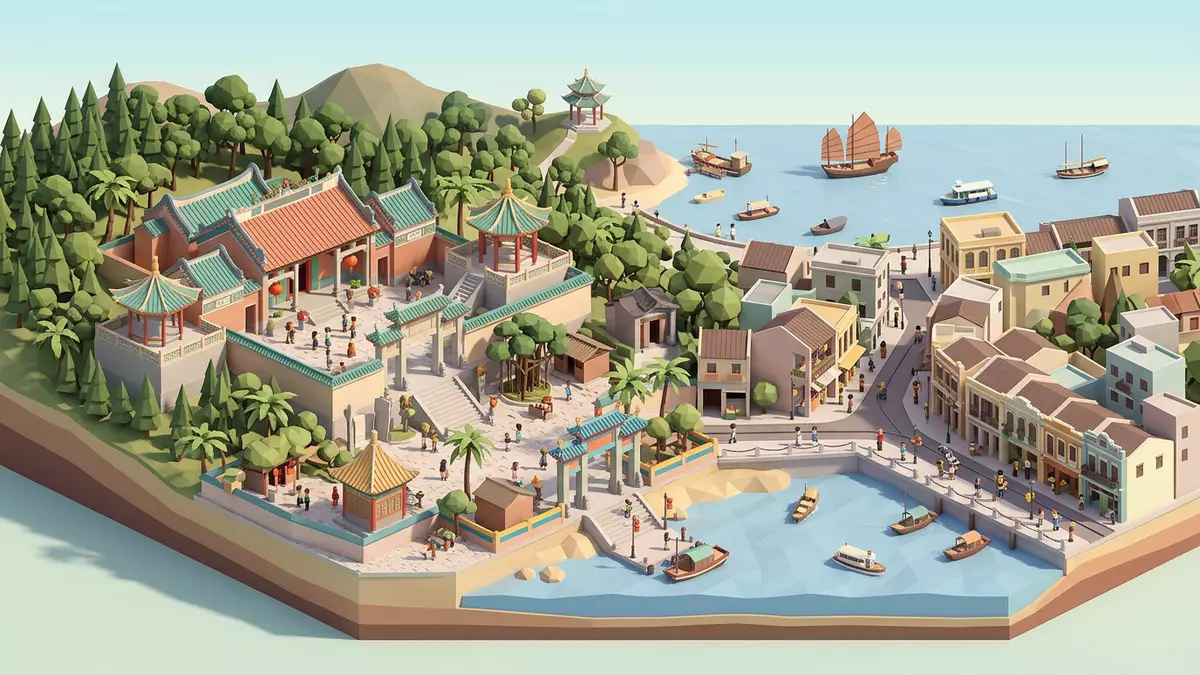
Templo de A-Ma rises in terraces on the south-western edge of the Macau Peninsula, where halls and stairways climb Barra Hill above the Inner Harbour. The temple is linked with the Historic Centre of Macau and the Ming dynasty.
A shrine stepping up Barra Hill
The complex makes its presence through levels rather than a single façade. Masonry walls, rock outcrops and linked halls give Templo de A-Ma a layered profile against the granite hillside.
The shrine is also known as A-Ma Temple, and its name is tied to the maritime goddess Mazu. That association places it within the coastal religious culture of southern China and the long seafaring history of Macau.
From the Ming dynasty to a layered complex
The earliest surviving part is linked with 1488, a date that places the temple among the oldest religious sites in Macau. Its story belongs to the Ming dynasty, while later additions gave the shrine the broader form seen today.
Architecturally, the place reads as a sequence of halls, courtyards and connecting paths. The result is less a single building than a hillside ensemble, with each part adapting to the slope beside Barra Hill.
Mazu, seafarers and Macau’s name
Templo de A-Ma is dedicated to Mazu, the sea goddess venerated by sailors and fishing communities. The cult surrounding her is central to the temple’s identity and helps explain its strong place in Macau’s religious landscape.
The temple is also tied to the naming of Macau itself. Local forms of the name, linked to A-Ma, became associated with the territory in European usage and remain part of the city’s historical memory.
Visiting Templo de A-Ma: what travellers from Western Europe should know
- The temple stands near Barra Square on the south-western side of the Macau Peninsula. City buses serve the area, and the approach leads towards the slope of Barra Hill.
- The terrain is uneven and rises in stages. Steps, stone platforms and short climbs are part of the visit.
- The site faces the Inner Harbour and sits close to the waterfront. The district around it includes older heritage streets and harbour-side structures.
- The official language is Chinese and the currency is the Macanese pataca.
- Entry requirements depend on your nationality; UK travellers can check the FCDO travel advice at gov.uk/foreign-travel-advice, Irish travellers the Department of Foreign Affairs at ireland.ie.
Searching for Templo de A-Ma on social platforms
These links open searches for Templo de A-Ma on each platform.
Frequently asked questions about Templo de A-Ma
Where is Templo de A-Ma?
It stands on the south-western edge of the Macau Peninsula, near Barra Square and above the Inner Harbour. The setting is on the slope of Barra Hill.
What does a visit involve?
The site is a hillside shrine with steps, stone terraces and linked halls. The layout is compact but varied, with the ground rising as the visitor moves through it.
What makes it distinctive?
Its layered hillside form and its connection with Mazu give it a clear identity. The temple also belongs to Macau’s historical story and to the city’s name.


