
The Alamo, from Spanish mission to symbol of Texas history
Published on 09/19/2026 at 08:02 | Editorial responsibility: Rafael Müller, Editor-in-Chief AD HOC NEWS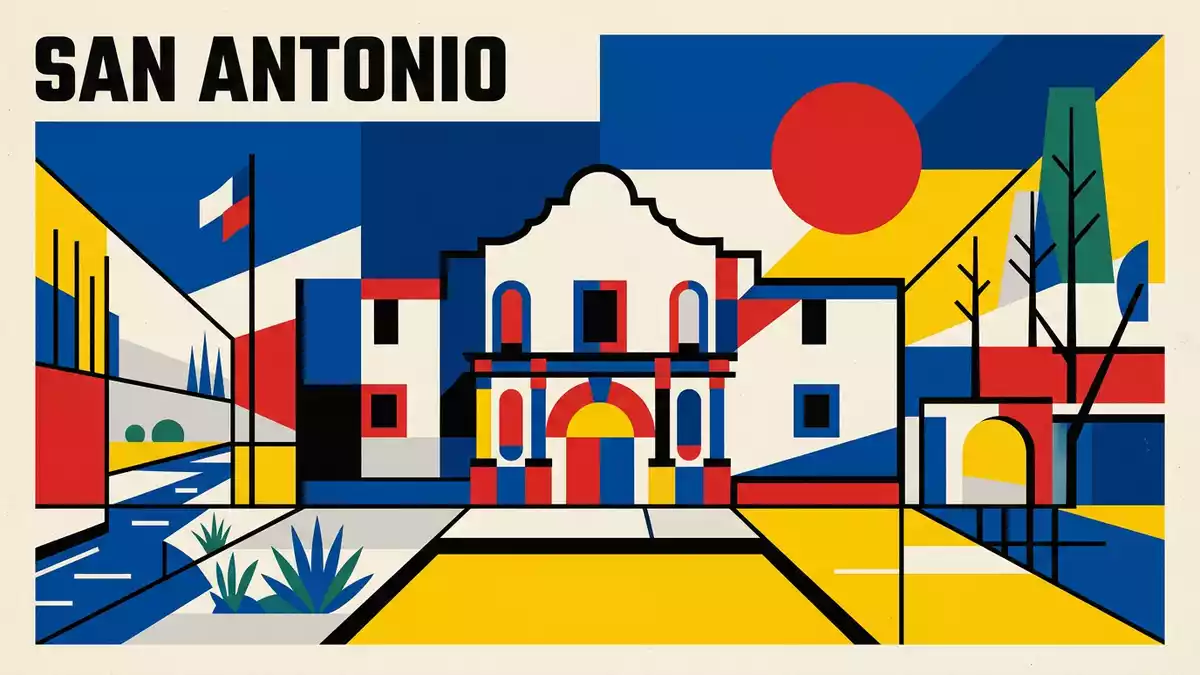
The Alamo in San Antonio is a compact former mission and fortress compound whose low stone church and barracks mark a pivotal chapter in Texas history. Founded as Mission San Antonio de Valero in the early eighteenth century and later turned into a garrison, it is best known as the site of the 1836 Battle of the Alamo during the Texas Revolution.
From Mission San Antonio de Valero to frontier stronghold
The story of The Alamo begins in the early 1700s, when Franciscan missionaries established Mission San Antonio de Valero beside the San Antonio River as the first of the city’s Spanish missions. Construction of the present stone mission church began in the 1750s, giving the complex a more permanent profile in the landscape.Mission San Antonio de Valero Over time, the mission was secularised and its religious role diminished, with the buildings adapted for frontier military use by Spanish, Mexican and later Texan forces.
The name The Alamo grew from a Spanish cavalry unit stationed at the site in the early nineteenth century, whose home town, Alamo de Parras, gave the mission its new designation.Alamo de Parras cavalry unit By the 1830s the former mission had become a fortified compound and depot, its chapel and long barracks forming a defensive perimeter around an open plaza at the edge of San Antonio.
The 1836 Battle of the Alamo and Texas identity
The Alamo achieved lasting significance during the Texas Revolution, when a small garrison of Texan soldiers occupied the compound in late 1835 and early 1836. In February 1836 the Mexican army under General Antonio López de Santa Anna began a siege that lasted thirteen days, culminating in an assault on 6 March 1836 in which the defenders were killed and the post captured.Battle of the Alamo in March 1836 Figures such as James Bowie and David Crockett are closely associated with the defence, and the phrase “Remember the Alamo” became a rallying cry for Texan forces.
Within weeks, Texan troops fighting under the banner of the newly proclaimed Republic of Texas defeated Santa Anna’s forces at the Battle of San Jacinto, securing independence for Texas in 1836.Republic of Texas in 1836 The Alamo’s role in these events turned the former mission into a symbol of resistance and sacrifice, linking its limestone walls to the broader story of Texas joining the United States in 1845 and its later place within American history.
Architecture, materials and World Heritage status
Architecturally, The Alamo combines the forms of an eighteenth-century mission church with adaptations made for military defence. The church façade shows stonework shaped by Spanish colonial design, with carved details and a raised bell level above thick masonry. Behind the chapel, the remnant of the long barracks extends along one side of the plaza, recalling the former courtyard and defensive line of the mission compound.mission church and long barracks The materials are predominantly local limestone, giving the buildings a pale, weathered appearance that contrasts with the taller structures surrounding Alamo Plaza.
The Alamo church and its associated buildings function as a museum and memorial within the Alamo Plaza Historic District, while also forming part of the group of San Antonio missions recognised as a World Heritage Site.World Heritage site recognition As Mission San Antonio de Valero, the complex is inscribed as a National Historic Landmark and stands alongside the other Spanish colonial missions along the San Antonio River as a record of early eighteenth-century settlement and evangelisation in what became Texas.National Historic Landmark designation
Visiting The Alamo: what travellers from Western Europe should know
- The Alamo stands at Alamo Plaza in downtown San Antonio, with the mission church and former barracks set directly beside modern streets and commercial buildings.
- The historic compound is largely level, but the interior of the church contains stone floors and steps, and the surviving barracks wing has passages that feel narrower than the open plaza.
- The Alamo is one of several preserved Spanish missions along the San Antonio River, and the other mission sites lie to the south of the city centre along marked routes.
- English is the official language and the currency is the United States dollar.
Searching for The Alamo on social platforms
These links open searches for The Alamo on each platform.
Frequently asked questions about The Alamo
Where is The Alamo and what kind of site is it?
The Alamo is a historic former mission and fortress compound at Alamo Plaza in central San Antonio, Texas, built originally as Mission San Antonio de Valero.
What should visitors expect when exploring The Alamo?
Visitors encounter a low limestone mission church and the remains of long barracks around an open plaza, with interior spaces that reflect eighteenth-century construction and later military use.
What makes The Alamo distinctive among historic sites in Texas?
The Alamo combines Spanish colonial mission architecture with its role in the 1836 battle during the Texas Revolution, and is part of the San Antonio Missions World Heritage Site.


