
The Met as a city of art on Fifth Avenue
Published on 09/01/2026 at 14:25 | Editorial responsibility: Rafael Müller, Editor-in-Chief AD HOC NEWS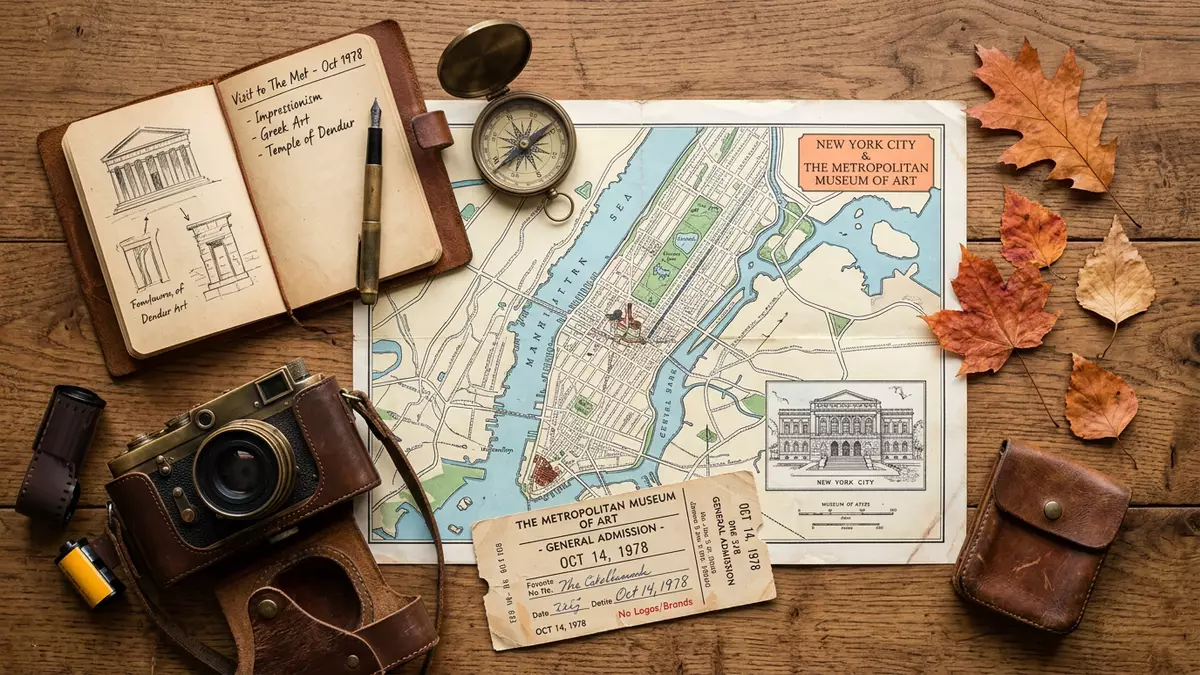
The Met in New York City fills an immense museum building along Fifth Avenue with art and artefacts spanning thousands of years, turning a single address into a city of galleries, corridors and courts. Founded in 1870 on Manhattan’s Upper East Side, it has grown into one of the largest art museums in the United States and a central landmark on the eastern edge of Central Park.
A museum that grew into a monumental façade
The Met’s main building stands at 1000 Fifth Avenue, on the stretch of Manhattan known as Museum Mile, facing the trees and paths of Central Park across the avenue.The address at 1000 Fifth Avenue anchors the museum firmly in the grid of the Upper East Side, yet the building itself stretches far beyond the scale of a typical New York townhouse block. Over the decades since the museum opened at this site in 1880, successive extensions and wings have produced a complex that measures around 2.2 million square feet of floor area and extends for nearly a quarter of a mile along the park.The vast floor area and length
From Fifth Avenue, the best-known feature is the grand entrance with its broad flight of steps and towering stone façade. This monumental front, completed as part of the late nineteenth-century expansion, frames the main doorway with columns and deep arches, signalling the museum’s ambition to stand alongside Europe’s historic institutions.The monumental façade facing Fifth Avenue Yet the building behind this formal face is far more varied: skylit halls sit beside intimate side galleries, and internal courtyards break up the mass into quieter pockets of space.
From a nineteenth-century foundation to a global collection
The Metropolitan Museum of Art was founded on 13 April 1870 by a group of American businessmen, financiers and artists who incorporated the institution with the aim of creating a national museum for art.The founding in April 1870 The museum opened to the public two years later and moved through several early homes before settling into the purpose-built structure on the edge of Central Park in 1880.The opening of the Central Park complex in 1880 That nineteenth-century date still shapes how visitors encounter the museum: grand staircases, Beaux-Arts details and long enfilades of rooms form the backbone of the plan, even as modern interventions have inserted new galleries and circulation routes.
Inside, the permanent collection holds more than 1.5 million objects organised into seventeen curatorial departments, from European paintings and Islamic art to African artefacts and arms and armour.The size and organisation of the collection In the central sculpture court, marble figures share the space with architectural fragments, while nearby galleries move through media and periods in rapid sequence: an ancient Egyptian temple reconstructed stone by stone, medieval cloister elements, and rooms hung densely with canvases by nineteenth-century painters. Other sections lead into Asian ceramics, textiles, musical instruments and photography, underscoring the museum’s role as an encyclopaedic survey of world art.
Walking The Met as an urban landscape
Because of its scale, moving through The Met feels less like visiting a single building and more like crossing between districts in an indoor city. The entrance hall opens onto broad axial corridors that guide visitors towards major courts and sculpture halls, while side passages branch off into smaller galleries that resemble private salons or chapels in their proportions. Changes in floor level, ceiling height and natural light mark the transition between wings built in different periods, so that a walk from one end of the museum to the other passes through a sequence of subtly shifting architectural moods.
One of the defining experiences of The Met is the way that architecture, display and artworks intertwine. Large objects such as classical statues, monumental tapestries and carved portals are set in generous volumes that can accommodate their height and depth, whereas more intimate pieces — miniature paintings, jewellery, small bronzes — occupy cabinets and tight rooms that invite close inspection. Many galleries echo the period of the works they contain, using historic panelling, stone surfaces or reconstructed interiors to frame the collections, while others adopt neutral white walls and modern lighting to emphasise the objects themselves. The result is a layered landscape in which the building’s fabric becomes part of the encounter with art.
Visiting The Met: what travellers from Western Europe should know
- The Met’s principal site, The Met Fifth Avenue, stands on Manhattan’s Upper East Side at 1000 Fifth Avenue, directly opposite Central Park and reached easily by New York City’s subway and bus networks.
- Approaching from Fifth Avenue involves ascending the broad exterior steps to the main entrance, while inside the museum many wings are linked by long corridors and staircases that require a fair amount of walking.
- The museum is in the United States, where the official language is English and the currency is the US dollar.
- The Met also operates The Met Cloisters in northern Manhattan, dedicated largely to medieval European art and architecture, which offers a contrasting setting to the Fifth Avenue building.
- Entry requirements depend on your nationality; UK travellers can check the FCDO travel advice at gov.uk/foreign-travel-advice, Irish travellers the Department of Foreign Affairs at ireland.ie.
Searching for The Met on social platforms
These links open searches for The Met on each platform.
Frequently asked questions about The Met
Where is The Met located in New York City?
The Met’s main building, The Met Fifth Avenue, stands at 1000 Fifth Avenue on Manhattan’s Upper East Side, bordering the eastern edge of Central Park.
What can visitors expect on a first visit to The Met?
Visitors encounter a vast sequence of galleries arranged around major halls and courts, displaying art and artefacts from many cultures and eras within a monumental nineteenth-century museum building.
What makes The Met distinctive among art museums?
The Met combines an encyclopaedic collection of more than 1.5 million objects with a complex, quarter-mile-long building whose varied wings and courts create an urban-scale interior for exploring art.


