
The Pearl-Qatar: a planned island of marinas and districts
Published on 09/24/2026 at 10:31 | Editorial responsibility: Rafael Müller, Editor-in-Chief AD HOC NEWS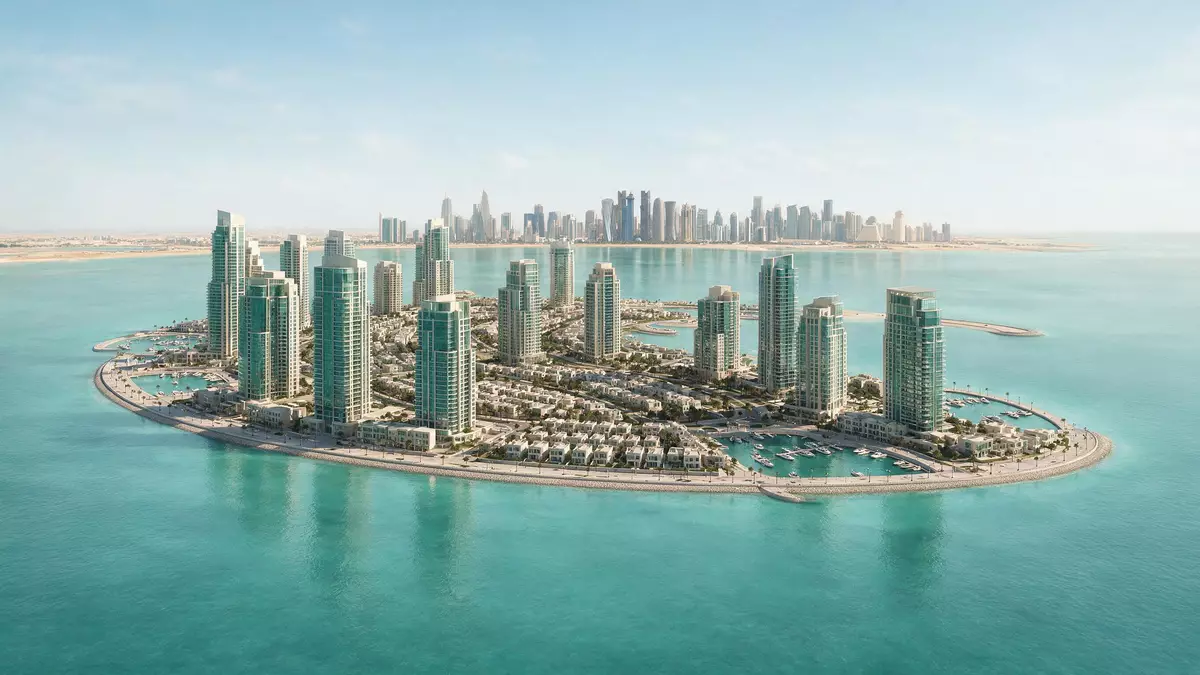
The Pearl-Qatar is an artificial island off Doha’s West Bay coast, built on reclaimed land in the Persian Gulf. Its visible character comes from water: marinas, canals, beaches and engineered shorelines sit beside residential streets, shops and restaurants.
Announced by United Development Company in 2004, the project carries Qatar’s pearling heritage into a planned urban district. The island’s name refers to Doha’s history as a pearl-fishing settlement, while its neighbourhoods present several architectural languages across one connected waterfront.
The Pearl-Qatar extends Doha into the Gulf
The island occupies nearly four square kilometres of reclaimed land and lies offshore from the capital’s northern coastal area. four million square metres of land form a mixed-use setting rather than a single isolated attraction.
Road bridges and causeways connect The Pearl-Qatar with Doha. West Bay lies nearby, with Katara Cultural Village and Lusail City also within the wider coastal area. The island’s position places residential quarters, commercial spaces and waterfront promenades within one planned urban composition.
The development adds an extensive artificial coastline to Doha. Its edges include marina basins, promenades, sandy beaches and views across open Gulf water. The shoreline is therefore part of the island’s architecture, not simply a boundary around it.
Porto Arabia, Qanat Quartier and the island’s districts
The Pearl-Qatar is divided into named precincts with different architectural characters. distinct architectural districts include Porto Arabia, Viva Bahriya, Medina Centrale, Costa Malaz and Qanat Quartier.
Porto Arabia is arranged around a marina, with apartment buildings and a waterfront promenade along the basin. The district’s name and layout place boats, residences and public-facing ground-floor spaces in the same scene.
Qanat Quartier uses canals, pedestrian bridges and coloured façades to create an Italianate waterfront language. Its waterways pass between buildings and public spaces, giving this part of The Pearl-Qatar a different appearance from Porto Arabia’s marina edge.
Medina Centrale forms a town-centre district with shops, cafés, restaurants and pedestrian areas. Viva Bahriya contains residential buildings beside a beach bay, while Costa Malaz combines homes with a coastal setting.
Other named areas include Abraj Quartier, Floresta Gardens, Giardino Village, Isola Dana and La Plage Villas. The variety of names reflects the project’s division into separate urban quarters rather than one uniform architectural field.
A modern waterfront linked to Qatar’s pearling past
Qatar’s pearling economy shaped Doha’s coastal history during the nineteenth and early twentieth centuries. The Pearl-Qatar’s name recalls that maritime tradition, and the development occupies a site associated with historic pearl-diving waters.
Construction began in 2004 under United Development Company, a Qatari real-estate company. Porto Arabia residents moved into the first completed district in 2009.
The project also has a distinct place in Qatar’s property history. It was the first development in the country where foreign nationals could purchase freehold property, linking the island’s physical expansion with a change in ownership arrangements.
That history remains visible through the contrast between traditional references and new construction. Pearl imagery belongs to Qatar’s maritime past, while the island itself is made from reclaimed ground, modern infrastructure and carefully separated districts.
The result is a city quarter defined by its manufactured geography. Streets run beside canals, apartment towers overlook marinas, and villas face beaches or landscaped residential areas. Each part belongs to the same island, yet the water remains the clearest connecting feature.
Visiting The Pearl-Qatar: what travellers from Western Europe should know
- The Pearl-Qatar lies off Doha’s northern coast near West Bay. Road bridges and causeways connect the island with the mainland, and taxis and private cars use the road link.
- The island is urban terrain rather than a natural landscape. Pavements, promenades, marina edges, canals and sandy beaches define the routes between its districts.
- Qanat Quartier contains canals and pedestrian bridges. Porto Arabia centres on a marina, while Medina Centrale provides a town-centre setting with shops and restaurants.
- The official language is Arabic and the national currency is the Qatari riyal.
Searching for The Pearl-Qatar on social platforms
These links open searches for The Pearl-Qatar on each platform.
Frequently asked questions about The Pearl-Qatar
Where is The Pearl-Qatar?
The Pearl-Qatar is an artificial island off Doha’s northern coast, near West Bay in Qatar. Road bridges and causeways link it with the mainland.
What can visitors expect there?
Visitors find marinas, canals, promenades, beaches, shops, restaurants and residential districts. Porto Arabia, Qanat Quartier and Medina Centrale each present a different waterfront setting.
What makes The Pearl-Qatar distinctive?
Its identity comes from the combination of reclaimed Gulf land, named architectural precincts and Qatar’s pearling heritage. It functions as a connected island district rather than a single monument.


