
Theatro Epidavrou and the stone curves of ancient Greece
Published on 09/23/2026 at 05:15 | Editorial responsibility: Rafael Müller, Editor-in-Chief AD HOC NEWS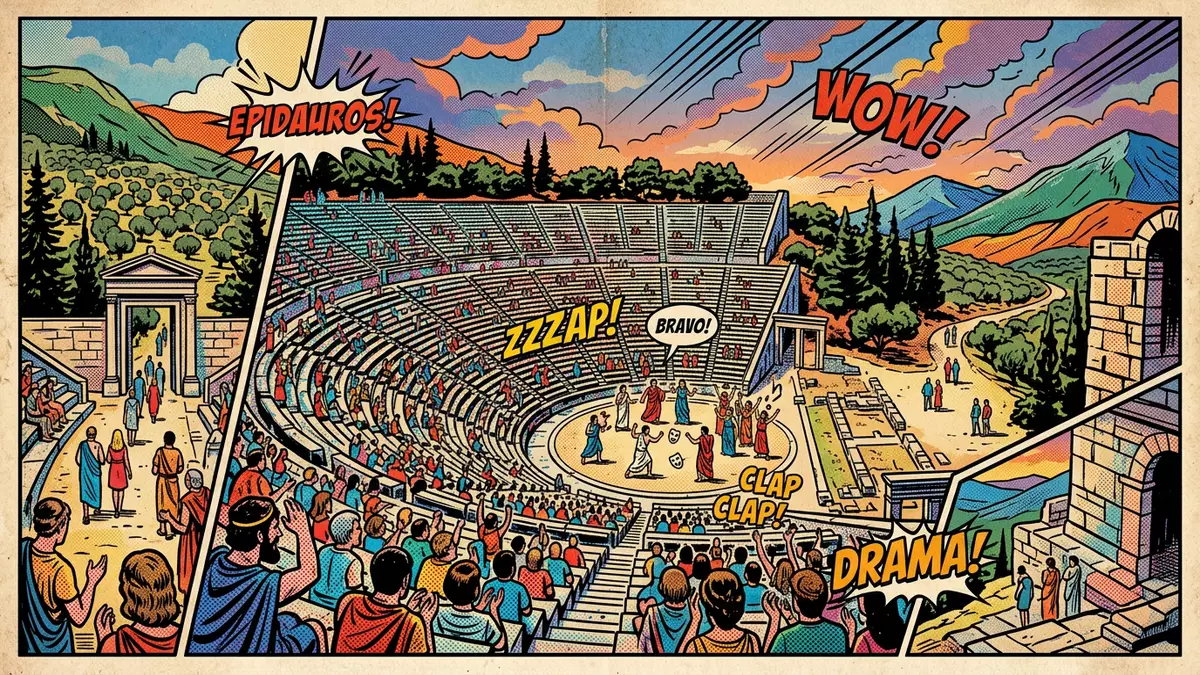
Theatro Epidavrou is a stone theatre set on the slope of Mount Kynortion beside the Sanctuary of Asklepios at Epidauros, Greece. Its broad cavea forms a sweeping arc above a circular orchestra, joining architecture and hillside in one clearly ordered view.
Theatro Epidavrou: a theatre shaped by the hillside
The theatre belongs to the late classical period and was built around 340–330 BC, during the development of the sanctuary of Asklepios. Its design is attributed to Polykleitos the Younger, an architect from Argos associated with the sanctuary’s Tholos.
The seats rise in limestone tiers across the slope. The lower cavea belongs to the original construction, while an upper section was added in the mid-second century BC. Together, these parts create the familiar large auditorium of Epidauros, with a wide open view across the orchestra.
Stone, orchestra and stage at Epidauros
Theatro Epidavrou follows the main elements of a Greek theatre: the cavea, the orchestra and the skene. The orchestra is a circular performance area measuring about 20 m (66 ft) across, set at the centre of the stone seating.
The stage building forms the architectural edge of the performance space. Its surviving remains include the proscenium and entrances connected with the stage area. Limestone benches, retaining walls and carefully arranged passages define the theatre’s visible composition.
The monument’s proportions and setting are recorded among the UNESCO World Heritage details. The sanctuary and theatre entered the World Heritage List in 1988, linking the auditorium with the wider religious landscape of ancient Epidaurus.
From ancient performances to a living auditorium
Theatre formed part of the cultural life of the Sanctuary of Asklepios, where worship, healing practices and public gatherings belonged to the same ancient setting. The auditorium provided a formal space for drama beside the sanctuary’s temples and other monuments.
The theatre’s historical identity rests on its preserved plan. A circular orchestra sits below the rising seats, and the hillside remains visible beyond the upper edge. The relationship between these elements can be read without leaving the auditorium.
The building’s history is also visible in its two construction phases. The late-fourth-century lower seating and the Hellenistic upper addition belong to different periods, yet remain legible as parts of one theatre. The Ministry of Culture description records the early seating and the later enlargement.
Polykleitos the Younger is named in the ancient literary tradition as the theatre’s designer. That attribution connects the auditorium with the architectural work of the Asklepios sanctuary and places the monument within the artistic world of fourth-century BC Greece.
Theatre at Epidauros remains recognisable as an auditorium rather than a ruin reduced to isolated fragments. The stone curves, central orchestra and stage structure preserve the central arrangement of Greek theatrical architecture.
Theatre traditions, architectural form and the sanctuary setting meet in the same monument. The two construction phases explain the visible division between the lower and upper seating without changing the theatre’s unified plan.
Visiting Theatro Epidavrou: what travellers from Western Europe should know
- The theatre lies beside the Sanctuary of Asklepios near Epidauros in the Peloponnese. Road travel from Athens and local car travel are the practical ways to reach the archaeological site.
- The auditorium is built on a hillside. Movement across the seating involves stone steps, sloping passages and uneven archaeological surfaces.
- The main visual sequence runs from the upper seating down towards the orchestra and stage building. Mount Kynortion forms the landscape behind the theatre.
- The official language is Greek and the currency is the euro.
Searching for Theatro Epidavrou on social platforms
These links open searches for Theatro Epidavrou on each platform.
Frequently asked questions about Theatro Epidavrou
Where is Theatro Epidavrou?
The theatre stands beside the Sanctuary of Asklepios near Epidauros in the Peloponnese region of Greece. It occupies the slope of Mount Kynortion.
What does a visit reveal?
The site presents a limestone auditorium, a circular orchestra, surviving stage architecture and the sanctuary landscape around them. Uneven slopes and stone steps form part of the visit.
What makes the theatre distinctive?
Its defining feature is the clear relationship between the curved seating, the circular orchestra and the hillside. The late classical plan remains legible across the monument.


