
Times Square and the city shaped by electric light
Published on 09/23/2026 at 03:51 | Editorial responsibility: Rafael Müller, Editor-in-Chief AD HOC NEWS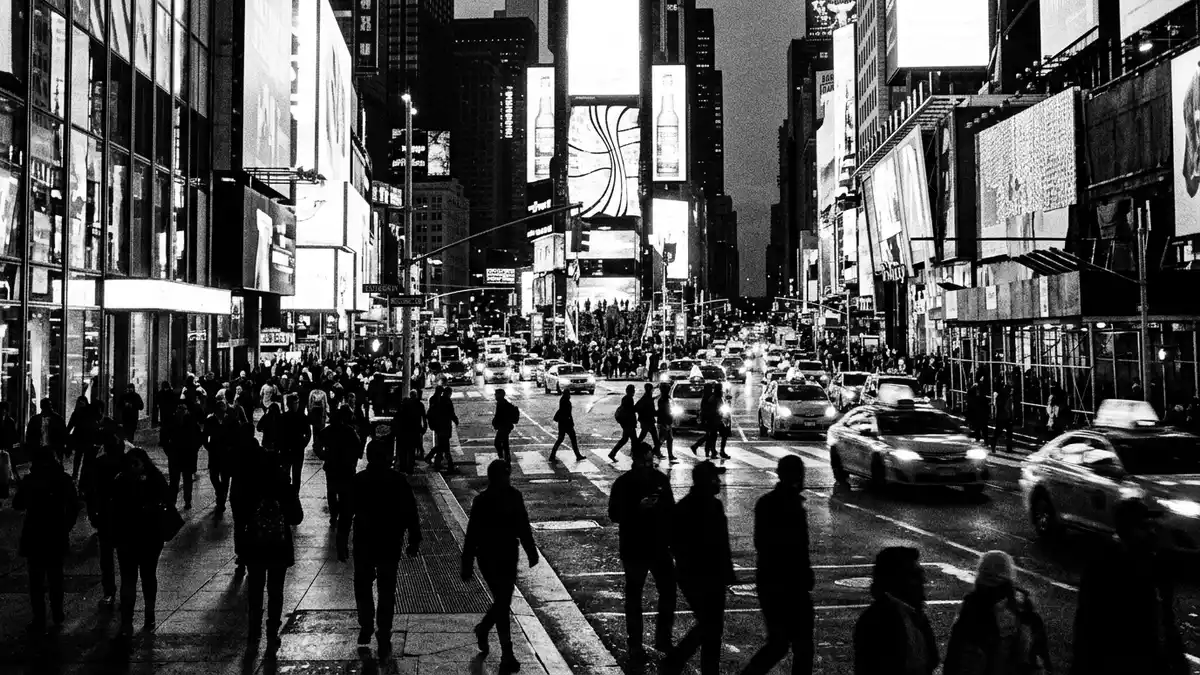
Times Square is a public crossroads in Midtown Manhattan, where Broadway, Seventh Avenue and 42nd Street meet. Its illuminated façades, theatre marquees and moving crowds occupy a space whose name dates from 1904, when The New York Times moved into a tower at the intersection.
Times Square: a crossroads with a changing outline
The central intersection is not a conventional rectangular square. Broadway cuts diagonally across Manhattan’s street grid, creating the distinctive bow-tie outline associated with the area between 42nd and 47th Streets. The name also extends beyond the precise meeting point of the three roads.
Times Square belongs to the Theatre District, with Broadway theatres, restaurants, hotels, offices and shops arranged around its pedestrian spaces. Large digital screens cover building façades, while theatre signs identify productions along the surrounding streets. The result is an urban place defined by movement, advertisement and performance.
From Longacre Square to the Times Building
The area was known as Longacre Square before it became Times Square. The name referred to Long Acre in London, a district associated with carriage-making and the horse trade. New York’s Longacre Square also had connections with carriages, stables and commercial activity.
Publisher Adolph Ochs moved The New York Times into a new headquarters in 1904. The building stood between Broadway and Seventh Avenue near 42nd Street, and the city adopted the name Times Square on 8 April 1904. The tower is known as One Times Square, while the newspaper itself moved elsewhere in 1913.
Theatre signs, public space and a civic tradition
Theatre has shaped the identity of Times Square since the early twentieth century. Broadway runs through the district, and the surrounding blocks contain theatres whose entrances, façades and illuminated signs form part of the streetscape.
New Year’s Eve is the square’s most established public tradition. The first celebration connected with The New York Times’ new headquarters took place in 1904, and the ball-drop ceremony became part of the annual event in 1907. The illuminated ball descends from One Times Square above the intersection.
The square also records changes in New York’s public realm. Road lanes, pavements, seating areas and pedestrian plazas occupy the same dense Manhattan setting as offices and theatres. One Times Square remains the clearest architectural marker of the name, while the signs around it express the district’s commercial and theatrical character.
Visiting Times Square: what travellers from Western Europe should know
- Times Square lies in Midtown Manhattan at the junction of Broadway, Seventh Avenue and 42nd Street. The New York City Subway serves the Times Square–42nd Street station.
- Broadway crosses the regular Manhattan street grid diagonally. Pedestrian areas occupy parts of the intersection and connect with surrounding theatre streets.
- Theatre entrances, marquees and digital advertising screens are concentrated around the square. One Times Square rises at the historic centre of the district.
- The official language is English and the currency is the United States dollar.
- Entry requirements depend on your nationality; UK travellers can check the FCDO travel advice at gov.uk/foreign-travel-advice, Irish travellers the Department of Foreign Affairs at ireland.ie.
Searching for Times Square on social platforms
These links open searches for Times Square on each platform.Frequently asked questions about Times Square
Where is Times Square?
Times Square is in Midtown Manhattan, New York City. Its central intersection joins Broadway, Seventh Avenue and 42nd Street.
What can visitors expect there?
The district contains theatre entrances, illuminated signs, digital screens, shops, restaurants and pedestrian spaces. One Times Square marks the historic centre.
What makes Times Square distinctive?
Broadway’s diagonal route creates the square’s unusual outline. Its name also connects the public space with The New York Times headquarters opened there in 1904.


