Tivoli and its glass-and-wood fairground world
Published on 08/09/2026 at 15:14 | Editorial responsibility: Rafael Müller, Editor-in-Chief AD HOC NEWS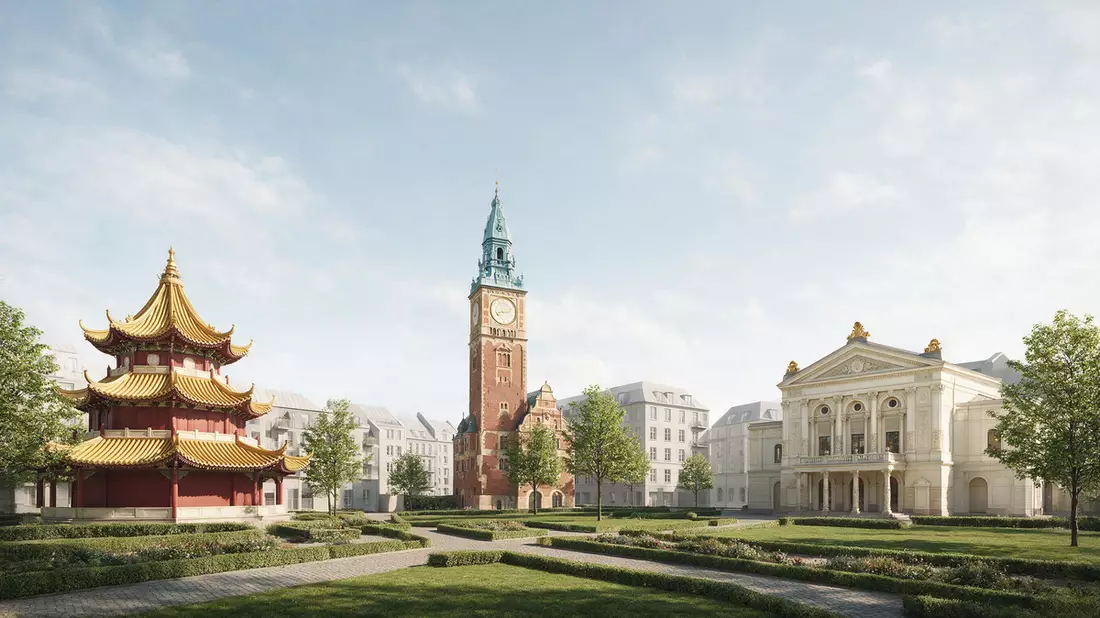
Tivoli in Kopenhagen is a pleasure garden, amusement park and performance venue centred on a landscape of rides, pavilions and planting. Its most memorable quality is the layered mix of glass, wood, iron and foliage around the lake and paths.
Tivoli’s late nineteenth-century atmosphere
Tivoli opened in 1843 under the initiative of Georg Carstensen, and its name has become tied to the park’s blend of leisure and spectacle. The site includes the Concert Hall, the Nimb complex and a sequence of ornate facades that frame the gardens rather than dominating them.
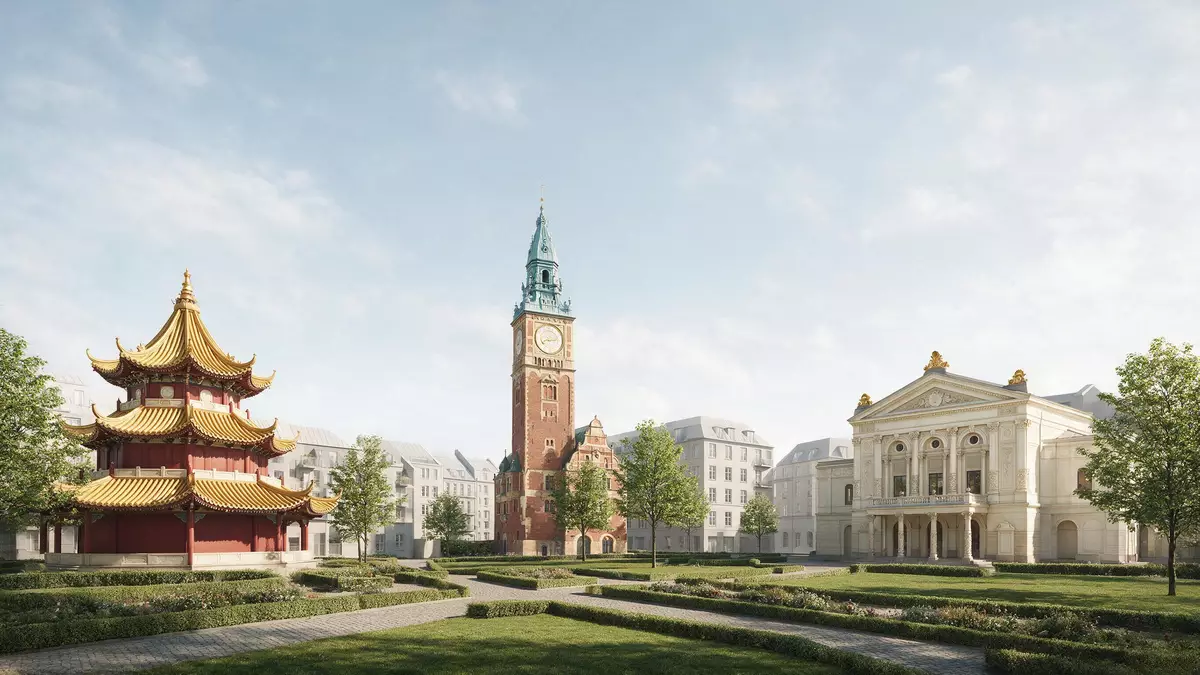
The park’s identity rests on accumulation. Chinese-style details, Moorish touches, lantern-lit walkways and seasonal planting sit beside more modern rides and restaurants, making the place feel assembled rather than uniform.
Gardens, rides and performance spaces
The central lake, flower beds and tree-lined paths create the setting for roller coasters, carousels and open-air entertainment. The wooden roller coaster, Rutschebanen, remains one of the best-known historic rides in the park and is operated with a brake man on board.
Music has long been part of the experience here. The open-air stage, the Concert Hall and smaller performance spaces keep theatre, concert and promenade culture in the same compact site.
Architecture in miniature and in sequence
Tivoli works through close views. Visitors move from a pavilion to a bridge, from a decorative gateway to a ride, and from planted borders to more elaborate buildings, with each element contributing a distinct layer.
The park is notable for its controlled variety. Ironwork, timber structures, painted trim and dense planting give it a hand-built character that suits its nineteenth-century origins and later additions.
Visiting Tivoli: what travellers from Western Europe should know
- The site is in central Kopenhagen and is reached easily by train, metro, bus and on foot from the city centre.
- Admission arrangements and opening hours are set by the site's operator and change with the season; the official website is the only binding source.
- Late afternoon and evening suit the illuminated paths, while warmer months bring fuller planting and outdoor activity.
- The park has paved paths, bridges and some uneven surfaces, so comfortable footwear is sensible.
- Card payment is widely used in Denmark, and English is commonly understood in visitor-facing settings.
- Entry requirements depend on your nationality. UK travellers should check the FCDO travel advice at gov.uk/foreign-travel-advice; Irish travellers the Department of Foreign Affairs at ireland.ie; EU and EEA citizens their own national foreign ministry.
Searching for Tivoli on social platforms
These links open searches for Tivoli on each platform.
Frequently asked questions about Tivoli
Where is Tivoli?
Tivoli is in central Kopenhagen, beside the city’s transport network and within easy reach of the main urban core. It is one of the city’s most distinctive public leisure grounds.
What should a visitor expect?
Expect a compact park with rides, gardens, performance spaces and decorative buildings. The experience changes from day to night as lighting and movement take over the paths and lake.
What makes Tivoli distinctive?
Its combination of historic amusement architecture, planted gardens and cultural venues gives it a layered character. Georg Carstensen’s 1843 park remains recognisable in that mixture of recreation and display.