
Tokyo Skytree and the vertical cityscape of Tokio
Published on 08/17/2026 at 13:48 | Editorial responsibility: Rafael Müller, Editor-in-Chief AD HOC NEWS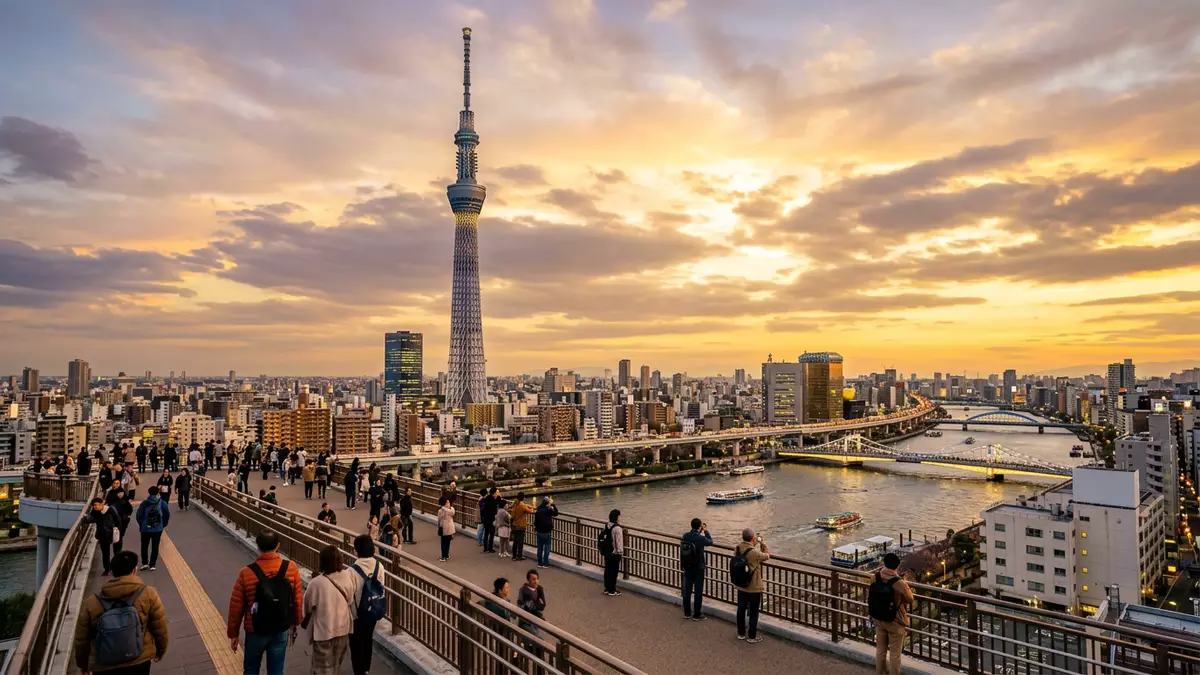
Tokyo Skytree rises above the Sumida district of Tokio as a steel broadcasting tower and viewing platform that reshapes the way the city is seen. Completed in the early 2010s and opened to the public on 22 May 2012, it reaches a height of 634 m (2,080 ft), making it a defining element of the skyline and a focal point for understanding the scale of the Japanese capital. Designed by the architectural firm Nikken Sekkei, it combines the role of a television and radio tower with high-level observation decks that pull the city into a single vertical panorama.
A tower of steel and numbers
Tokyo Skytree stands in the Oshiage district of Sumida City, east of the older quarters around Asakusa and close to the Sumida River. Official information records its exact elevation at 634 m (2,080 ft), a figure that also echoes “Musashi”, a historic name associated with the wider Tokyo region, turning a structural measurement into a cultural reference.a height of 634 m The tower’s form rises from a broad base into a slender shaft, supported by a lattice of steel that stabilises its considerable height without relying on occupied floors from ground to summit.
Construction began in 2008 under the direction of Nikken Sekkei, with the Obayashi Corporation responsible for building the structure and sculptor Kiichi Sumikawa involved as design supervisor.completed in 2012 at 634 m The tower was developed by Tobu Railway and Tobu Tower Skytree Co., tying it directly to the transport and commercial infrastructure of eastern Tokyo and anchoring it within the larger complex known as Tokyo Skytree Town. From ground level, the structure is flanked by shopping and entertainment facilities, but the dominant presence is always the steel tower itself.
Observation decks above the city
The most accessible way to experience Tokyo Skytree is through its enclosed observation decks, set high above the low-rise and mid-rise fabric of Sumida. The lower deck, known as Tembo Deck, is located at around 350 m above ground and spans several levels within the tower’s upper structure.observation decks at 350 and 450 m Large windows wrap around the deck, giving outward views over central Tokyo, the river and, on clear days, distant mountains. Sections of the floor are glazed, allowing visitors to look straight down towards the base and the streets below.
From Tembo Deck, dedicated lifts continue upwards to the Tembo Galleria, a higher level that begins around 445 m and leads along a gently rising glass-covered walkway to Sorakara Point at approximately 451 m.Sorakara Point is the highest viewing spot This upper deck forms the highest publicly accessible point in the tower and one of the highest enclosed viewing platforms in Japan, drawing the city into a broad horizontal band far below. The sequence from the lower deck to the upper walkway and final viewing area creates a clear vertical progression through the structure, with the changing height reflected in the widening field of view.
Broadcasting tower in the urban fabric
Beyond its role as a vantage point, Tokyo Skytree functions as a major broadcasting facility for the wider metropolitan region. It was established to take over television and radio transmission duties from older towers and masts whose height no longer matched the expanding cityscape. The precise elevation allows signals to clear neighbouring high-rise buildings and reach across the Kanto plain, while the location in Sumida places the structure within reach of existing rail lines and roads.
The tower stands at 1-1-2 Oshiage in Sumida City, connected by local streets to the Sumidagawa embankments and the more historic districts on the opposite bank.1-1-2 Oshiage, Sumida City The surrounding development, known as Tokyo Skytree Town, extends around the base with commercial buildings that make use of the foot traffic generated by the tower.Tokyo Skytree Town shopping and entertainment complex From street level, looking up from these blocks, the tower’s steel framework responds to the dense urban fabric by rising far above any neighbouring structure, marking the transition from ordinary city scale to the vertical reach of a megacity.
Visiting Tokyo Skytree: what travellers from Western Europe should know
- Tokyo Skytree stands in the Oshiage area of Sumida in eastern Tokyo, close to the Sumida River and within walking distance of stations on the Tobu Skytree Line and the Toei Asakusa Line.
- The main approach from nearby stations runs through paved plazas and interior shopping levels; inside the tower itself, lifts connect the base with the observation decks, with additional staircases between certain interior floors.
- Tokyo Skytree forms part of a larger complex known as Tokyo Skytree Town, so a visit combines high-level views with time spent in adjoining commercial and entertainment spaces at ground level.
- The official language is Japanese and the currency is the Japanese yen; English-language signage is present in key areas of the tower and its surrounding complex.
- Entry requirements depend on your nationality; UK travellers can check the FCDO travel advice at gov.uk/foreign-travel-advice, Irish travellers the Department of Foreign Affairs at ireland.ie.
Searching for Tokyo Skytree on social platforms
These links open searches for Tokyo Skytree on each platform.Frequently asked questions about Tokyo Skytree
Where in Tokio is Tokyo Skytree located?
Tokyo Skytree stands in the Oshiage district of Sumida City in eastern Tokyo, near the Sumida River and across from the older Asakusa area.
What can visitors expect during a visit to Tokyo Skytree?
A visit centres on enclosed observation decks at around 350 m and 450 m, accessed by lifts from the base, with wide-window views over Tokyo and surrounding districts.
What makes Tokyo Skytree distinctive among towers?
Tokyo Skytree combines a height of 634 m with a dual role as broadcasting tower and public viewing structure, rising from a dense urban quarter into one of the highest enclosed decks in Japan.


