Tonle Sap’s floating villages and shifting waters
Published on 08/09/2026 at 15:15 | Editorial responsibility: Rafael Müller, Editor-in-Chief AD HOC NEWS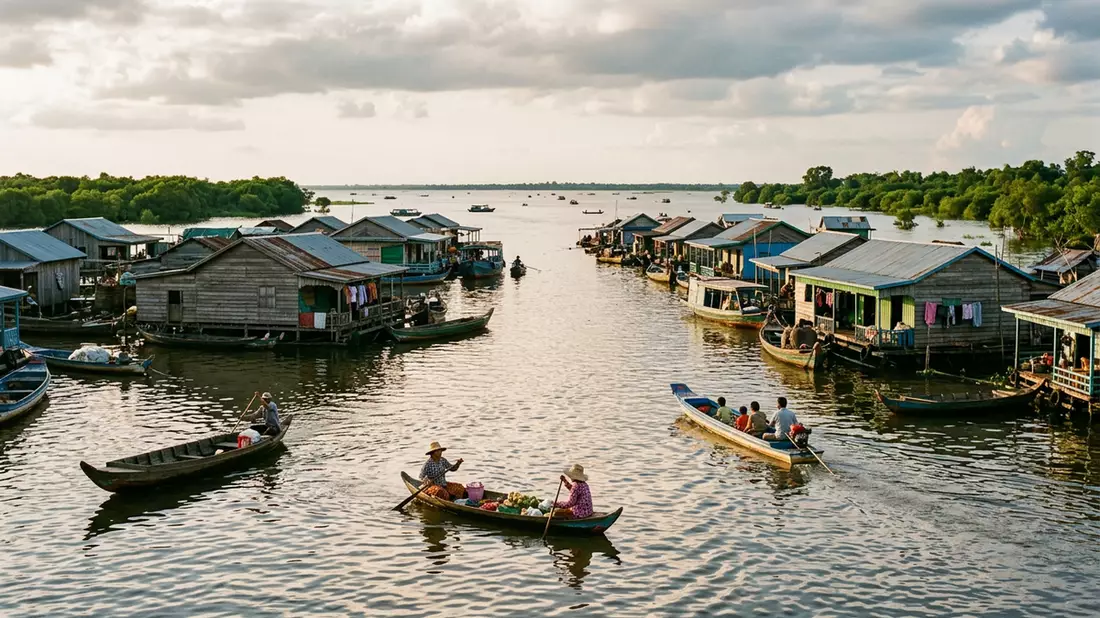
Tonle Sap is Cambodia’s great inland lake, linked to Siem Reap and known for its floating settlements and broad seasonal waterline. It forms part of the Mekong system, and its surface changes enough to alter the look of the shore from one season to another.
Tonle Sap and the lake-side way of life
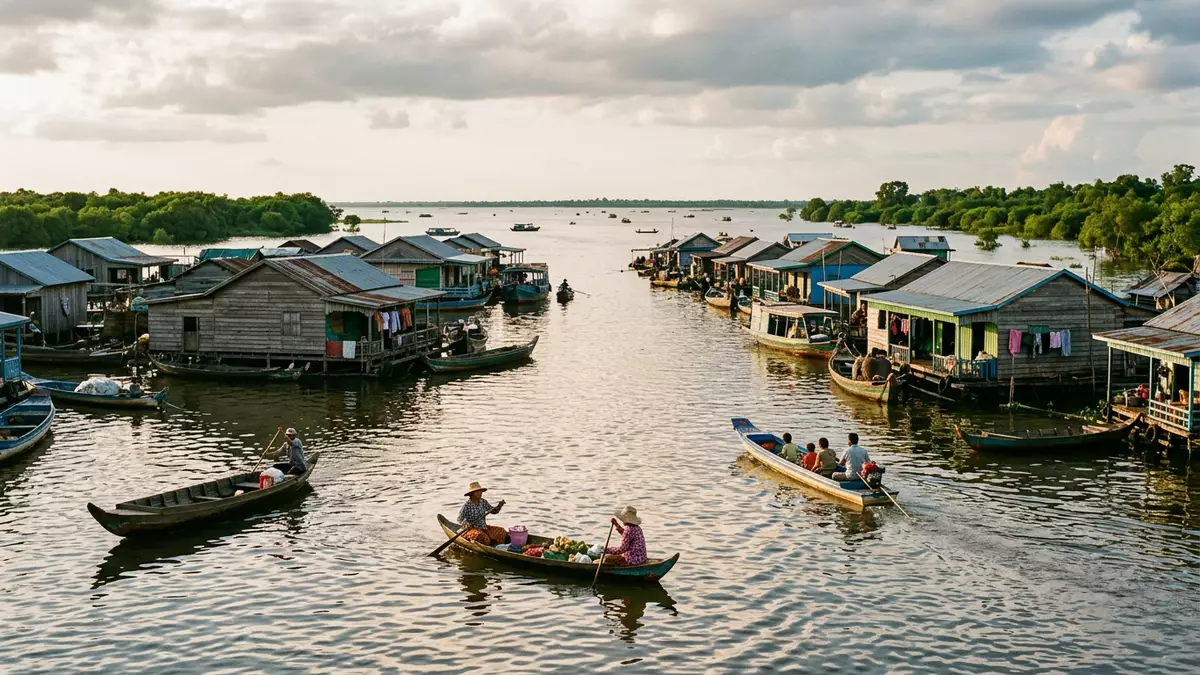
The lake is closely associated with fishing, river travel and villages that sit on the water rather than beside it. Wooden homes, school buildings and market boats appear across different parts of the lake region, giving the area a working character rather than a purely scenic one.
The name Tonle Sap belongs to both the lake and the river that connects it with the wider water network of Cambodia. That connection makes the place important in the geography of the country and in the daily routines of communities around Siem Reap.
The waters that change the shoreline
Tonle Sap is shaped by the annual swing between dry and wet periods. In the dry months the water retreats, while in the rainy season it spreads far across the plain and changes the edge of the lake.
This changing scale is one reason the lake feels different from a fixed monument or a standard city attraction. The water, houses, boats and stilted structures form a landscape that is read in movement as much as in outline.
History, region and cultural setting
Tonle Sap has long been tied to the history of Khmer civilisation and the broader Angkor region. The lake supported settlement, food supply and transport for generations, and that older connection still shapes how visitors understand the area.
For travellers coming through Siem Reap, the lake adds a living water landscape to the temple cities and dry land around them. It is a place of ordinary activity, but also one of the clearest ways to see how river, lake and settlement meet in Cambodia.
Visiting Tonle Sap: what travellers from Western Europe should know
- The site is reached from Siem Reap by road and by boat routes that serve lake settlements.
- Admission arrangements and opening hours are set by the site's operator and change with the season; the official website is the only binding source.
- The lake region is best seen in the wet season or in the early part of the day, when water access and light are more favourable for boat travel.
- Some visits involve wooden walkways, boats, uneven boarding points and exposed edges near the water.
- Local interactions often involve Khmer, cash in small amounts and boat-based trading in the lake communities.
- Entry requirements depend on your nationality. UK travellers should check the FCDO travel advice at gov.uk/foreign-travel-advice; Irish travellers the Department of Foreign Affairs at ireland.ie; EU and EEA citizens their own national foreign ministry.
Searching for Tonle Sap on social platforms
These links open searches for Tonle Sap on each platform.
Frequently asked questions about Tonle Sap
Where is Tonle Sap?
Tonle Sap is in Cambodia, near Siem Reap, and forms the country’s best-known inland lake system. It is connected to the Mekong river network.
What should visitors expect?
Expect boats, water-level changes, village life and a landscape that shifts with the seasons. Some parts involve walking on uneven boards or stepping on and off boats.
What makes Tonle Sap distinctive?
Its large seasonal change and its floating settlements define it more than any single building or viewpoint. The lake is both a transport landscape and a place of daily work.