
Topkapi Sarayi and its courtyards above the Bosphorus
Published on 08/15/2026 at 14:37 | Editorial responsibility: Rafael Müller, Editor-in-Chief AD HOC NEWS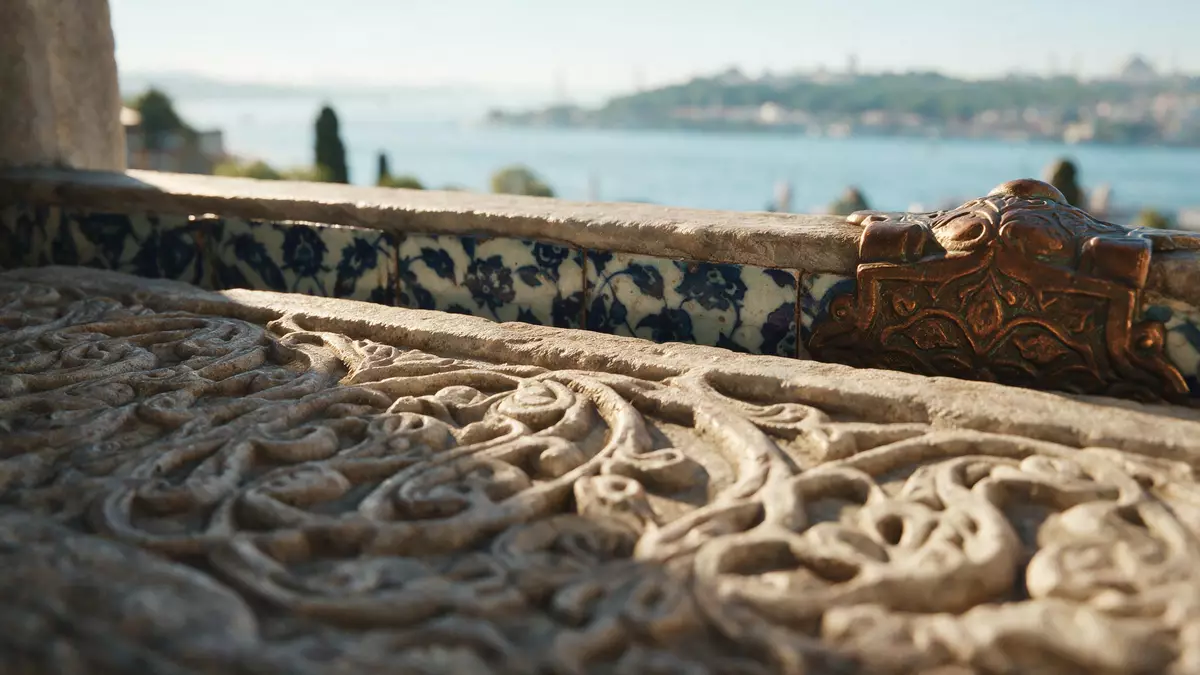
Topkapi Sarayi in Istanbul is an expansive Ottoman palace complex laid out across the eastern tip of the city’s historic peninsula, between the Bosphorus, the Golden Horn and the Sea of Marmara. Built under Sultan Mehmed II in the later fifteenth century, and turned into a museum in 1924 after the foundation of the Republic of Turkey, it presents a sequence of gates, courtyards, pavilions and gardens rather than a single palace block.
Topkapi Sarayi on the historic peninsula
Topkapi Sarayi occupies the headland often called Seraglio Point, a plateau at the top of a hill that falls away towards the surrounding waters. The complex stands within its own walled precinct on the eastern side of the Fatih district, close to the great dome and buttresses of Ayasofya and above the shipping lanes of the Bosphorus and the Golden Horn.walled precinct on the eastern tip The location on this spur of land means that built stone, planted terraces and sea views are never far apart.
Construction of the palace began under Mehmed II after the conquest of Constantinople in 1453, with major works in the later 1450s and 1460s, and it developed through successive reigns into the core residence and administrative seat of the Ottoman sultans. From around 1478 until the move to Dolmabahçe Palace in 1856, Topkapi Sarayi functioned as the imperial court’s centre, housing generations of sultans, their households and the machinery of government.residence and administrative centre from about 1478 to 1856 A decree of 1924 then converted the complex into a museum and library.
A palace organised around gates and courtyards
The organising idea of Topkapi Sarayi is a sequence of courtyards, narrowing from the outer world to the inner domain of the sultan. Visitors pass through the Bab-? Hümâyun, the main imperial gate in the outer walls, into the first courtyard, an open expanse that historically accommodated soldiers, servants and the retinues of officials. Further inside stands the Babüsselâm, a monumental gate with flanking towers leading to the second courtyard, where administrative buildings, council chambers and service structures are arranged around a central open space.Bab-? Hümâyun, Babüsselâm and successive courtyards
Beyond the Babüssaâde gate lies the third courtyard, associated with the Enderun palace school and the more private realm of the sultan, and further terraces and gardens extend into a fourth courtyard overlooking the water. This layered arrangement is reinforced by internal zoning: the Bîrun area for service and security, the Dîvân-? Hümâyun for imperial council and administration, the Enderun for education and elite training, and the Harem for the private living quarters of the ruler’s household.four main sections connected by four courtyards Walking deeper into the complex means crossing thresholds that mark shifts from public to restricted space.
Architecture, materials and collections
Architecturally, Topkapi Sarayi developed over several centuries, and its buildings show Ottoman court architecture with later Baroque and European influences alongside Islamic decorative traditions. The earliest phases under Mehmed II established masonry pavilions, tiled halls and service ranges around the core courtyards, and later sultans added new wings, kiosks and garden structures, extending the complex into the nineteenth century.construction from the fifteenth to the nineteenth century Stone, brick, timber and ceramic tile are used in varying combinations, with domed roofs over key halls and slender chimneys rising from the palace kitchens.
As a museum, Topkapi Sarayi houses collections that reflect its former role as an imperial residence: weapons and armour, ceremonial garments, manuscripts and books, and objects associated with court ritual and everyday life. The treasury chambers display precious metalwork and jewelled pieces, while the library preserves volumes from different periods of Ottoman rule.imperial collections and extensive library The architecture and the collections together present a physical record of the six centuries in which the Ottoman Empire shaped the region.
Visiting Topkapi Sarayi: what travellers from Western Europe should know
- Topkapi Sarayi stands on the historic peninsula of Istanbul, within the Fatih district beside Ayasofya; the area is reached by tram services that run to Sultanahmet and by local buses.
- The palace grounds occupy a hilltop plateau with cobbled approaches, long walks across open courtyards and a number of staircases between terraces, so time on foot over uneven surfaces is part of a visit.
- Within the complex, interiors alternate with outdoor passages and gardens, and some routes involve covered walkways, tiled halls and narrower corridors, particularly in the Harem and treasury areas.
- The official language is Turkish and the currency is the Turkish lira.
- Entry requirements depend on your nationality; UK travellers can check the FCDO travel advice at gov.uk/foreign-travel-advice, Irish travellers the Department of Foreign Affairs at ireland.ie.
Searching for Topkapi Sarayi on social platforms
These links open searches for Topkapi Sarayi on each platform.
Frequently asked questions about Topkapi Sarayi
Where is Topkapi Sarayi located within Istanbul?
Topkapi Sarayi stands on the eastern tip of the historic peninsula in the Fatih district, above the Bosphorus and the Golden Horn and beside Ayasofya.
What should visitors expect on a visit to Topkapi Sarayi?
A visit involves moving through successive courtyards, gates, halls and gardens, with time in museum galleries and historic interiors as well as walks across open terraces.
What makes Topkapi Sarayi distinctive among palaces?
Instead of a single palace block, Topkapi Sarayi is organised as a multi-courtyard complex with separate zones for administration, education and private life, set on a hill between three stretches of water.


