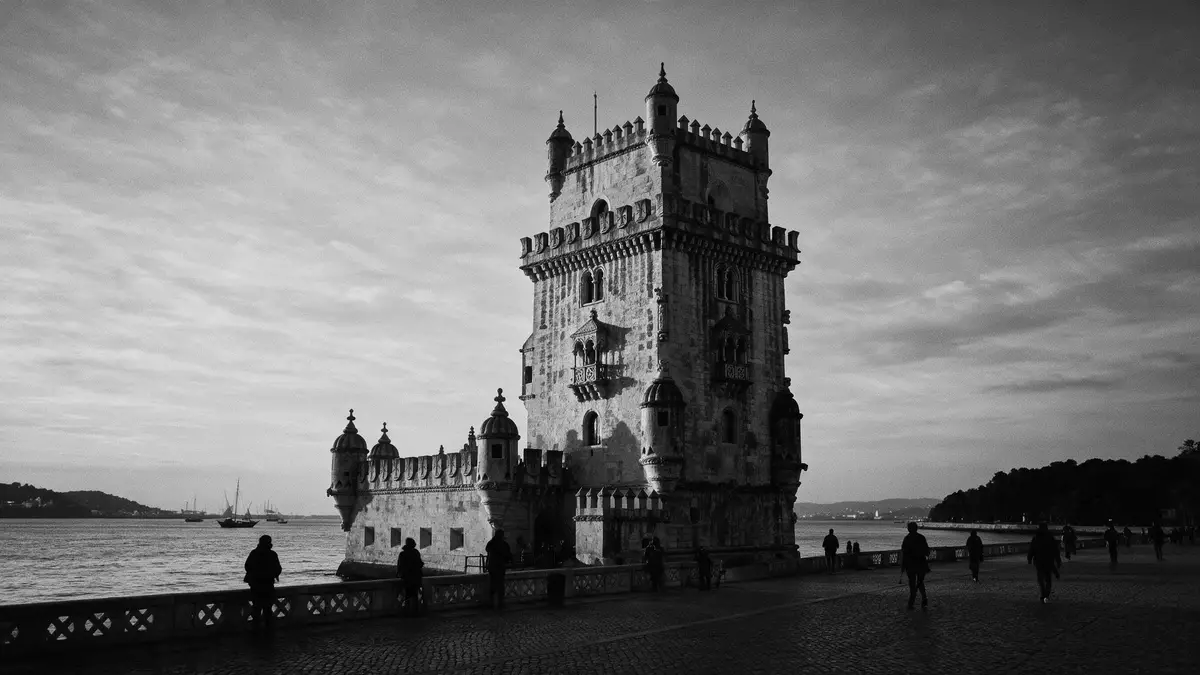
Torre de Belem and the stone gateway to Lissabon’s seafaring age
Published on 08/12/2026 at 14:14 | Editorial responsibility: Rafael Müller, Editor-in-Chief AD HOC NEWS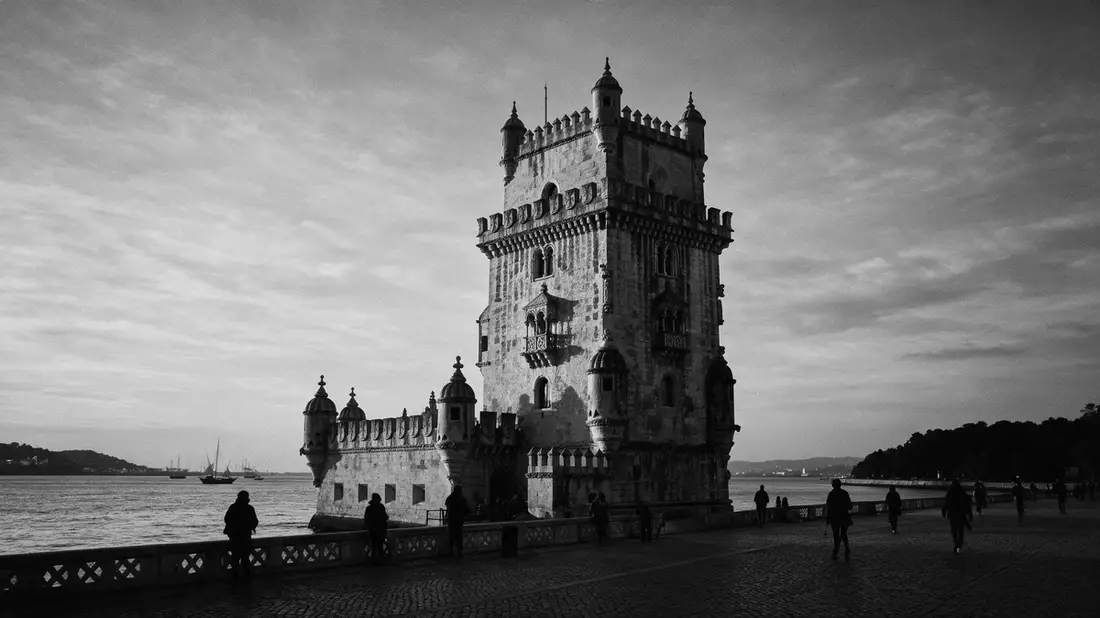
Torre de Belem on the Tagus at Lissabon’s western edge is a compact stone fortification from the early sixteenth century, built as a sentinel over the river mouth. Rising from the shoreline in the parish of Santa Maria de Belém, it embodies Portugal’s maritime era in carved limestone and reinforced bastions.
Manueline stonework on the Tagus
The tower is a sixteenth-century fortification in Lisbon, officially known as the Tower of Saint Vincent and constructed during the reign of King Manuel I of Portugal.sixteenth-century fortification It stands on the northern bank of the Tagus River, close to where the estuary widens towards the Atlantic, so that departing and arriving ships passed directly in front of its guns.northern bank of the Tagus River
The stonework belongs to the Manueline style, a late Gothic form closely linked to the Portuguese age of navigation, with maritime symbols carved into walls, balconies and parapets.Manueline style Decorative elements such as armillary spheres, ropes in stone and crosses of the Order of Christ wrap around the structure, turning its defensive role into a sculpted celebration of seafaring iconography.
From river bastion to World Heritage symbol
Torre de Belem was constructed between 1514 and 1519, combining a tall tower similar to a medieval keep with a lower bulwark that projected its cannon fire across the water.constructed between 1514 and 1519 The design is attributed to the military architect Francisco de Arruda, who brought experience from Portuguese fortifications in North Africa into the scheme, including corner turrets whose profiles recall Moorish sentry posts.Francisco de Arruda
The tower forms part of a World Heritage ensemble together with the nearby Monastery of the Hieronymites, both inscribed on the UNESCO List in 1983 as representative monuments of Portugal’s period of overseas expansion.inscribed on the UNESCO List in 1983 Its status as a national monument was recognised earlier in the twentieth century, and it stands now as a symbol closely associated with Lisbon and with Portugal’s historical connection to the ocean.símbolo identitário da cidade
Interior spaces and riverside setting
Inside, Torre de Belem is divided between the vertical tower and the broader bastion that reaches towards the river, with enclosed levels above and gun positions closer to the waterline.fortificação localizada na freguesia de Belém Access between storeys runs through narrow passages and stairways typical of early sixteenth-century military architecture, linking lookout points, enclosed rooms and terraces set behind the decorative parapets.
The tower stands in the Belém district, west of Lisbon’s historic centre, beside landscaped riverside spaces and within sight of the Monastery of the Hieronymites along the Tagus bank.Av. Brasília, 1400-038, Lisboa The immediate surroundings are level waterfront ground with stone paving and open views across the estuary, so the compact silhouette of Torre de Belem appears against water and sky rather than crowded urban streets.
Visiting Torre de Belem: what travellers from Western Europe should know
- Torre de Belem stands on the northern bank of the Tagus in the Belém district, west of central Lissabon, reached by riverside roads including Avenida de Brasília.
- The interior involves stairways and confined passages between levels, with stone steps and changes of height that demand steady footing.
- The tower is near the Monastery of the Hieronymites along the Tagus waterfront, so both monuments can be visited on the same riverside walk.
- The official language is Portuguese and the currency is the euro.
Searching for Torre de Belem on social platforms
These links open searches for Torre de Belem on each platform.
Frequently asked questions about Torre de Belem
Where is Torre de Belem located in Lissabon?
Torre de Belem stands on the northern bank of the Tagus River in the parish of Santa Maria de Belém, west of Lissabon’s historic centre.
What can visitors expect inside Torre de Belem?
Visitors encounter stone-built interior levels linked by stairways and passages, with terraces and gun platforms that reveal how the sixteenth-century fortification was arranged.
What makes Torre de Belem distinctive among Lisbon’s landmarks?
The combination of Manueline decorative stonework with a compact river fort, its early sixteenth-century construction and its UNESCO World Heritage status give Torre de Belem a distinctive character.