
Tottori Sakyu, Japan’s sea-facing desert of shifting sand
Published on 08/14/2026 at 14:23 | Editorial responsibility: Rafael Müller, Editor-in-Chief AD HOC NEWS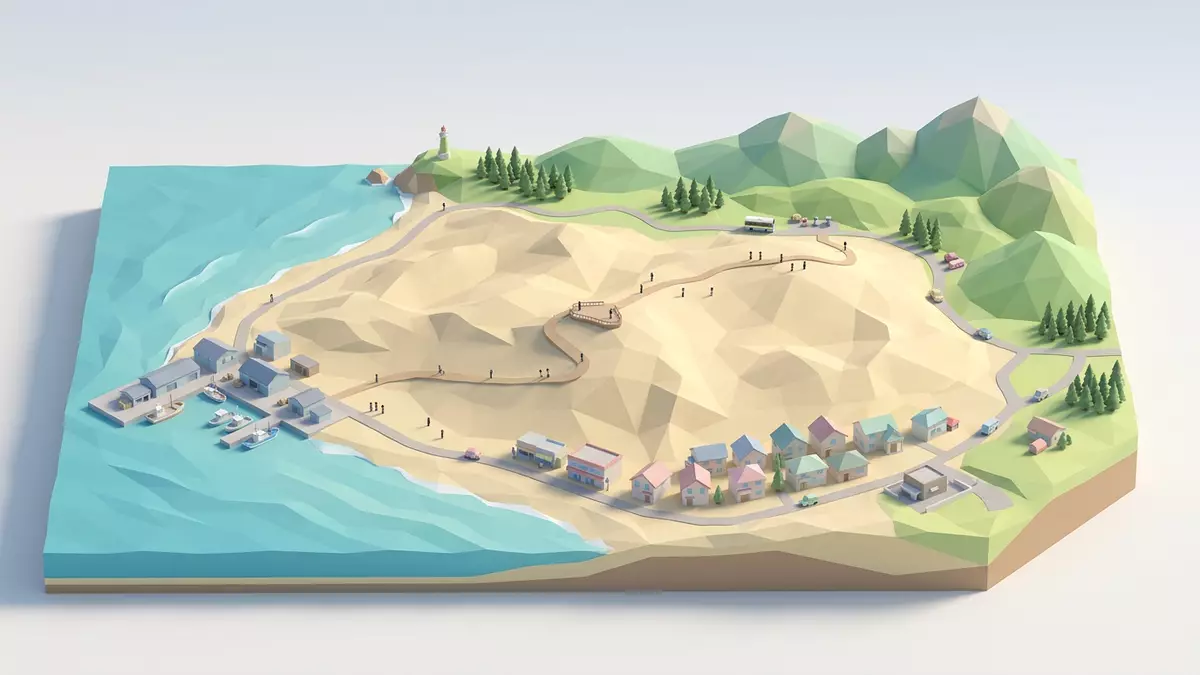
Tottori Sakyu, known in English as the Tottori Sand Dunes, is a broad band of golden sand along the Sea of Japan just outside Tottori City, forming Japan’s best-known coastal dune landscape in the San’in Kaigan Geopark.Tottori Sand Dunes
A desert edge between sea and mountains
The defining experience at Tottori Sakyu is the contrast between its rolling sand hills and the surrounding setting of sea and upland terrain. Standing on the higher dunes, the view runs along an arc of coast on the Sea of Japan, while inland lie the lower slopes of the Chugoku region’s mountains.Chugoku region along the Sea of Japan The dune field itself extends for around 16 km east to west and roughly 2 km north to south, forming a sandy strip between land and water that is large enough to feel like an enclosed world.16 kilometres along the coast
The sand surface is shaped by wind into ridges, slopes and hollows, some rising tens of metres above sea level and creating a varied relief that changes with each season’s weather.distinctive ups and downs and blowouts On clear days, the dunes can resemble a small desert, with the pale sand meeting the deep colour of the sea and only sparse vegetation in certain areas. This juxtaposition of coastal climate and desert-like terrain is what gives Tottori Sakyu its enduring appeal for visitors from elsewhere in Japan and beyond.
A landscape shaped over thousands of years
Geologically, Tottori Sakyu is the product of long-term processes between river, mountain and sea. Sediment carried by the Sendai River from the Chugoku Mountains has been deposited along this stretch of coast for tens of thousands of years, and prevailing winds have reworked those deposits inland into the dune field visible today.sediments from the Sendai River The dunes are recognised as part of the San’in Kaigan UNESCO Global Geopark and have been formally designated as a national natural monument in Japan, reflecting their scientific and scenic importance.national natural monument within the geopark
Within the dune area, visitors can see typical sand-dune formations such as ripples, steeper slip faces and depressions formed by wind erosion, as well as the boundary between bare sand and hardy coastal plants adapted to the shifting ground.geomorphological and plant communities peculiar to dunes These features make Tottori Sakyu a frequent subject for field trips by schools and university groups in Japan, and an accessible place for travellers interested in seeing how a dune system operates at the scale of a modest coastal plain rather than a continental desert.
Exploring the dunes and nearby facilities
Tottori Sakyu lies a short distance north of central Tottori City, with the main access point in the Fukube-cho Yuyama area, where the visitor centre and information boards introduce the geology and ecology of the dunes.Fukube-cho Yuyama address and visitor facilities From the entrance area, paths and stairways lead up onto the lower slopes of the dune field, and from there it is possible to walk across to steeper sections that overlook the sea. The higher dunes reach elevations of around 40–50 m (130–165 ft) above sea level, and the slopes can be quite demanding underfoot because of the loose sand.higher point about 47 metres above sea level
Close to the dunes stands the Sand Museum, whose exhibitions focus on sand sculpture and the wider story of the San’in coastal region.Sand Museum near the dune area The proximity of museum galleries, visitor facilities and open dune terrain makes this part of Tottori City a compact cluster of attractions where the coastal landscape is foregrounded. For travellers from Western Europe used to more vegetated shorelines, the sight of an extensive sand field facing directly onto the Sea of Japan can be a striking counterpoint to the wooded hills and agricultural land further inland.
Visiting Tottori Sakyu: what travellers from Western Europe should know
- Tottori Sakyu lies on the Sea of Japan coast just north-east of central Tottori City, with access by local bus from JR Tottori Station to stops near the dune entrance and visitor facilities.bus connections from Tottori Station
- Walking on the dunes involves ascending and descending sandy slopes, including some that are steep and soft underfoot, so footwear that copes well with loose sand is important on the main routes.
- The dune area is exposed to coastal weather from the Sea of Japan, and conditions such as strong wind or summer heat can have a direct effect on how comfortable long walks across the sand feel.
- The official language is Japanese and the currency is the yen.
- Entry requirements depend on your nationality; UK travellers can check the FCDO travel advice at gov.uk/foreign-travel-advice, Irish travellers the Department of Foreign Affairs at ireland.ie.
Searching for Tottori Sakyu on social platforms
These links open searches for Tottori Sakyu on each platform.
Frequently asked questions about Tottori Sakyu
Where is Tottori Sakyu located?
Tottori Sakyu is on the Sea of Japan coast just outside Tottori City in Tottori Prefecture, in western Honshu, with main access via the Fukube-cho Yuyama area.location in Tottori Prefecture
What can visitors expect on a visit?
Visitors encounter wide expanses of sand, wind-shaped dunes rising tens of metres, views over the Sea of Japan and access paths from an entrance area with visitor information.
What makes Tottori Sakyu distinctive among Japanese landscapes?
Tottori Sakyu forms Japan’s largest coastal sand-dune field and is designated both as a national natural monument and as part of the San’in Kaigan UNESCO Global Geopark, highlighting its rarity and scientific value.largest sand dunes in Japan


