
Tour Eiffel as an iron lattice skyline for Paris
Published on 08/15/2026 at 14:29 | Editorial responsibility: Rafael Müller, Editor-in-Chief AD HOC NEWS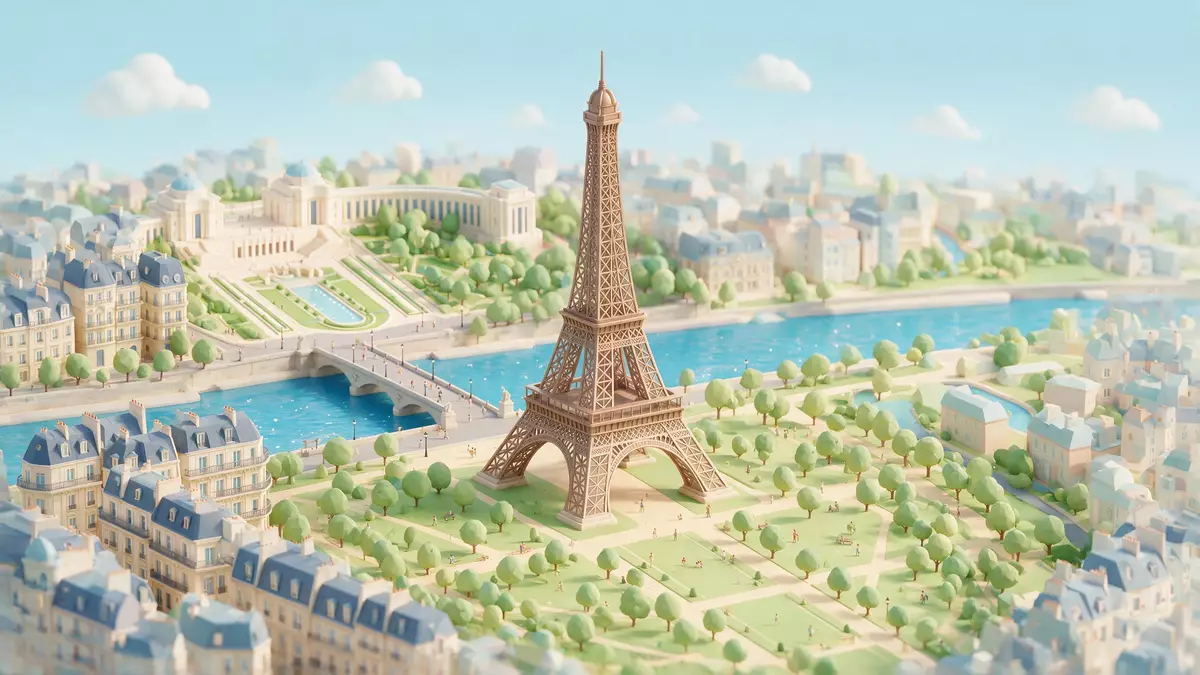
Tour Eiffel in Paris is a wrought-iron lattice tower from the late nineteenth century that has become a vertical marker for the French capital. Rising to 330 m (1,083 ft) including its antennas, it stands on the Champ-de-Mars beside the River Seine and gives visitors tiered views over the city at several levels.
An iron tower built for 1889
The story of Tour Eiffel begins with the Exposition Universelle held in Paris in 1889, organised to mark the centenary of the French Revolution. The French engineer Gustave Eiffel secured the concession to build a 300 m iron tower as the visual centrepiece of the fair, working with engineers Maurice Koechlin and Émile Nouguier and architect Stephen Sauvestre on the design.engineers Maurice Koechlin and Émile Nouguier
Construction of Tour Eiffel took place between 1887 and 1889, with the main iron structure completed by 31 March 1889 after just over two years of work.Construction of Tour Eiffel The tower was then opened to the public in May 1889 as part of the Exposition Universelle, giving visitors a vantage point far higher than any previous structure in Paris.opened to the public in May 1889
Structure, levels and views
Tour Eiffel stands on four iron lattice legs that splay outwards from the base on the Champ-de-Mars before narrowing as they rise. The tower’s original architectural height was around 300 m (984 ft), and with its broadcast antennas it reaches 330 m, which kept it the tallest structure in Paris after other towers surpassed it worldwide.original architectural height was around 300 m The weight of the structure runs into several thousand tonnes of iron held together by rivets, forming a rigid grid of diagonals and horizontal members.several thousand tonnes of iron
The tower is divided into three main public levels, each with outdoor terraces running around the structure and interior spaces set within the ironwork. Elevators run within the legs and up through the central shaft, and staircases connect lower levels for those who choose to climb sections on foot.three main public levels From the higher platforms, the view takes in the Seine, the avenues of central Paris, the golden dome of Les Invalides and the axis towards the Arc de Triomphe and La Défense.
Tour Eiffel in the Paris landscape
Tour Eiffel stands on the left bank of the Seine at the western end of the Champ-de-Mars, a long formal park laid out between the tower and the École Militaire. Directly across the river lies the Palais de Chaillot at Trocadéro, whose terraces and steps face the tower and frame one of the most recognisable perspectives in Paris.Palais de Chaillot at Trocadéro
Since 1889 Tour Eiffel has also functioned as a working piece of infrastructure for telegraphy and broadcasting. Antennas added above the original 300 m structure extended its height and turned the iron tower into a support for radio and television transmission as communications technology developed through the twentieth century.Antennas added above the original 300 m structure
Visiting Tour Eiffel: what travellers from Western Europe should know
- Tour Eiffel rises above the Champ-de-Mars on the left bank of the Seine in central Paris, a short walk from the Trocadéro terraces on the opposite bank.
- The ascent involves changes of level and staircases, and the outdoor platforms are exposed to wind and weather at height.
- Paris lies in France, where the official language is French and the currency is the euro.
Searching for Tour Eiffel on social platforms
These links open searches for Tour Eiffel on each platform.
Frequently asked questions about Tour Eiffel
Where is Tour Eiffel located in Paris?
Tour Eiffel stands on the Champ-de-Mars on the left bank of the River Seine in central Paris, close to the Trocadéro on the opposite bank.
What should visitors expect on a visit?
A visit centres on ascending through the iron structure by lift or stairs to outdoor terraces on several levels, with wide city views and exposure to weather at height.
What makes Tour Eiffel distinctive among city towers?
The combination of late nineteenth-century wrought-iron lattice engineering, a height of 330 m and its position beside the Seine gives Tour Eiffel a singular profile on the Paris skyline.


