
Tsodilo Hills and the quartzite ridges of Botswana
Published on 09/19/2026 at 12:41 | Editorial responsibility: Rafael Müller, Editor-in-Chief AD HOC NEWS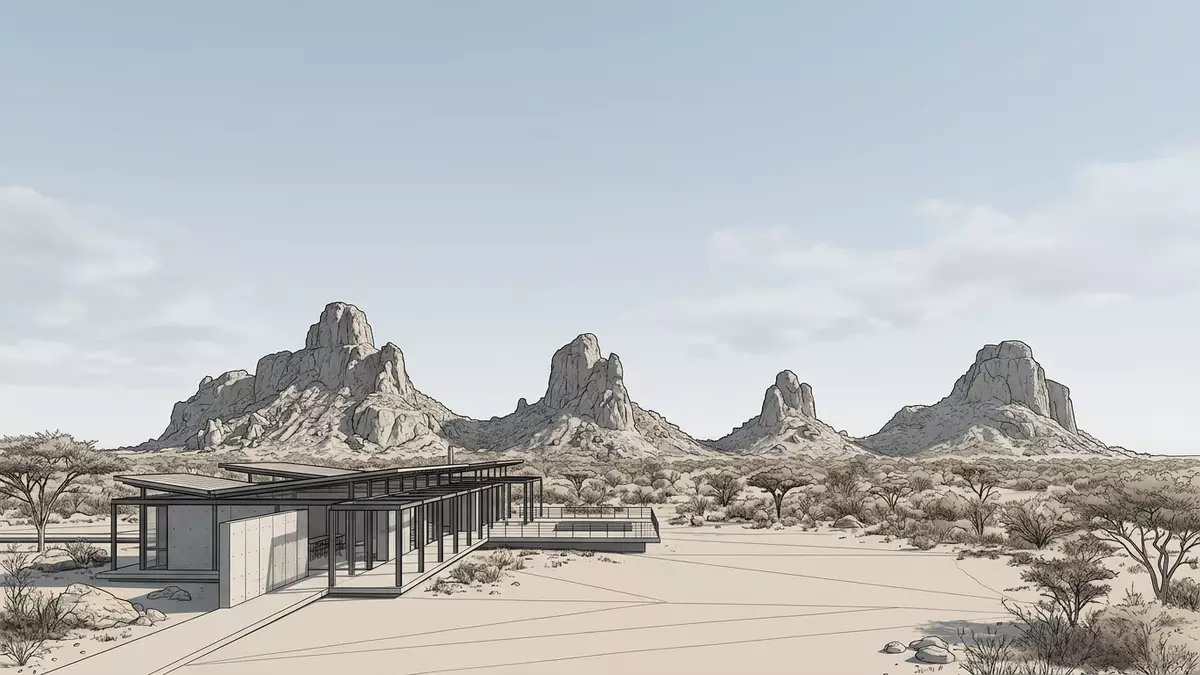
Tsodilo Hills in north-west Botswana rises as a cluster of quartzite ridges above the Kalahari. The place is a UNESCO World Heritage Site and one of southern Africa’s major rock-art landscapes.
Quartzite ridges and painted shelters
The hills stand close to the Namibian border in the Ngamiland District and the Okavango Sub-District. Their slopes hold rock shelters, caves and painted surfaces, and the setting has long been linked to settlement and ritual.
More than 4,500 paintings are preserved across a compact area of about 10 km2. The record stretches from the Stone Age to the nineteenth century, with animals, people and geometric forms across the rock faces.
A landscape of rock art and long memory
The best-known descriptions of the site place its human record at over 100,000 years. That span makes Tsodilo Hills more than a scenic outcrop; it is also an archaeological landscape with layers of use, belief and image-making.
The hills have also been called the “Louvre of the Desert”, a phrase that points to the density of the paintings rather than to any single panel. The name has become attached to Tsodilo because the rock art is concentrated in a small, dry setting where quartzite and sand meet.
San tradition and sacred ground
Local communities have long treated the hills as a place of worship, and the San and Hambukushu remain closely associated with the area. That cultural continuity is part of what led to the World Heritage inscription in 2001.
The paintings and shelters are only part of the story. Tsodilo also contains deposits, paths and named hills that give the landscape a layered, human scale rather than a single monument-like form.
Visiting Tsodilo Hills: what travellers from Western Europe should know
- Tsodilo Hills lies west of Shakawe in Botswana’s north-western corner. The approach is by road from the Shakawe side, with the turn-off south of Sepupa on the Maun–Shakawe route.
- The ground is dry, rocky and open, with quartzite outcrops rising from Kalahari sand. The terrain includes sheltered rock surfaces, uneven slopes and exposed ridges.
- The official language is English and the currency is the Botswana pula.
- Entry requirements depend on your nationality; UK travellers can check the FCDO travel advice at gov.uk/foreign-travel-advice, Irish travellers the Department of Foreign Affairs at ireland.ie.
Searching for Tsodilo Hills on social platforms
These links open searches for Tsodilo Hills on each platform.
Frequently asked questions about Tsodilo Hills
Where are Tsodilo Hills?
Tsodilo Hills is in north-west Botswana, near the Namibian border and west of Shakawe. It lies in the Ngamiland District within the Okavango Sub-District.
What does a visit involve?
The place is a rocky, open landscape with shelters, caves and painted surfaces across a compact area. Road access from Shakawe leads into a dry setting with quartzite ridges and uneven ground.
What makes Tsodilo Hills distinctive?
The site combines a dense rock-art record, a long archaeological sequence and a strong cultural role for local communities. UNESCO inscribed it in 2001.


