Uxmal and the rounded Pyramid of the Magician
Published on 08/18/2026 at 14:08 | Editorial responsibility: Rafael Müller, Editor-in-Chief AD HOC NEWS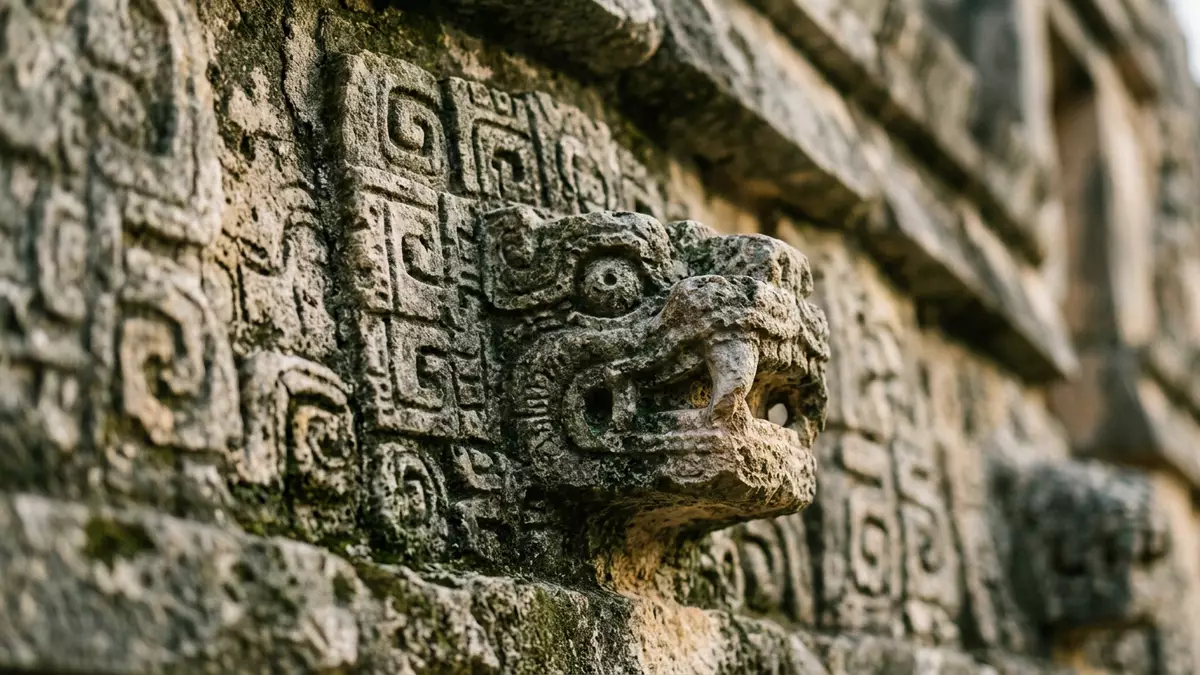
Uxmal in Mexico’s Yucatán Peninsula is an ancient Maya city where a rounded pyramid rises above finely carved palaces in the low Puuc hills. This former ceremonial centre flourished in the Late Classic period and is recognised as the Pre-Hispanic Town of Uxmal on the UNESCO World Heritage List, linking its core ruins with the nearby sites of Kabah, Sayil and Labná.
The Puuc hills and the setting of Uxmal
Uxmal stands in the Puuc region of south-western Yucatán, a landscape of gently rolling limestone hills that contrasts with the largely level terrain of much of the peninsula. The archaeological zone lies south of Mérida and near the present-day town of Muna in the Mexican state of Yucatán, forming the centre of a wider cultural district where Puuc-style architecture is found at Kabah, Labná and Sayil as well.centre of the Puuc region The town’s location in the low hills is reflected in the very name of the region, where “Puuc” refers to a chain of small elevations rather than high mountains.Puuc (“hill”) region
From Mérida, Uxmal is reached by road on Highway 261, which runs south-west towards Campeche and passes the turn-offs for the site’s entrance. Travellers encounter the archaeological zone at a point where the hills rise gently from the surrounding countryside, and the ancient structures occupy a series of terraces and platforms rather than a single flat expanse.
An urban centre of Late Classic Maya civilisation
Uxmal is an urban and ceremonial centre of Maya civilisation that saw major development between about the seventh and tenth centuries AD, when Late and Terminal Classic architecture defined its present outline.Late and Terminal Classic development Archaeological studies indicate that the settlement was founded around AD 700 and functioned as the heart of a group of surrounding towns, including Kabah, Labná and Sayil, for several centuries.founded c. AD 700 During this period it became one of the principal centres of northern Yucatán, with a population numbered in the tens of thousands.
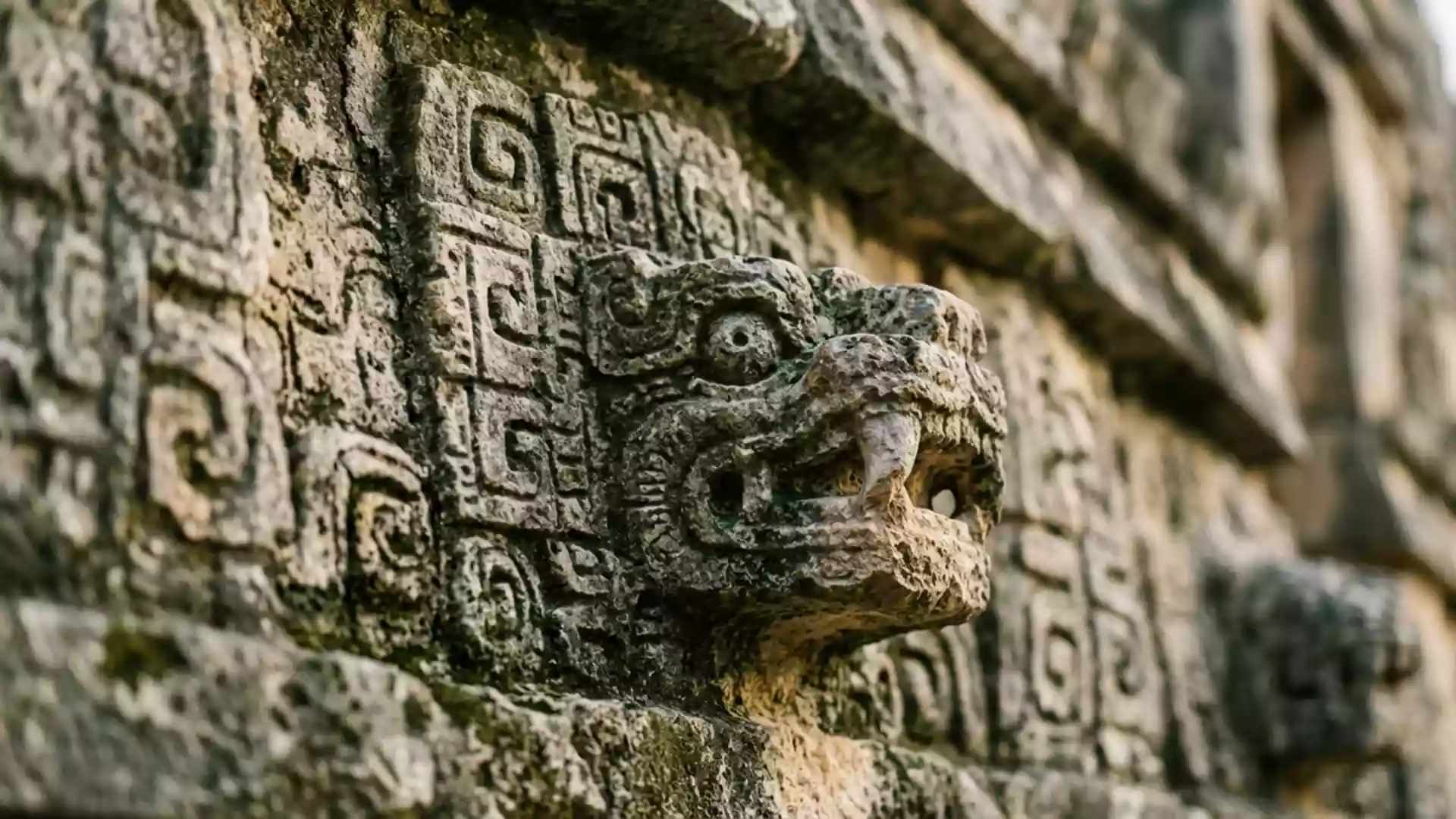
The site is recognised for its Puuc architectural style, characterised by masonry buildings whose lower walls are often plain while upper facades carry dense stone mosaic ornament. Uxmal’s structures belong primarily to the Late Classic period, and its town has long been regarded as one of the most important places of Maya culture alongside cities such as Palenque, Chichén Itzá and Tikal.important site of Maya culture In 1996, the Pre-Hispanic Town of Uxmal was inscribed on the UNESCO World Heritage List, recognising both its architectural achievement and its role as a regional centre in the Puuc hills.inscribed 1996 on the World Heritage List
The rounded Pyramid of the Magician
On entering Uxmal, travellers encounter the Pyramid of the Magician (Spanish: Pirámide del Adivino), a stepped Maya pyramid whose rounded, elongated base distinguishes it from the squarer plans of many other Mesoamerican structures.Pyramid of the Magician The pyramid is the tallest and most recognisable monument at the site, forming a visual focus for the northern part of the ceremonial core. It reaches a height of around 35 m (about 115 ft), making it a dominant feature of the Uxmal skyline when viewed from surrounding platforms.around 35 metres in height
The Pyramid of the Magician was built in multiple stages between the sixth and tenth centuries AD, with later temples rising above earlier ones inside the mass of the structure.construction phases from sixth to tenth centuries Archaeologists have identified several superimposed building phases, each reflecting shifts in style over time. The pyramid’s western staircase aligns with the setting sun at the summer solstice, an arrangement that connects its geometry to celestial observation without needing drawn-out explanation of motives.western staircase faces the sun on the summer solstice A local legend tells of a dwarf magician who raised the monument rapidly, giving the structure its modern name while standing apart from the archaeological evidence for its gradual construction.legend of a dwarf magician
Courtyards, palaces and carved facades
The core of Uxmal consists of palaces and platforms arranged around open courtyards, where horizontal buildings frame broad plazas. One of the most striking ensembles is the Nunnery Quadrangle, a group of long ranges whose upper facades are covered with geometric stone mosaic, masks and lattice patterns. Nearby stands the Governor’s Palace, an elongated building raised on a platform and fronted by an extensive carved facade that is often cited as a masterpiece of Puuc design.Nunnery Quadrangle and Governor’s Palace
Across the site, Puuc-style decoration includes multiple masks of the rain god Chaac, fret patterns, hieroglyphic panels and tall roof combs above temple chambers.facades with masks of Chaac Other named structures include the House of the Tortoises, the Ball Court, the Great Pyramid and the Pigeon House, each contributing its own arrangement of terraces, stairways and sculpted detail.House of the Tortoises, Ball Court and Great Pyramid Walkways and broad staircases link these areas, and many platforms offer elevated viewpoints across the courtyards and towards the Pyramid of the Magician.
Visiting Uxmal: what travellers from Western Europe should know
- Uxmal lies in the state of Yucatán in Mexico, south of Mérida and close to the town of Muna, and is reached by road along Highway 261 from the regional capital.
- The terrain at the site consists of stone platforms, broad staircases and elevated courtyards, so a visit involves walking over uneven surfaces and climbing steps between different levels.
- The surrounding Puuc region forms a band of low limestone hills inland from the Gulf of Mexico coast, with the archaeological zone occupying one of the higher points in this undulating landscape.
- The official language is Spanish and the currency is the Mexican peso.
- Entry requirements depend on your nationality; UK travellers can check the FCDO travel advice at gov.uk/foreign-travel-advice, Irish travellers the Department of Foreign Affairs at ireland.ie.
Searching for Uxmal on social platforms
These links open searches for Uxmal on each platform.
Frequently asked questions about Uxmal
Where is Uxmal located?
Uxmal is in the Puuc hills of the state of Yucatán in Mexico, south of Mérida and near the town of Muna, within the Santa Elena and Muna municipalities.
What can travellers expect when visiting Uxmal?
Travellers explore stone pyramids, palaces and courtyards arranged on terraces, including the Pyramid of the Magician, the Nunnery Quadrangle and the Governor’s Palace, all built in Puuc style.
What makes Uxmal distinctive among Maya sites?
Uxmal is distinctive for its rounded Pyramid of the Magician, its dense Puuc-style mosaic facades with masks of Chaac, and its recognition as the Pre-Hispanic Town of Uxmal on the UNESCO World Heritage List.