

Varadero’s long white arc of sand in northern Cuba
Published on 08/29/2026 at 09:28 | Editorial responsibility: Rafael Müller, Editor-in-Chief AD HOC NEWS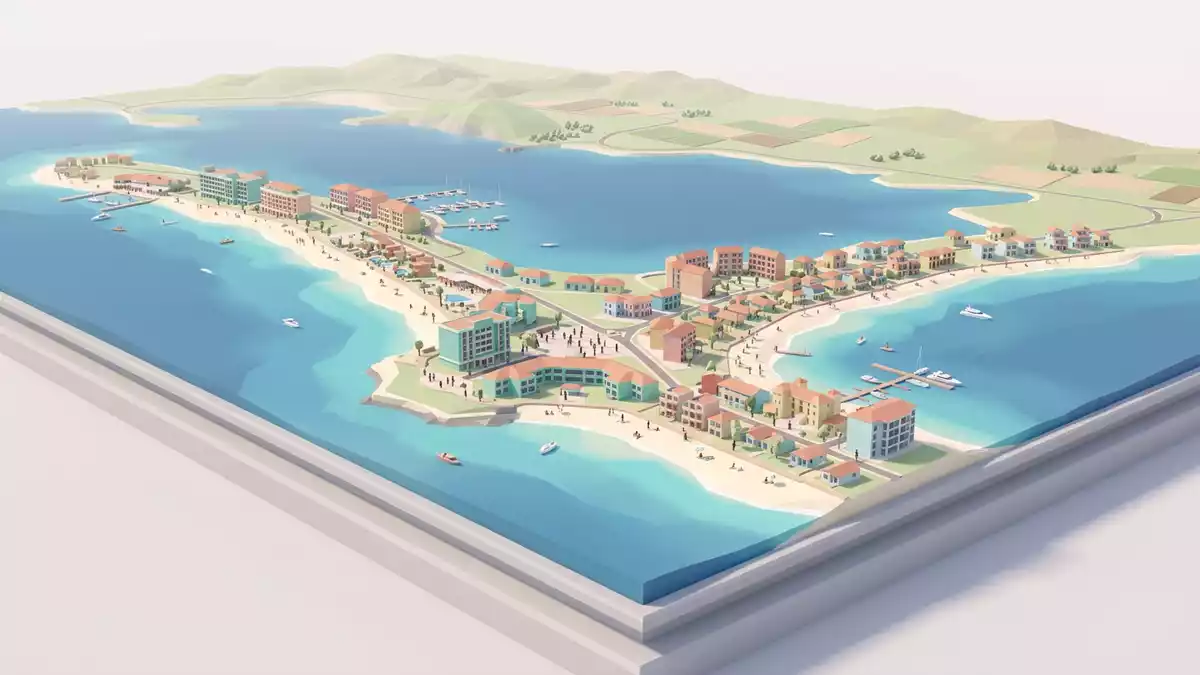
Varadero in northern Cuba is a resort town built along the Hicacos Peninsula, where an unusually long band of pale sand and shallow Caribbean water defines the entire landscape. The town forms part of Matanzas province and grew into one of the largest resort areas in the Caribbean during the twentieth century, with its beach and hotels sharing the same narrow strip of land.
A town on a narrow Caribbean peninsula
Varadero occupies the Hicacos Peninsula on the northern coast of Cuba, between the Bay of Cárdenas and the Straits of Florida, with the town and resorts lining an elongated strip of land that projects into the sea.Hicacos Peninsula The peninsula reaches more than 20 km (12.4 mi) from the main island towards Punta Hicacos, which marks Cuba’s northernmost point, and at its widest is a little over 1 km (0.6 mi) across, so the sea is never far away on either side.northernmost point of Cuba
Geographically, Varadero lies around 140 km (87 mi) east of Havana along the Via Blanca highway, which reaches the peninsula from the west over low coastal terrain.140 km east of Havana The peninsula itself sits only a few metres above sea level, with sandy ground, scattered dunes and low vegetation, and is separated from the Cuban mainland by a shallow channel and lagoon. The town forms part of the municipality of Cárdenas and has an urban area with several tens of thousands of residents alongside the tourist complexes, making it more than just a string of hotels.
From elite seaside retreat to major resort town
The name Varadero originates from the Spanish word for a dry dock, reflecting early use of the area as a place to pull vessels out of the water in the sixteenth century, long before it became a holiday destination.name linked to dry docks As a town, Varadero was established in the late nineteenth century, when wealthy families from nearby Cárdenas began to build houses for their summer stays along the peninsula, laying out streets and plots among the sand and scrub.founded in 1887
During the twentieth century Varadero developed in stages from an elite retreat into a large-scale resort area, with extensive hotel construction particularly from the 1930s and later decades transforming long sections of the shoreline into organised tourist zones.resort expansion Many of the larger hotels and all-inclusive complexes occupy plots at the outer parts of the peninsula, while nearer the original town centre the grid of streets still contains houses, small guest accommodation and public spaces, showing how the settlement retains a local community alongside its resort functions.resident population and hotel hub
A long white-sand beach and warm shallow sea
The defining feature of Varadero is its beach, which runs for roughly 20 km (12.4 mi) along the seaward edge of the peninsula, forming a nearly continuous strip of white sand facing clear, shallow water.20-kilometre-long beach Much of this shoreline is backed by hotel grounds and low dunes, so a visitor moving along the peninsula encounters repeated sequences of sand, palms, grass, pathways and the low silhouettes of resort buildings.
The sea off Varadero displays the blue and turquoise colours associated with Caribbean shallows, with gentle wave action along most of the beach and offshore areas where coral formations can be reached by boat.white sandy beaches The climate is tropical, with warm air temperatures for most months; average values lie in the low to mid-20s °C, with higher humidity in the rainy season and lower rainfall between about December and April.tropical climate data The low elevation means horizons over the water are broad, and light changes rapidly with cloud and sun, giving the beach varied appearances through a day.
Visiting Varadero: what travellers from Western Europe should know
- Varadero lies on the Hicacos Peninsula in northern Cuba, around 140 km east of Havana, and is reached by road along the Via Blanca highway from the capital and other towns in Matanzas province.
- The terrain is low-lying and sandy, with long stretches of beach and hotel grounds; walking along the waterfront involves extended distances on sand, and inland streets are generally flat.
- Nearby, the Bay of Cárdenas provides a sheltered body of water on the southern side of the peninsula, contrasting with the open Caribbean on the northern side.
- The official language is Spanish and the currency is the Cuban peso.
- Entry requirements depend on your nationality; UK travellers can check the FCDO travel advice at gov.uk/foreign-travel-advice, Irish travellers the Department of Foreign Affairs at ireland.ie.
Searching for Varadero on social platforms
These links open searches for Varadero on each platform.
Frequently asked questions about Varadero
Where is Varadero in Cuba?
Varadero is a resort town in Matanzas province on the Hicacos Peninsula, about 140 km east of Havana on Cuba’s northern coastline.
What can visitors expect on a visit to Varadero?
Visitors encounter a long white-sand beach, shallow Caribbean water, extensive hotel zones and an urban area where permanent residents live alongside the resort infrastructure.
What makes Varadero distinctive among Cuban destinations?
Varadero is distinctive for combining one of the Caribbean’s longest continuous beach fronts with a narrow peninsula setting and a major concentration of resort accommodation.


