
Victoria & Alfred Waterfront and Cape Town’s working harbour
Published on 09/22/2026 at 06:29 | Editorial responsibility: Rafael Müller, Editor-in-Chief AD HOC NEWS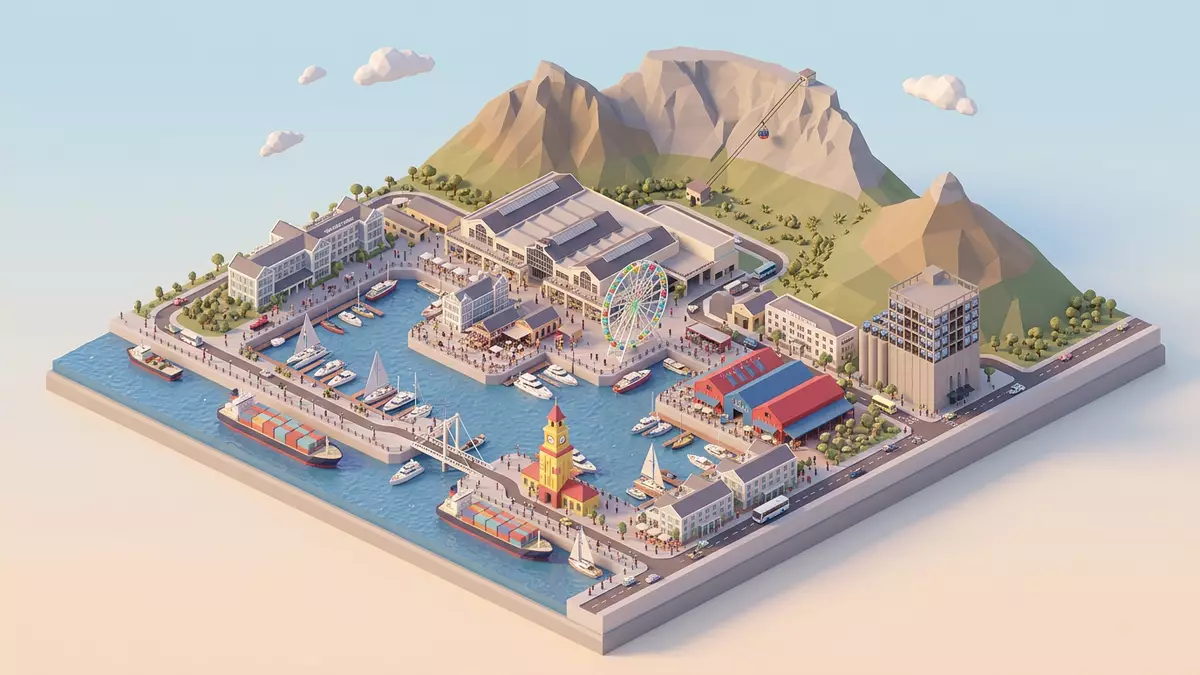
Victoria & Alfred Waterfront occupies historic harbour basins on the edge of Table Bay in Kapstadt. Brick dock buildings, working quays and the profile of Table Mountain share the same urban setting, giving the district a visible connection between maritime industry and city life.
Two harbour basins shape the waterfront
The district takes its name from the Alfred Basin and the Victoria Basin. Their names refer to Prince Alfred, Queen Victoria’s second son, and Queen Victoria herself. The two basins remain the clearest organising features of Victoria & Alfred Waterfront, with quays, promenades and buildings arranged around sheltered stretches of water.
Prince Alfred began the harbour works in 1860 by tipping the first load of stone for Cape Town’s breakwater. The event connects the waterfront with the nineteenth-century expansion of the port and with the maritime route around the southern tip of Africa. The 1860 harbour beginning remains central to the site’s historical identity.
Brick, water and a working port
Victoria & Alfred Waterfront is not a detached museum quarter. The harbour retains maritime activity, including vessels using the basins and ships undergoing repair. Alongside this working landscape are restaurants, shops, hotels, cultural venues and public spaces in and around former dock buildings.
Victorian industrial architecture gives the older parts of the district their character. Red brick walls, warehouse forms, loading areas and iron details appear beside newer construction. The result is a mixed urban fabric in which commercial and cultural uses occupy buildings associated with port operations.
From nineteenth-century harbour to urban quarter
The Alfred Basin was followed by the larger Victoria Basin as shipping developed during the late nineteenth century. The basins and their surrounding dock estate belong to a period when Cape Town’s harbour supported vessels moving between Europe, Asia and the southern African coast.
Victoria & Alfred Waterfront (Pty) Ltd was established in November 1988. The redevelopment brought retail, hospitality, residential and cultural functions into the historic docklands while the harbour continued operating. A 1988 redevelopment therefore forms part of the district’s documented history, alongside the older basins and quays.
The waterfront’s cultural landmarks include the Zeitz Museum of Contemporary Art Africa, housed in a converted grain silo complex. The building’s concrete silos form a distinctive vertical group beside the harbour, while its interior contains galleries devoted to contemporary art from Africa and its diaspora.
The Two Oceans Aquarium adds another maritime dimension, presenting marine life associated with the Atlantic and Indian Ocean meeting around the Cape. Its location reinforces the relationship between the waterfront and the waters beyond the harbour walls.
Visiting Victoria & Alfred Waterfront: what travellers from Western Europe should know
- Victoria & Alfred Waterfront lies north of Kapstadt’s central business district, on the Atlantic edge of Table Bay. The district is connected with the city by roads, local buses and harbour-side walking routes.
- The waterfront occupies quays and basins rather than a single enclosed attraction. Routes include promenades, paved streets, steps and access points beside working harbour areas.
- Table Mountain rises behind the district, while Robben Island lies across Table Bay. The changing relationship between mountain, water and dock buildings is visible from the harbour edge.
- The official language is English, Afrikaans and isiXhosa, and the currency is the South African rand.
Searching for Victoria & Alfred Waterfront on social platforms
These links open searches for Victoria & Alfred Waterfront on each platform.
Frequently asked questions about Victoria & Alfred Waterfront
Where is Victoria & Alfred Waterfront?
It lies on Cape Town’s Atlantic seaboard, north of the central business district and beside the historic harbour in Table Bay.
What can visitors expect to find there?
The district combines harbour promenades, shops, restaurants, hotels, cultural venues, aquarium displays and working maritime spaces.
What makes the waterfront distinctive?
Its identity comes from the meeting of the Alfred and Victoria basins, nineteenth-century dock architecture and an active port beneath Table Mountain.


