
Vieille Ville de Luxembourg and its cliff-top fortifications
Published on 08/17/2026 at 14:48 | Editorial responsibility: Rafael Müller, Editor-in-Chief AD HOC NEWS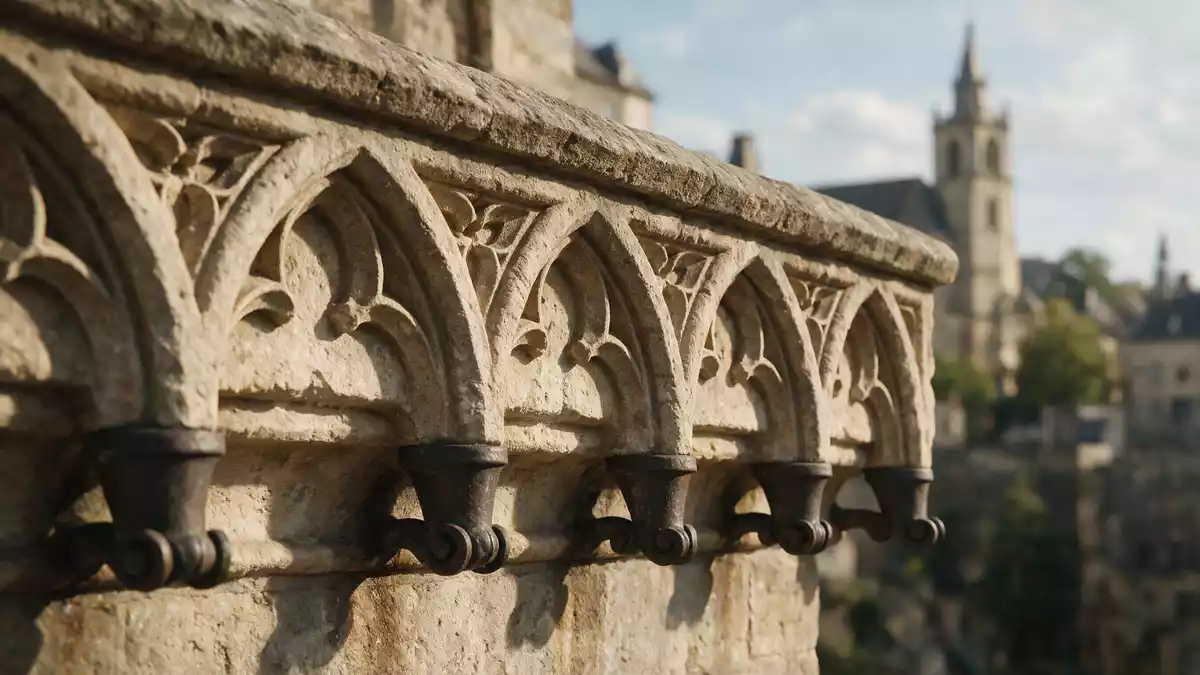
Vieille Ville de Luxembourg is the historic core of Luxembourg City, spread across a rocky plateau and deep river valleys where the capital first took shape in the Middle Ages. The old quarters and the surviving fortifications form a single urban landscape, recognised as a cultural World Heritage Site since 1994, and they tell the story of how a modest stronghold grew into the centre of the Grand Duchy of Luxembourg.
A fortified old town above rivers and gorges
The Vieille Ville de Luxembourg occupies a dramatic setting at the confluence of the Alzette and Pétrusse rivers, where a steep rocky outcrop rises above the watercourses and natural ravines.rocky outcrop above the Alzette and Pétrusse Streets and squares in the upper town stand on this plateau, with views down to the lower quarters that line the valley floor.
The fortified character of the site is visible in extended ramparts, bastions and towers that follow the edge of the cliffs and encircle the historic neighbourhoods.old town and powerful bulwarks Long stretches of masonry wall, punctuated by gates and defensive works, frame the town and mark the line of former military defences that once made Luxembourg a major fortress in Western Europe.
From Lucilinburhuc to a World Heritage city
The origins of Vieille Ville de Luxembourg reach back to 963, when Siegfried, Count of the Ardennes, acquired a rocky promontory above the Alzette and established a small castle called Lucilinburhuc on the cliff.Siegfried’s Lucilinburhuc castle of 963 A settlement developed around this stronghold, and by the twelfth century stone defensive walls enclosed the growing town on the plateau.
Over the following centuries, the fortress city passed through the hands of several European powers, including the Habsburgs, the Spanish Crown, France under Louis XIV, Austria and Prussia, each leaving traces in its military works.successive European powers and fortifications In 1994, the ensemble “City of Luxembourg: its Old Quarters and Fortifications” was inscribed on the UNESCO World Heritage List under cultural criterion (iv), confirming its status as an outstanding example of a fortified European city with major surviving defences in an exceptional natural setting.1994 World Heritage inscription
Old quarters, casemates and panoramic walks
The protected World Heritage property covers the upper town together with lower quarters such as the Grund, Clausen and Pfaffenthal, and extends to areas like the Bourbon plateau where later development took place.Old Town, Grund, Clausen and Pfaffenthal Within these neighbourhoods, narrow streets, historic houses and civic buildings stand alongside former military installations, creating an urban fabric where everyday life and fortress architecture share the same space.
One of the most striking features of Vieille Ville de Luxembourg is the network of casemates, with tunnels carved through the rock beneath the fortifications and galleries opening towards the valleys.casemates carved into the rock On the surface, elevated promenades such as the Corniche follow the edge of the cliffs, offering long perspectives over the Alzette valley and the lower quarters, while bridges and stairways link the plateau to the riverside streets below.
Visiting Vieille Ville de Luxembourg: what travellers from Western Europe should know
- Vieille Ville de Luxembourg forms part of Luxembourg City in Luxembourg, with the historic quarters and fortifications concentrated around the plateau above the Alzette and Pétrusse rivers.
- The terrain combines a high rocky plateau with steep slopes down to the river valleys, and approaches between upper and lower town involve stairways, gradients and bridges.
- Rail and road links connect Luxembourg City with neighbouring countries; from within the city, local public transport and marked streets lead towards the UNESCO-listed old quarters.
- Luxembourg lies within the European Union; the official language of the country includes Luxembourgish, French and German, and the currency is the euro.
Searching for Vieille Ville de Luxembourg on social platforms
These links open searches for Vieille Ville de Luxembourg on each platform.Frequently asked questions about Vieille Ville de Luxembourg
Where is Vieille Ville de Luxembourg located?
Vieille Ville de Luxembourg is the historic centre of Luxembourg City in the Grand Duchy of Luxembourg, occupying the plateau and valleys around the Alzette and Pétrusse rivers.
What can visitors expect when exploring the old town?
Visitors encounter streets and squares on the upper plateau, lower quarters along the rivers, extended ramparts and casemates in the cliffs, all set within a recognised World Heritage ensemble.
What makes Vieille Ville de Luxembourg distinctive among European historic towns?
Its combination of medieval origins under Siegfried in 963, multi-layered fortress architecture shaped by several European powers, and inscription as “City of Luxembourg: its Old Quarters and Fortifications” on the World Heritage List together make it distinctive.


