
Vieux-Port de Marseille and the harbour at Marseille’s core
Published on 09/21/2026 at 22:27 | Editorial responsibility: Rafael Müller, Editor-in-Chief AD HOC NEWS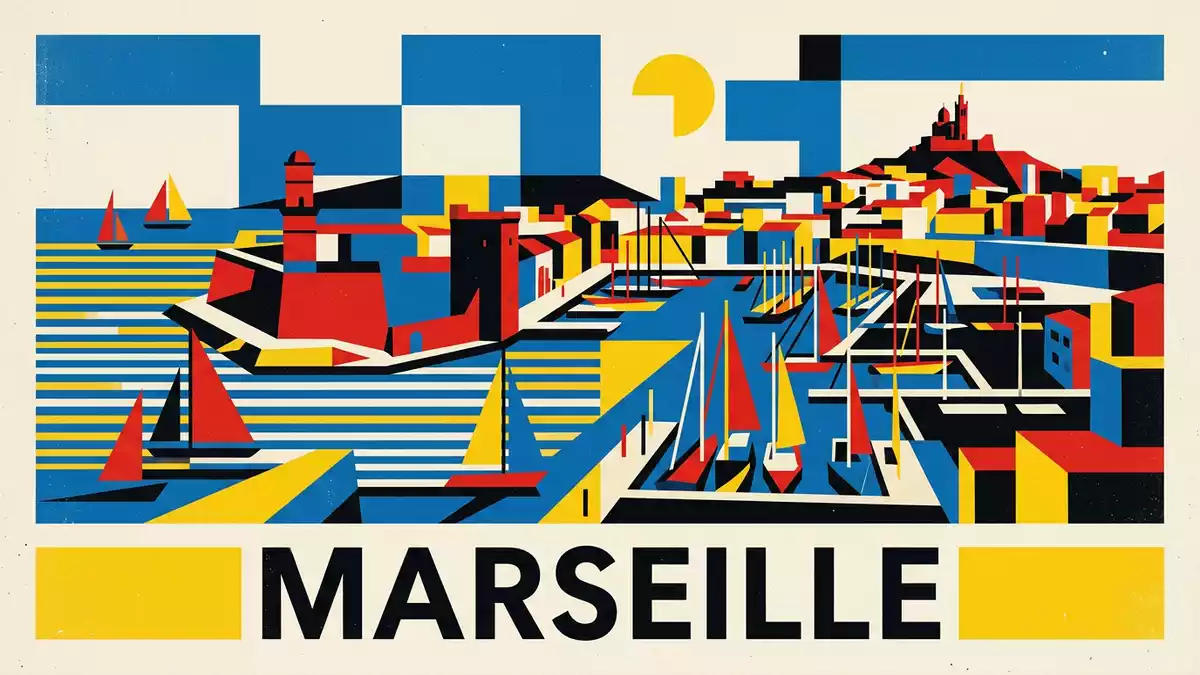
Vieux-Port de Marseille is the historic harbour at the centre of Marseille, where the city’s story begins in the sixth century BC. Its broad basin, quays and fortified entrance make the harbour itself the main attraction.
Ancient Marseille at the water’s edge
The harbour basin sits where Greek settlers founded Massalia, the city that became Marseille. The place links the seaward frontage of the modern city with the long continuity of Mediterranean trade, and that connection remains visible in the layout.
The Old Port has long served as Marseille’s principal harbour, and the name Vieux-Port de Marseille reflects that older role. The basin opens towards the Mediterranean, with limestone hills rising around the harbour and Fort Saint-Nicolas and Fort Saint-Jean guarding the entrance.
Quays, forts and the working harbour
The quays date from the fifteenth to the seventeenth centuries, and they give the waterfront a layered edge. Fort Saint-Nicolas and Fort Saint-Jean belong to the seventeenth-century defensive line at the harbour mouth, and their stone mass contrasts with the open water in front of them.
Marseille’s harbour history also includes Roman Massilia, medieval trade and the later shift of larger commerce towards the wider port complex beyond the old basin. What remains here is a compact maritime landscape of water, stone, boats and public promenades.
A harbour used, crossed and seen
Vieux-Port de Marseille is not a sealed monument but an urban harbour still tied to movement across the water. Ferries, fishing boats and leisure craft share the basin with the quays, and the fish market belongs to the same working edge.
The site also holds a strong visual rhythm: the long waterfront, the enclosing hills and the two forts create a clear frame. That frame makes the harbour legible from the streets around it as well as from the water.
Visiting Vieux-Port de Marseille: what travellers from Western Europe should know
- The harbour lies in central Marseille and is reached on foot from the city centre, by tram and by metro, with the waterfront forming part of the urban street grid.
- The basin is flat and open, but the approaches to the forts involve steps and sloping ground. The stone quays and harbour edges are easy to read on the ground.
- The official language is French and the currency is the euro.
- Entry requirements depend on your nationality; UK travellers can check the FCDO travel advice at gov.uk/foreign-travel-advice, Irish travellers the Department of Foreign Affairs at ireland.ie.
Searching for Vieux-Port de Marseille on social platforms
These links open searches for Vieux-Port de Marseille on each platform.
Frequently asked questions about Vieux-Port de Marseille
Where is Vieux-Port de Marseille?
It sits at the heart of Marseille, on the city’s historic waterfront. The basin opens towards the Mediterranean and is framed by the old quays and the two forts.
What does a visit involve?
The harbour is an urban waterfront with stone quays, boats and open views across the basin. The forts rise above the entrance, and the surrounding streets connect it to the centre of Marseille.
What makes it distinctive?
Its interest lies in the visible layering of Marseille’s history: Greek origins, later quays and seventeenth-century fortifications. The harbour remains a living maritime space rather than a static monument.
historic cradle


