
Vieux-Port de Marseille and the harbour basin at Marseille’s core
Published on 09/17/2026 at 10:54 | Editorial responsibility: Rafael Müller, Editor-in-Chief AD HOC NEWS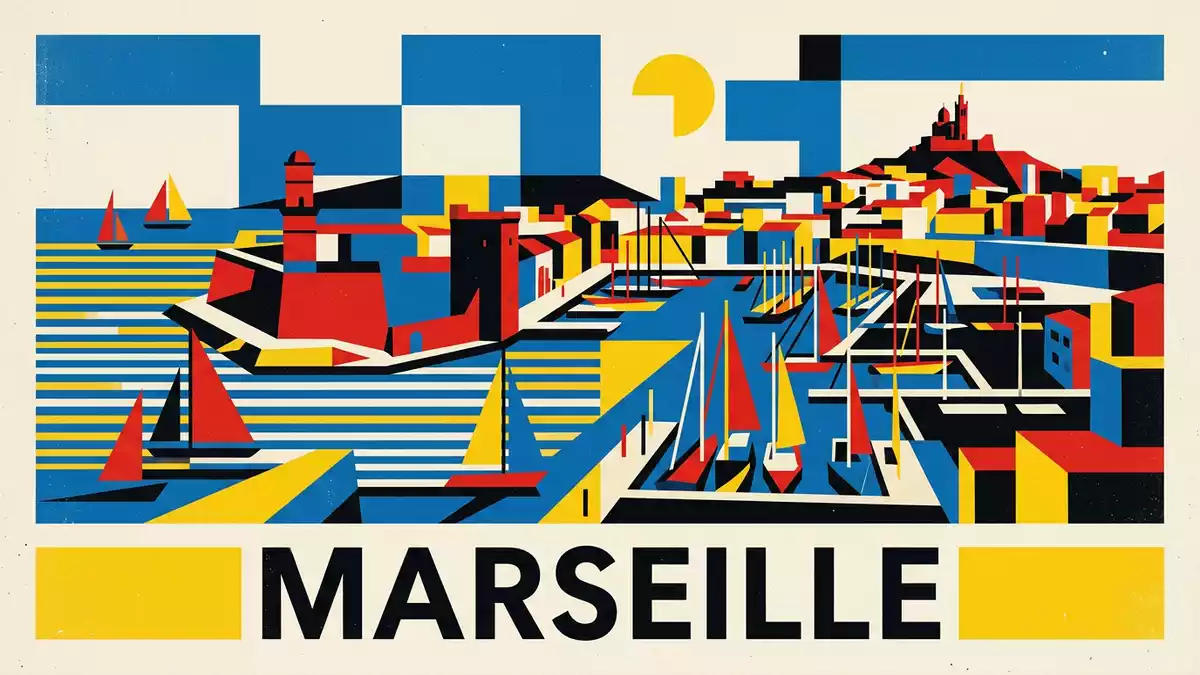
Vieux-Port de Marseille is the historic harbour basin at the western end of La Canebière, the place where the city of Marseille first took shape around a sheltered inlet on the Mediterranean coast. The basin occupies the site of the ancient harbour known as Lacydon, a natural cove that has served as Marseille’s waterfront since Greek settlers from Phocaea founded the colony of Massalia in the sixth century BC.
A harbour that gave Marseille its form
The story of Vieux-Port de Marseille begins in antiquity, when Phocaean Greeks chose the rocky bay of Lacydon as the harbour for Massalia, establishing their settlement on the surrounding slopes and quays.the historic cradle of Marseille As the city evolved into Roman Massilia, the same inlet remained the centre of maritime life, with quaysides, warehouses and fortifications clustering around the water. Over centuries the harbour basin continued to shape the layout of streets, with the major thoroughfare La Canebière running inland from its inner end and connecting the waterfront directly to the urban core.La Canebière
Vieux-Port de Marseille functioned as the principal harbour for commercial shipping for many generations, handling Mediterranean trade and maritime connections towards other coastal cities and, later, territories linked to France.principal commercial harbour In the nineteenth century the growth in ship size and cargo volume led heavy maritime operations to move along the coast towards larger dock installations in districts such as La Joliette and the Grand Port Maritime de Marseille, while the historic basin gradually shifted towards lighter maritime uses and waterfront life organised around promenades, smaller craft and civic space.Grand Port Maritime de Marseille
Architecture, reconstruction and the quays around the water
The urban fabric lining Vieux-Port de Marseille reflects both destruction and rebuilding in the twentieth century, when wartime damage to the old quarter led to large-scale reconstruction along the quays. The rebuilt waterfront includes ensembles designed under the direction of architect Fernand Pouillon in the mid twentieth century, part of a programme that reshaped the buildings framing the basin between the late 1940s and the 1950s.Fernand Pouillon Along the water edge, quays and terraces now form continuous promenades, with steps, ramps and broad paved areas giving views along the harbour and towards the surrounding districts.
At the eastern head of the basin, a contemporary intervention by Foster + Partners introduces a simple canopy known locally as L’Ombrière, a large reflective stainless-steel roof supported on slender pillars above the quay.highly reflective stainless steel canopy The canopy provides a covered space on the open quay, its mirrored underside reflecting the harbour scene and the movement on the quays below. Around the basin, the quaysides host a marina filled with smaller boats, and former working spaces sit beside open promenades, steps down to the water and areas used for markets or gatherings.
Harbour edges, landmarks and districts around Vieux-Port de Marseille
Vieux-Port de Marseille forms a central basin enclosed by quays and by slopes rising towards several districts of Marseille, with the Hôtel de Ville, Opéra, Saint-Victor and Pharo areas meeting around its edges.bordered by key districts The entrance of the harbour, where the basin meets the open sea, is marked by two fortifications: Fort Saint-Jean on the northern side and Fort Saint-Nicolas on the southern side, their stone walls framing the narrow mouth of the port.two forts at the entrance From this entrance a view opens back along the full length of the basin, with lines of moored boats, quays lined with buildings and the city rising behind.
The harbour lies under the distant but distinct silhouette of Notre-Dame de la Garde, the basilica on the hill that overlooks Marseille and watches over the basin from above.Notre-Dame de la Garde Around the water, the quays connect directly with streets and squares, so that crossing the basin by foot involves moving through varied frontages, from civic buildings near the Hôtel de Ville to residential blocks, terraces and stairways leading up into the surrounding neighbourhoods. The harbour edges also open towards other waterfront installations along Marseille’s coastline, including the areas of La Joliette and further port basins to the north-west, where larger commercial docks extend beyond the historic inlet.
Visiting Vieux-Port de Marseille: what travellers from Western Europe should know
- Vieux-Port de Marseille occupies the central harbour basin of Marseille’s waterfront at the foot of La Canebière, reached easily by city transport including the Vieux-Port – Hôtel de Ville metro station on Line 1.
- The quaysides are largely level and paved, but several stairways and ramps link the waterfront to streets and viewing points on the surrounding slopes, with additional steps inside the fortifications at the harbour mouth.
- Fort Saint-Jean and Fort Saint-Nicolas stand on rocky ground at the harbour entrance, with paths and terraces giving elevated views back into the basin and towards Notre-Dame de la Garde.
- Marseille lies in France; the official language is French and the currency is the euro.
Searching for Vieux-Port de Marseille on social platforms
These links open searches for Vieux-Port de Marseille on each platform.
Frequently asked questions about Vieux-Port de Marseille
Where is Vieux-Port de Marseille located within the city?
Vieux-Port de Marseille forms the central harbour basin on the city’s Mediterranean waterfront, at the western end of La Canebière and below districts such as the Hôtel de Ville and Pharo.
What should visitors expect when walking around the harbour?
Visitors encounter paved quaysides lined with boats, reconstructed waterfront buildings, stairways and ramps, views towards Notre-Dame de la Garde and access to landmarks including Fort Saint-Jean and Fort Saint-Nicolas at the harbour entrance.
What makes Vieux-Port de Marseille distinctive among Marseille’s waterfront areas?
The basin is the ancient harbour of Lacydon where Massalia was founded, framed by historic and reconstructed quays, marked by two forts at its entrance and complemented by the contemporary stainless-steel canopy of L’Ombrière at its eastern head.


